
Combining Korean HydraFacial and Skin Boosters: Which Comes First, and the Gap That Matters
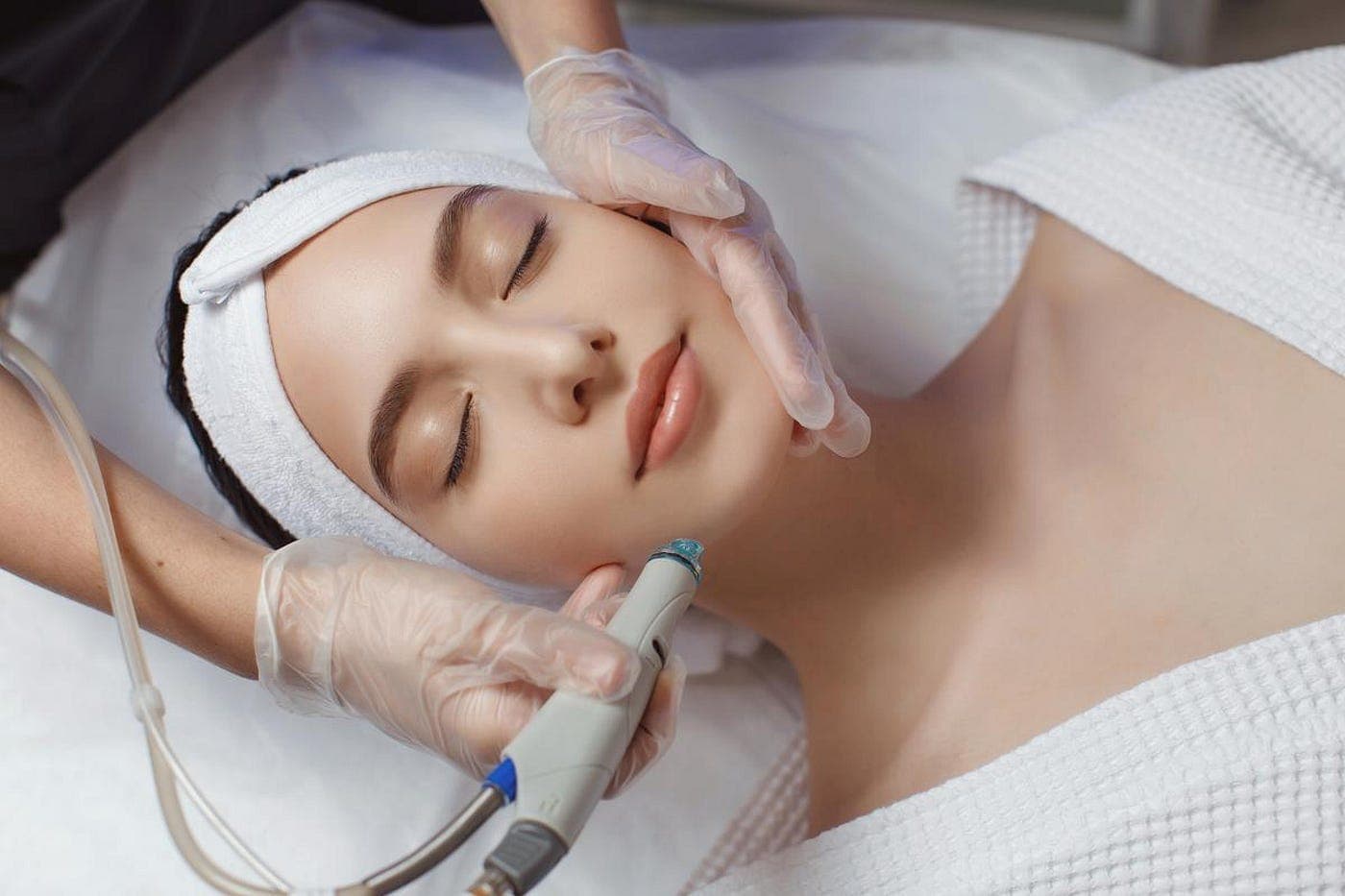
If you are having both, the facial comes first. Not because glow has to precede hydration in some sequence, but for a blunter reason: a Korean HydraFacial has no downtime at all, while skin boosters leave redness and small raised bumps at the injection points for several days. A device that clears and exfoliates the surface wants intact skin to work on.
That asymmetry decides the order, and once you see it the rest of the plan — how far apart, what to book before an event — follows from the two treatments being on completely different clocks.
What is each one actually doing?
They work at different depths, and that is the whole reason to pair them rather than choose.
The Korean HydraFacial is our standard HydraFacial run as a longer fourteen-step protocol: layered serum infusion, a cooling mask and LED, across seventy-five to ninety minutes. It works on the surface. Thin serums applied in sequence absorb better than one rich product, congestion is lifted by suction rather than manual extraction, and the exfoliation is deliberately gentle with barrier support at the end. Skin looks dewy because a cleared, evenly hydrated surface reflects light evenly — texture is what creates that, not a product sitting on top.
Skin Boosters go underneath that. They are injectable hyaluronic acid placed into the skin itself rather than beneath it, hydrating from within and prompting collagen. They improve skin quality — texture, elasticity, hydration — rather than changing shape or volume the way a filler does.
So one conditions the surface and one hydrates the tissue. Neither substitutes for the other, which is why "which should I pick" is usually the wrong question if your complaint is skin that looks dehydrated and dull.
Why does the facial have to come first?
Because of what each one leaves behind. The facial leaves nothing: you can wear makeup and return to work the same day, and any mild redness settles within an hour or two.
Boosters leave the opposite. Temporary redness, small raised bumps and occasional bruising at the injection points are normal, and they resolve within a few days rather than hours.
Now read the booster assessment in that light. Before injecting, the doctor checks for anything that rules it out — and open wounds and active infection are on that list. Injection points are small breaks in the skin. Running a suction-and-exfoliation protocol across an area in that state is working against the thing you just paid for, and it is the reason the gap after boosters is the one that needs respecting rather than the gap before them.
How long that gap should be is not something either treatment's page states, and it is not something to estimate from a web page. It is set at the consultation, by someone looking at how your injection points have actually settled.
How do the two timelines compare?
They barely overlap, and this is the useful part for planning.
The facial gives a visible same-day result. That is precisely why it is such a common pre-event booking — one session is enough to look brighter and smoother that evening. For skin quality that holds, the schedule is once a month, because it is a maintenance treatment and the benefit comes from regularity rather than from any single visit.
Boosters run the other way. Hydration builds gradually over the following weeks rather than appearing at once, and follow-up sessions may be scheduled to complete the course. The effect is long-lasting, with top-ups to sustain it.
So: fast and repeating, versus slow and occasional. A plan that uses both is really a monthly surface rhythm with a slower in-skin course running underneath it.
What does that mean if I have an event?
Put the boosters well back and the facial close in.
If something is a few days away, boosters are the wrong booking — you would be arriving at it inside the window where bumps and possible bruising are still normal. The facial is the one designed for that: no recovery, makeup the same day.
And it is worth holding an honest expectation of what the facial delivers. Brighter, smoother, more even-looking skin the same day is reasonable. The poreless finish in edited photographs is not — pores do not close, and that look is lighting and retouching as much as skincare. Anyone promising flawless skin from a facial is overselling it.
Does Bangalore change the plan?
It changes which complaint brings you in, more than the sequence. "My skin looks dehydrated and dull however much water I drink or serum I use" is the booster brief almost word for word, and it is a very common description here — the combination of long commutes, air-conditioned offices and a city that is humid for much of the year produces skin that reads as tired rather than dry.
The practical constraint is the monthly facial rhythm rather than the treatment itself. Seventy-five to ninety minutes once a month has to survive the traffic, so pick between Bellandur and Indiranagar on the branch you will actually get back to on a weekday, not the one that is convenient this week. A maintenance treatment you attend is worth more than a better-located one you abandon.
Both suit all skin types, including sensitive skin, and in the facial's case the gentle exfoliation plus barrier finish is why reactive skin generally copes better with it than with a stronger single-step treatment.
Who should not plan this combination?
The booster side carries the screening, and it is not negotiable: active infection, open wounds, a known allergy to the product, pregnancy or breastfeeding all stop the injecting part. The facial is the gentler of the two and is not where the restrictions sit.
That is also why this is a single conversation rather than two bookings. If the boosters turn out not to be appropriate for you right now, the monthly facial rhythm still stands on its own — but you want to find that out at the assessment, not after you have planned a course around it.
Planning the pair
Bring both intentions to one appointment and let the assessment set the order, the gap and whether the facial rhythm pauses around the injecting. Say what you want and by when; the dates are what the plan is built around.
Book an appointment at either branch. The consultation fee is waived against treatment if you go ahead, and every session of the Korean HydraFacial includes complimentary LED light therapy as standard rather than as a limited offer.