
Combining Dermaplaning and Hydra Medi Facials: Order, Spacing and Why
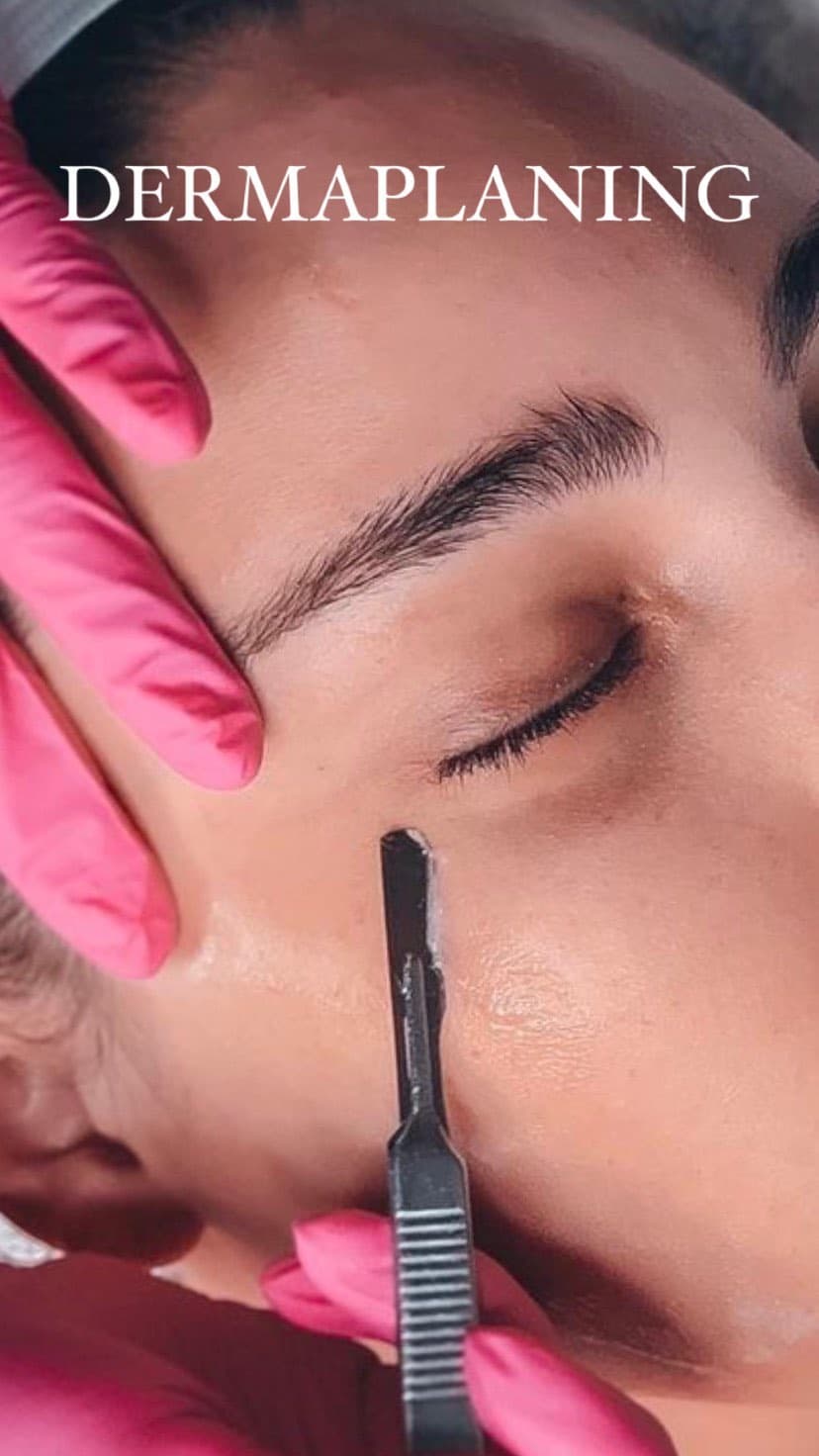
Dermaplaning goes first. Its own treatment page describes it as a prep step: clearing the surface helps a facial reach the skin more evenly, and a Hydra Medi Facial's actives absorb better through an exfoliated surface. What neither page states is the interval between them, or whether they belong in one appointment — that part is set by your doctor.
This post is about sequencing rather than choosing. If you have already decided you want both dermaplaning and a Hydra Medi Facial, the useful questions are what order, how far apart, and what the combination asks of your skin that either one alone does not.
Which one goes first?
Dermaplaning. Both treatment pages point the same way, from different directions. The dermaplaning page states that it pairs well with other treatments, because clearing the surface first helps a facial or a peel reach the skin more evenly — and adds that it is often done as a prep step rather than alone. It also notes that serums and actives penetrate a freshly exfoliated surface far better, so the routine you already own does more.
The Hydra Medi Facial page arrives at the same principle from inside its own protocol: exfoliating first and oxygenating last is what lets the nutrient-rich serums reach past the dead surface layer instead of sitting on top of it. The whole design of the facial assumes a cleared surface before the actives go in.
Reversed, the logic simply does not hold. Running a blade over skin that has just had actives infused and been oxygenated undoes the point of the last stage of the facial.
Why does the order matter in practice?
Because the benefit you are paying for in the facial is absorption. The Hydra Medi Facial is a three-in-one treatment that cleanses and infuses the skin with active ingredients, exfoliates away dead cells, and finishes by oxygenating so those actives are drawn in. Hydrating actives go in while the skin is freshly cleared, precisely because that is the point in the sitting where they are absorbed most readily.
Dermaplaning is the same argument one step earlier. Removing the dead surface layer and the vellus hair is what leaves skin smoother to the touch by the end of the session, and what lets what comes next work on skin rather than on a layer of dead cells sitting over it.
So the sequence is not a preference. It is the same mechanism applied twice, in the only order in which both parts make sense.
Can both be done in the same appointment?
That is a consultation decision, and neither treatment page states an answer. The dermaplaning page describes it as often done as a prep step rather than alone, which points towards a combined sitting — but it does not say that it is routinely combined with this particular facial, and we are not going to fill in a protocol that is not written down.
What we can say is what makes it a genuine clinical question rather than a scheduling one, which is the next section. Bring the request to your consultation, and the doctor will tell you whether both belong in one sitting for your skin or whether they are better separated.
Isn't that a lot of exfoliation for one sitting?
It is a fair question, and it is the main reason this is not a plan to make for yourself. Count what is actually happening.
Dermaplaning is a physical exfoliation — a blade lifting the dead surface layer. The Hydra Medi Facial then contains a gentle exfoliation step of its own, priming the skin so the actives are absorbed rather than sitting on a dull layer, plus an acid loosening pass in which a mild acid blend softens what is blocking the pores. The facial page is careful to describe that pass as facial-strength rather than a peel — nothing is left on long enough to cause flaking. And every Hydra Medi Facial session at this clinic includes a complimentary chemical peel, which on its own is a ₹1,999 session.
Stack those and you have a blade, a mechanical exfoliation step, an acid pass and a peel. Each is mild by design. Together they are a real decision about how much a particular face should have in one day, and that decision belongs to the doctor who has looked at your skin — not to a booking form.
How far apart should they be if they are not combined?
Neither page states an interval between the two treatments, so there is no number to give you, and inventing one would be worse than saying so.
What each page does state is its own rhythm, and the two happen to line up. Dermaplaning is repeated roughly every three to four weeks, matching the skin's own renewal cycle — going more often exfoliates skin that has not finished rebuilding. The Hydra Medi Facial is recommended at one session a month for consistent results, and is described as a maintenance treatment where the benefit comes from regularity rather than any single visit.
Two roughly monthly rhythms are straightforward to run alongside each other, whether that ends up meaning one appointment or two. How they are arranged for you is confirmed at consultation.
Who is this combination not suitable for?
Anyone either treatment would be deferred for on its own — and the exclusion lists are not identical, which is another reason the assessment matters.
Dermaplaning is not appropriate over active inflammatory acne, active cold sores, sunburn, or broken or infected skin, and some skin conditions mean it is deferred or declined at assessment. The Hydra Medi Facial is postponed for an active rosacea flare, sunburn or an infected breakout, since those can be made worse rather than better, and it is not performed on pregnant patients — tell your doctor at consultation so an appropriate alternative can be discussed.
Sunburn appears on both lists, which in a city with year-round daytime UV exposure is worth noting rather than glossing over.
What should I expect afterwards, and when should I contact the clinic?
Between them, the expected picture is mild. Dermaplaning can leave skin slightly pink for an hour or two, and a soothing serum and sunscreen go on before you leave. The facial has no downtime to speak of; mild redness or itching, if it happens at all, settles quickly, and you are asked to hold off on exercise for a couple of days while the skin regenerates.
Sun protection is the one instruction that carries real weight here. After dermaplaning, skin burns more easily for around a week, and daily sunscreen is part of the treatment rather than an optional extra. Sunscreen also closes the facial protocol for the same reason. If you have had both, treat that week seriously.
Contact the clinic rather than working it out yourself if redness persists beyond a day or the skin feels genuinely irritated, if an area becomes increasingly sore, hot or inflamed instead of settling, if a nick from the blade is not healing over a few days, or if breakouts flare afterwards. Please do not self-assess — skin in the days after a combined session is not something you have a baseline for, and photographs online are not a substitute for someone looking at you. Ring the clinic, describe what you are seeing, and let the team decide whether you should be seen. If something worsens outside clinic hours and you are worried, seek medical attention locally rather than waiting for the clinic to reopen.
What does the pair cost, and how do I plan it?
They are priced separately: dermaplaning is ₹1,999 per treatment, and a Hydra Medi Facial is ₹2,999 per treatment, with the complimentary chemical peel included in every facial session. The consultation is ₹500, waived off against treatment. Whether your plan is one combined appointment or two spaced visits is settled at that consultation, and so is whether the combination suits your skin at all.
The useful thing to bring is the complaint rather than the pairing. If it is dull texture, congestion and makeup that will not sit flat, say that — the doctor may well arrive at this combination, or may tell you one of the two is doing the work and the other is not adding much for you. Either answer is worth more than a sequence copied from the internet. Book a consultation and let the plan be built around your skin.