
Combining Dermal Fillers and Skin Boosters: Order, Spacing and Why
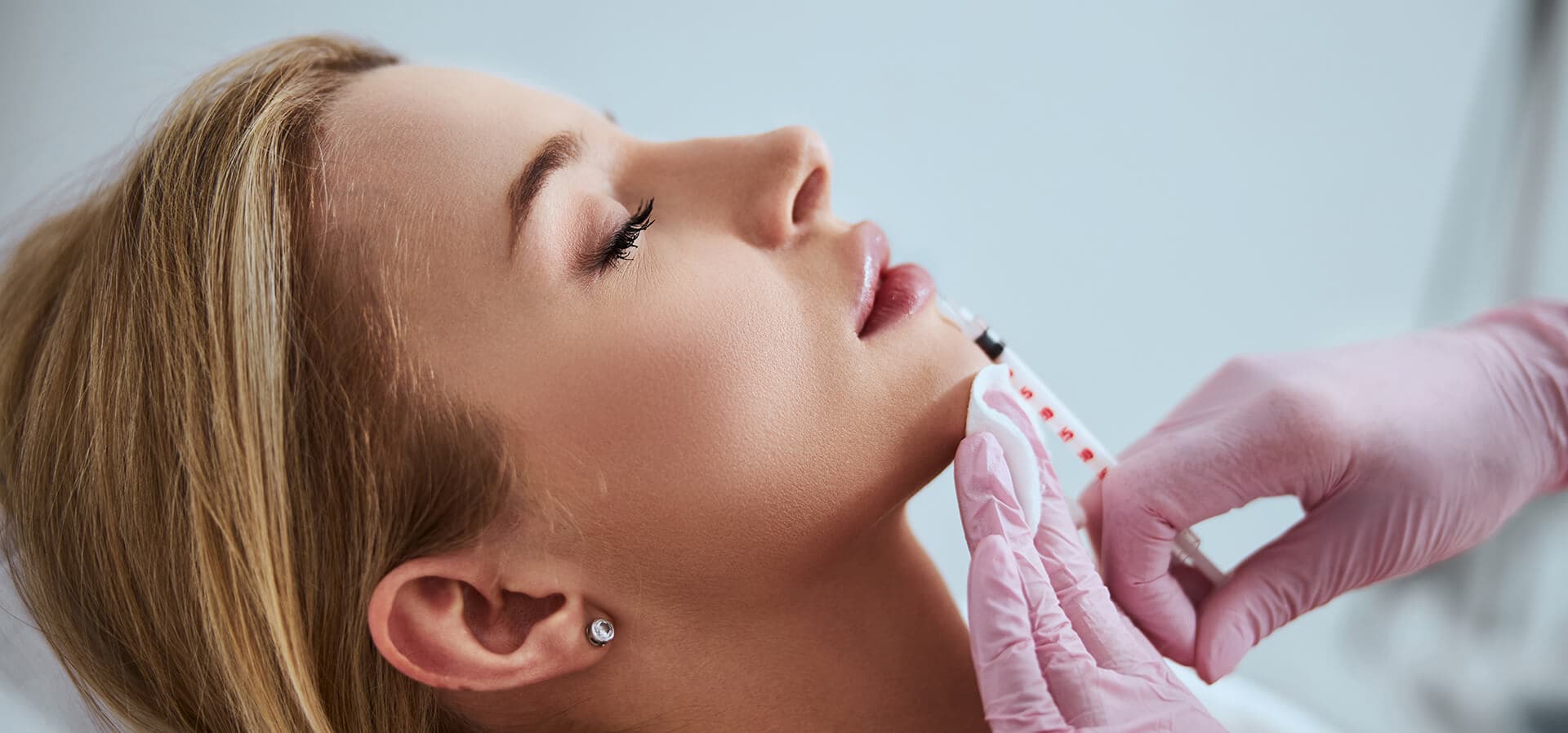
Fillers and skin boosters are both hyaluronic acid, and that shared ingredient is where the similarity stops. A filler is placed beneath the skin to restore volume and contour. A booster goes into the skin to improve its hydration, elasticity and texture, and deliberately leaves your face shape alone. In a combined plan they are not alternatives — they are two different jobs, and the sequencing is decided by a doctor after examination.
Patients arrive at this pairing from two directions. Some have had dermal fillers, are happy with the shape, and find the skin over the new contour still looks dull and dehydrated. Others have had skin boosters, like how the skin feels, and realise that better-quality skin over a flattened cheek is still a flattened cheek. Both observations are correct, and both point at the same answer.
What is the actual difference in what they do?
Depth, and intention.
A filler is a gel-like injectable placed under the skin to replace volume that has been lost, soften creases that stay put on a still face, and refine contour along the jaw, chin or lips. It adds structure.
A booster is injected into the skin itself. Hyaluronic acid holds many times its weight in water, so placed at that depth it raises moisture at a level no topical serum reaches, and it prompts the skin's own collagen production. What changes is quality — texture, elasticity, hydration, the crepiness that shows around the eyes and mouth. Boosters are explicitly not placed to add volume or contour, which is the point for anyone who wants better skin without any change to their features.
Put crudely: one is scaffolding, the other is the surface material. Neither substitutes for the other, and a plan built entirely from one of them tends to reveal the gap eventually.
Which one comes first?
Neither treatment core sets a fixed order, and any article that gives you one is inventing it. What can be said is what the sequencing decision is actually weighing, which is this: a filler decides where the tissue sits, and a booster improves the surface over wherever it ends up. Structure is usually established before the surface is refined, in the same way a room is plastered after the walls are up.
Against that, the doctor is also weighing what is bothering you most, how much of the concern is volume against how much is skin quality, and whether your skin currently rules out injecting at all. Those factors can reorder the plan entirely, and they are why the sequence is set at your consultation rather than in advance.
How far apart should they be?
Again, there is no published interval to quote, and inventing one would be worse than saying so. But there is a genuinely useful reason not to compress the two into a single afternoon, and it has to do with reading the results.
The two treatments run on completely different clocks:
- A filler is close to immediate. You see the change at the end of the appointment, and the final result is there at one to two days. Most people recover fully within one to two days.
- A booster is gradual. Hydration builds over the weeks after treatment rather than appearing at once, because part of the effect comes from your own collagen response. Injection-point redness settles well before the result arrives.
They also leave different marks in the short term. After filler, expect swelling and redness in the first hours to days — particularly around lips and eyes — with bruising and tenderness possible for a few days. After boosters, expect redness, small raised bumps at the injection points and occasional bruising, settling within a few days; the little bumps are the product itself, and they resolve as it integrates.
Both settle. The problem with stacking them on one day is attribution: when something looks uneven on day three, nobody can say which treatment it belongs to, and the sensible response to a filler lump is not the sensible response to a booster bump. Spacing them keeps that legible. How much space, and whether your particular plan needs any, is a clinical call.
What should you not do while they settle?
For fillers, avoid alcohol, smoking, strenuous exercise and fish oil around your appointment — the last two matter because bruising is more likely if you take blood thinners or fish oil. If a lump or unevenness appears in the first days, tell your doctor rather than massaging it yourself; hyaluronic acid can be adjusted or dissolved if it needs to be.
For boosters, keep the injection points clean. Any injection breaks the skin, so the infection risk is low but not nil, and increasing pain, heat or spreading redness is a reason to report it rather than wait.
When is a booster not an option at all?
Boosters have a clear list of situations that rule injecting out: active skin infection, open wounds, skin cancer or melanoma in the area, a known allergy to any ingredient, and pregnancy or breastfeeding. That check happens before anything is drawn up, and it is a genuine reason to have the consultation before you plan a combined course around a date.
How long does each side of the plan last?
Fillers run roughly six months to two years, depending on the gel, the area and your own metabolism. Boosters are long-lasting rather than permanent, with top-up sessions recommended to sustain the effect; your doctor advises on timing once they have seen how your skin responded to the first course.
The practical consequence is that a combined plan is rarely two appointments and done. The two components come up for renewal on different schedules, and a sensible plan says so at the start rather than surprising you in month eight.
What does a combined plan cost?
Dermal fillers start from ₹14,999 per treatment. Skin boosters are not quoted here as a single figure, because what you need genuinely varies — the area being treated, how many injection points it takes, the product chosen for your skin, and how many sessions the doctor recommends to complete a course. That is settled at the consultation with a plan you can see, rather than estimated from a page.
The consultation itself is ₹500, waived against treatment.
Where to start
Start with the assessment rather than with a package. The doctor examines hydration, texture and elasticity, works out how much of what is bothering you is volume and how much is skin quality, and confirms whether boosters — rather than a filler, a peel or something else — are the right answer at all. An honest answer at that stage is worth more than a combined plan you did not need.
To have that conversation, book an appointment at our Indiranagar or Bellandur clinic.