
Coffee and Tea Stains: Which Ones Come Off, and Which Ones Do Not
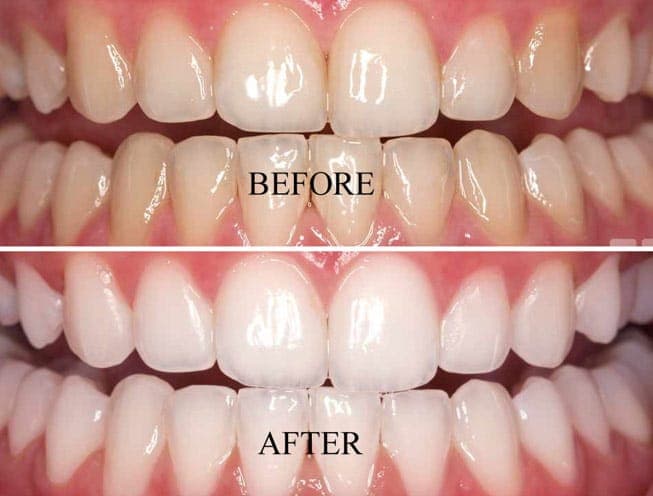
Tooth discolouration is not one thing, and that is why two people with equally yellow-looking teeth can get completely different answers. Some staining sits on the surface and polishes off. Some sits inside the enamel and has to be broken down chemically. And some responds poorly to either, which is worth knowing before you pay for an appointment rather than after it.
There are four groups in practice. Only two of them are addressed by the two treatments people usually walk in asking about.
Is my staining on the surface, or inside the tooth?
That is the question the examination answers, and the distinction is mechanical rather than a matter of degree.
Surface discolouration is deposit sitting on the outside of the tooth, along with plaque and the hardened tartar that a brush cannot shift. Polishing removes discolouration left by tea, coffee, tobacco and pigmented foods — red wine among them — so teeth look cleaner and closer to their natural shade. That phrase is the important one: closer to their natural shade. Polishing returns you to your own colour. It does not take you past it.
Pigment inside the enamel is a different problem and needs a different mechanism. Teeth whitening uses a peroxide-based gel that works into the enamel to break down pigment from tea, coffee, tobacco and pigmented foods, rather than scrubbing the surface — which is what lets it lighten the shade of the natural tooth rather than just clean it.
So the two are not competing options. One cleans the tooth; the other changes its colour. Which you need depends on what your discolouration actually is, and both is a common answer.
Group one: deposits that come off with a cleaning
If your staining is surface-level, scaling and polishing is the whole treatment, and this is the group most people underestimate. Scaling removes plaque and hardened tartar, particularly along and just under the gumline; polishing then smooths the surfaces and lifts the staining.
For a lot of patients in this city that is genuinely enough. If your day runs on filter coffee at home and three rounds of chai at the office, what has built up may be exactly the deposit a cleaning removes — and you would be paying for whitening to solve a problem you had already solved. Most people need this every six to twelve months anyway, so it is not an extra step so much as the one that was due.
A practical note: a scaling and polishing appointment comes before whitening in any case, so the gel contacts clean enamel. If you book whitening first you will be doing this appointment anyway.
Group two: pigment in the enamel that whitening lifts
This is the group whitening is for — discolouration from age, tea, coffee and tobacco that has worked into the enamel and will not polish off.
What matters here is the supervision rather than the gel. In clinic the gums are isolated before the gel is applied and the exposure is timed, which is what keeps a stronger agent appropriate to use — the main difference from an over-the-counter kit. The target shade is agreed with you beforehand, so the result reads as a healthy version of your own teeth rather than an obviously artificial white. Usually one session, sometimes two, with no downtime beyond avoiding staining foods for a couple of days.
And nothing is drilled or removed. Whitening does not reshape the tooth or remove enamel, which makes it one of the few cosmetic dental options that is entirely additive.
The examination beforehand is not a formality. It catches decay, cracks or exposed roots, and bleaching over any of those causes real pain — which is the actual reason a dentist looks first.
Group three: staining that responds poorly to either
Here is the part that rarely appears in advertising. Staining from tetracycline, fluorosis, trauma or a dead nerve responds poorly or unevenly to external bleaching, and no amount of cleaning touches it either, because it is not sitting on the surface.
If that is your situation, the useful outcome of the appointment is being told so at assessment rather than after. A dentist who identifies this early has saved you money and a disappointment; one who sells you a session anyway has not. Ask directly what type of discolouration yours is, and what the expected response is.
Group four: restorations, which do not change colour at all
Crowns, veneers and tooth-coloured fillings do not bleach. Whitening only affects natural enamel.
That has a consequence people are often surprised by: if you have visible restorations, they may end up looking darker than the surrounding teeth once those have lightened, and may need replacing to match. If you have any in your smile line, raise it before treatment — sequencing is a real conversation, and often the restorations are replaced afterwards to match the new shade.
So is anything here actually "masking" a stain?
No — and that is worth being clear about, because the words get used loosely. Polishing removes deposit. Whitening breaks down pigment. Neither one covers anything up.
Covering a tooth is a different category of treatment altogether, and the same restorations that would do it are the ones that will not lighten. So if you are weighing "remove it or hide it", understand that the hiding option changes the tooth permanently while the two treatments described here do not.
How long does it last, and what shortens it?
Whitening lasts several months to a few years, and the range is that wide because it depends heavily on diet, smoking and oral hygiene. Heavy tea, coffee or tobacco use will shorten it considerably.
That is not a reason to skip it — it is a reason to know what you are buying. If you drink four cups of tea a day, you are at the shorter end of the range, and the sensible plan is a regular cleaning schedule holding the result between whitening sessions rather than expecting one appointment to last for years.
What to ask when you come in
Two questions settle almost everything. Which type of discolouration do I actually have? And would a cleaning alone get me most of the way? An honest answer to the second one occasionally costs the clinic a whitening appointment, which is precisely why it is worth asking.
If your teeth have yellowed and you would rather find out which group you are in than guess, book a consultation at our Bellandur or Indiranagar clinic. Mention any crowns or fillings in your smile line when you book — it changes the plan rather than the price.