
The Clear Aligner Boom: The Worldwide Trend, Assessed for Indian Patients
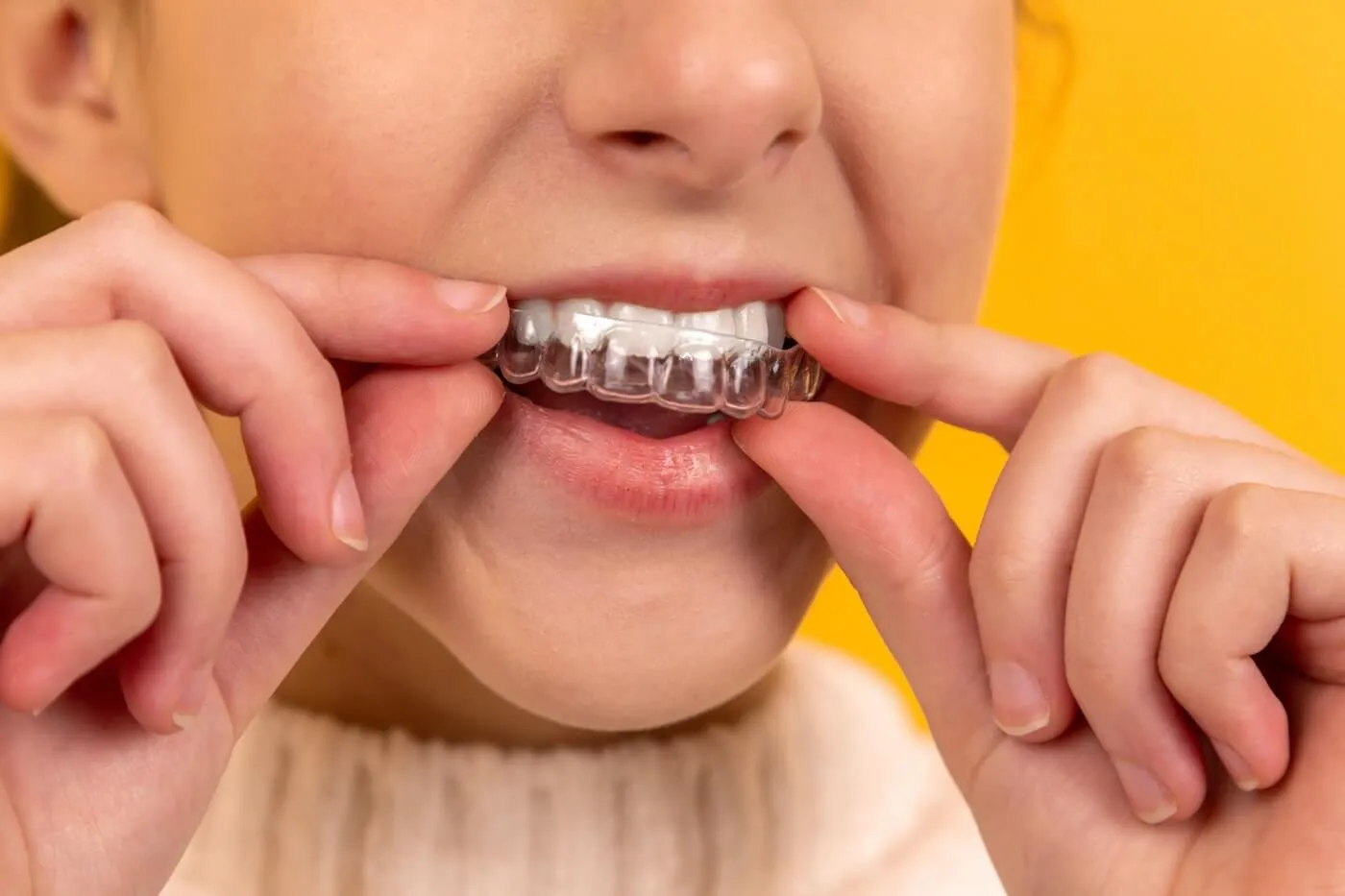
The aligner boom changed how teeth are straightened, not the physics of straightening them. Teeth still move through bone under steady, gentle pressure over months; what removable clear trays add is discretion and the ability to take the appliance out. That is a genuine advance in comfort and appearance — and it also introduces the one variable fixed braces never had, which is whether the appliance is in your mouth at all.
What is the boom actually about?
Adults. Orthodontics was for decades something that happened to teenagers, and the reason most adults with crowding or a gap never did anything about it was not cost or time — it was two to three years of visible metal in professional life. Remove that objection and a very large group of people who had quietly given up become treatable.
That is the whole engine of the trend. Aligner trays are near-invisible in conversation and are taken out to eat and brush, which suits adults who do not want fixed brackets at work. Everything else — the marketing spend, the before-and-after reels, the direct-to-consumer services — follows from that one unlocked market.
Is the technology new, or is the marketing new?
Both, in different proportions than the advertising suggests.
What is genuinely different is the delivery: a case is now mapped with a digital scan or impressions and X-rays, planned as a sequence of increments, and manufactured as a series of custom trays swapped every few weeks. That staging and manufacturing capability is real and it is what makes the removable route practical.
What has not changed is the mechanism or the biology. Pressure moves teeth through bone at the speed bone remodels, which is why aligner treatment for suitable cases still takes roughly 6 to 18 months, and why fixed braces still run around 18 to 36 months for the cases that need them. Nobody has invented a faster bone. Be sceptical of any claim that rests on the movement itself being quicker rather than the case being simpler.
The second thing that has not changed is that this is dentistry. Treatment still starts with an orthodontic assessment — examination, X-rays, and impressions or a digital scan to map current tooth positions and the bite — and it is performed by a dentist, always. Braces and aligners at our clinics follow that sequence regardless of which appliance the plan lands on, and Invisalign is the brand of clear aligner we provide.
Does the trend hold up for an Indian patient?
Mostly yes, with one honest caveat that has nothing to do with the technology and everything to do with the day you actually live.
Aligners only move teeth while they are in. They are designed to be worn for the large majority of the day and night, removed for meals and brushing, and inconsistent wear extends treatment. Now picture a normal Indian working day: chai at eleven, lunch, filter coffee at four, something at a colleague's desk, dinner late. Every one of those is a removal and — this is the part people underestimate — a brush before the trays go back in. The appliance is not demanding in itself; the discipline around it is.
This is not an argument against aligners. It is the single question worth being honest with yourself about before choosing them, because the person who wears them consistently gets the treatment time they were quoted and the person who does not gets a longer, more expensive one.
Two smaller local realities are worth planning for. Both routes involve regular adjustment or progress appointments throughout, so if you travel for work or commute across the city, think about which clinic you can realistically reach on a weekday. And whichever appliance you choose, a retainer is fitted afterwards to hold the teeth in their new positions long-term — teeth drift back toward their original positions without one, and that is the most common reason results are lost.
Where does the hype outrun the treatment?
The idea that aligners suit everyone. They do not. Braces handle a wider range of complex movements, and some cases can only be treated properly with fixed brackets. Which appliance is right for you depends on the type and severity of the misalignment, your bite and your routine — and a dentist should tell you plainly when aligners are not suitable rather than fitting them because you asked.
The idea that removable means effortless. Removable means responsibility transferred from the appliance to you. Fixed braces work whether or not you are motivated on a Tuesday; trays do not.
The idea that a scan is a substitute for an examination. A direct-to-consumer service can post you trays. It cannot examine your bite, review your X-rays, or confirm that your gums and supporting bone are healthy enough for teeth to be moved — which is checked before treatment starts, at any age.
The idea that straightening solves the whole complaint. Alignment changes position. If shade is what actually bothers you, teeth whitening is a separate treatment; if it is shape and surface as well, that belongs in a smile makeover, which is a sequenced plan combining several treatments and decided at assessment rather than in advance.
What about all the different names?
Invisible aligners, invisible braces and clear aligners are three names for the same treatment: a series of removable clear trays that moves the teeth in stages, with no brackets or wires fixed to the tooth surface. They are called invisible because the trays are hard to notice in conversation, not because they cannot be seen at all. If a quote uses one of these terms as though it were a distinct product, ask what is actually being proposed.
What to ask before you commit
Ask whether your case genuinely suits aligners or whether fixed braces would do it better, and expect a reason rather than reassurance. Ask what the expected duration is for your case specifically. Ask what happens if a tray is lost, and whether the retainer afterwards is included. And ask what the plan looks like if progress stalls.
Expect some soreness for a day or two after each new tray — that is normal and settles on its own. Contact the clinic if a tray does not seat properly, if a tray is lost, or if soreness persists well beyond a few days rather than carrying on and hoping the next tray fits better.
Consultation is ₹500, waived off against treatment. Book a consultation at The Aesthetic Edge in Indiranagar or Bellandur, and find out whether the trend and your case are actually the same conversation.