
BB Glow Treatment: The Myths Worth Clearing Up Before You Book
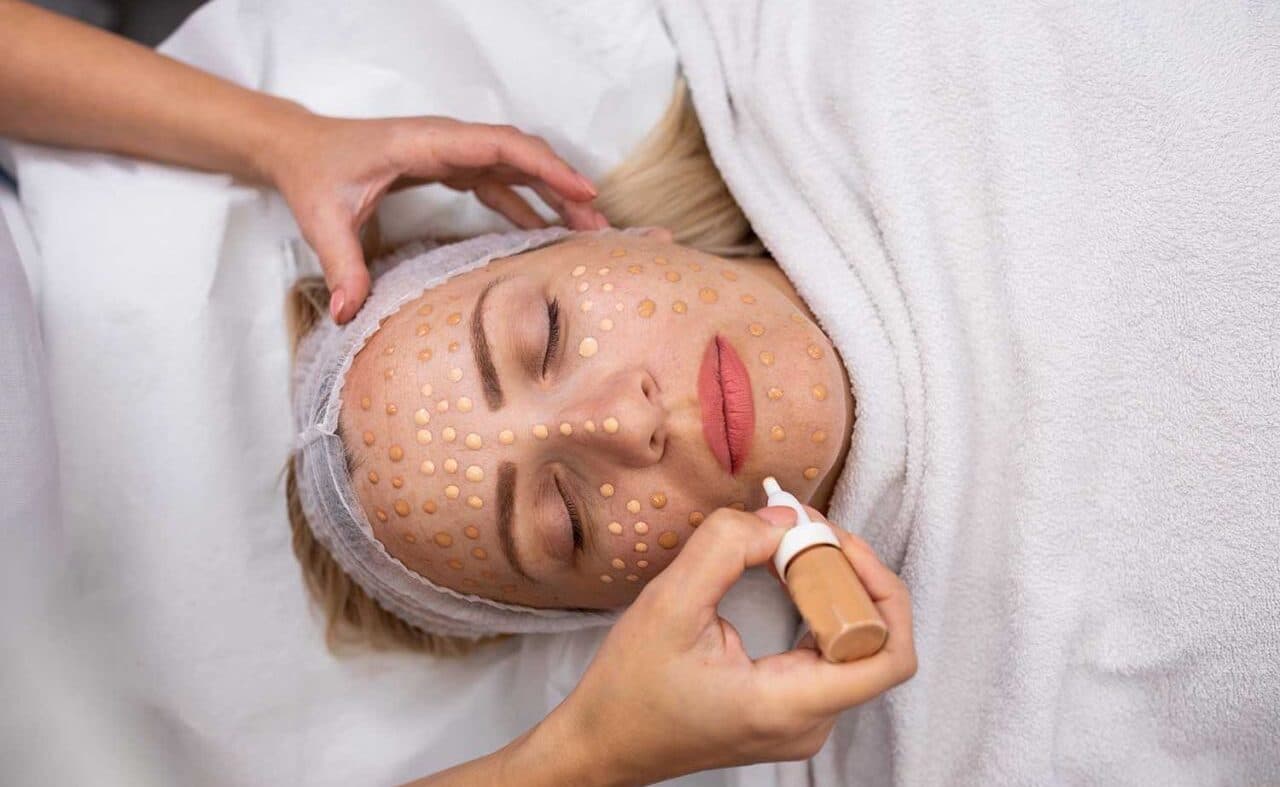
The four beliefs that cause most disappointment are that BB Glow is permanent, that it lightens your skin, that it is a facial with no downtime, and that one session will do it. None of those is accurate. It is a tinted serum worked into the upper layers of the skin, in a course of four to six sessions, that softens how uneven tone reads for several weeks at a time.
Most of these ideas come from social media rather than from clinics, and none of them is malicious. They just set an expectation the treatment was never designed to meet, and that is where dissatisfaction comes from — not from the treatment failing, but from it doing exactly what it does while someone expected something else.
"It's permanent, isn't it?"
No. It holds for around four to six weeks from a completed course, with a top-up every four to five months to maintain it.
This is the correction that matters most, because it changes the whole proposition. The tint sits in the upper layers of the skin, and those layers renew themselves continuously — every cycle carries a little of the pigment away. Fading is not the treatment going wrong; it is the treatment behaving as designed.
How long it holds varies with skin type, sun exposure and how consistent your aftercare is. Anyone offering permanent BB Glow is describing something else.
"It lightens your skin, though."
It does not. It does not bleach or lighten your natural skin colour.
What it does is place a tinted serum in the upper layers so tone reads more evenly, and the effect fades as the skin renews itself. The goal is evenness — patchiness and dullness reading softer and more uniform — not a change of complexion. If a lighter skin colour is what you are after, BB Glow is not the treatment, and a doctor here will tell you so rather than start a course.
"It's basically a facial."
There is needling involved, which puts it in a different category entirely.
A micro-needling pen works the serum into the upper layers of the skin at a controlled depth. That means real aftercare, real downtime, and real contraindications — none of which a facial carries. It also means the treatment belongs with a doctor rather than at a salon counter: skin type, active breakouts and the cause of your pigmentation are all assessed before the first session, and reviewed at each visit.
"So there's no downtime."
Minimal is not none, and the difference shows up in your diary.
Tightness, redness and mild irritation are common in the first few days and usually settle within three to four. You cannot wear makeup for the first 24 hours, and you should not wash or scrub your face in that window either. Treated skin is also more reactive to UV, so sunlight, steam rooms and saunas should be avoided for two weeks and daily sunscreen is not optional.
The practical version: it fits into a lunch break, but you go back to your desk bare-faced and you plan a few days' margin before anything you want to look polished for.
"One session and I'm done."
Most courses run to four to six sessions, spaced roughly two weeks apart.
The colour builds gradually rather than arriving at once, which is also why the result looks like your own skin rather than like makeup. Your doctor confirms the number at consultation, based on your skin type and how much unevenness is being treated — so the plan is set for your skin rather than sold as a fixed package before anyone has looked at it.
A partial course is not half a result. It fades noticeably faster than a completed one, which is worth knowing before you book the first appointment.
"It'll fix my pigmentation."
It changes how uneven tone reads. It is not working on what is underneath.
This is the distinction marketing blurs most often, and it is the one worth being clear-eyed about. The tinted serum sits in the upper layers and fades as the skin renews, so the patches that keep returning will keep returning. If the goal is to treat the pigment rather than soften how it reads, that is a different conversation — a course of chemical peels works on surface pigment and texture, and where the concern is specifically lip colour, lip micropigmentation is assessed on its own terms.
A doctor reviews the cause of your pigmentation before any serum is chosen, precisely so this gets decided before you commit.
"It's safe for everyone."
It is not offered to everyone, and the exclusions are firm rather than cautionary.
BB Glow is not performed during pregnancy or breastfeeding, over active infections, open wounds or skin cancer, or where there is a known allergy to any ingredient in the serum. Your doctor screens for all of this beforehand, which is one of the practical arguments for having it done somewhere that screens at all.
Beyond the outright exclusions, active breakouts and very reactive skin are assessed case by case, and a history of marking after minor injuries is worth raising explicitly because it changes how any needling treatment is planned.
"It's painful."
It is designed to be comfortable, and most people describe a slight tingling as the pen passes over the skin.
If it feels like more than that, say so during the session rather than enduring it — tell your doctor at any point and the settings can be adjusted. That is a normal part of the treatment, not a complaint.
"You can put makeup on straight after to hide the redness."
This is the myth that causes the most avoidable trouble, because it is the one people act on without asking.
Nothing goes on the skin for the first 24 hours, including foundation. No washing or scrubbing in that window either. After that you can return to your usual routine, minus retinol, AHAs and BHAs for the length of your course — those speed up cell turnover, which is exactly what carries the tint away.
When a myth becomes a reason to ring the clinic
The belief that everything settles on its own is the one to be most careful with. Redness, tightness and mild irritation in the first few days are ordinary and fade. What is not ordinary is redness that is worsening rather than fading, swelling that increases instead of settling, weeping or crusting, or a fever.
Please do not judge these yourself and do not treat them at home. Call the clinic that treated you, in Indiranagar or Bellandur, and you will be advised or seen; if it is outside working hours, ring at the start of the next working day rather than waiting the week out. These are uncommon, and every one of them is simpler to deal with early.
The honest summary
BB Glow is a doctor-performed cosmetic treatment that makes uneven tone read more evenly for a few weeks at a time, in a course, with real aftercare, on skin that has been assessed first. Held to that description it does what people want from it. Held to the version circulating online, it cannot.
If you want to know whether it suits your skin specifically, that is what the consultation is for — ₹500, waived off against treatment. Book an appointment at either clinic.