
BB Glow Treatment in Bangalore: What Local Conditions Change
Bangalore changes two practical things about BB Glow, not the treatment itself. Sun exposure is one of the three factors our core says results vary with, and this city has no off-season for UV — so daily sunscreen is a year-round habit, not a summer one. The second is scheduling: a course runs four to six sessions about a fortnight apart, which has to survive your work diary.
Everything else you may have read about local climate and this treatment is worth treating carefully. Below is what the treatment core actually supports, and what it is silent on.
Does the climate genuinely change anything?
One thing, and it is worth taking seriously. The BB Glow core names three factors that results vary with: skin type, sun exposure, and how consistent your aftercare is. Sun exposure is the only one of the three that is meaningfully different because of where you live.
It also states two rules with no wriggle room in them. Treated skin is more reactive to UV. Sunlight, steam rooms and saunas should be avoided for two weeks, and daily sunscreen is not optional.
That is the whole of the honest local story. Anything beyond it — humidity doing something specific to the pigment, your building's water supply shortening the result — is not something our treatment core claims, and we are not going to invent a mechanism to make a page more interesting.
Why does thinking in terms of "summer sunscreen" not work here?
Because Bangalore does not have a season in which the sun goes away. The city sits well inside the tropics, and daylight hours and sun angle stay high enough across the year that there is no genuine winter break from UV of the sort people who grew up further north are used to planning around.
The practical consequence is about habits rather than physics. A patient who thinks of sunscreen as an April-to-June product will have gaps in the exact months when the sky is grey and the rule still applies. The clinic's aftercare does not carve out an exception for overcast days, and neither should you.
If you have never worn sunscreen daily, this is the part of the protocol to solve before the course starts, not during it. Find a texture you will actually reapply on a humid afternoon — a formulation you tolerate and use every day does more for the result than a superior one that stays in the drawer.
Is the monsoon a good time to start a course?
It can be a convenient one, for reasons of diary rather than skin.
A course is four to six sessions roughly two weeks apart, which means eight to ten weeks of commitment, plus a fortnight after each session in which sunlight, steam rooms and saunas are off the table. If your calendar in those months has fewer weekend trips, outdoor weddings and beach plans in it, the protocol is easier to keep to. That is a scheduling argument, and we are not dressing it up as a clinical one.
What the monsoon does not do is remove the sunscreen rule. Cloud cover changes how bright the day looks; it does not turn the daily instruction into an optional one.
How do I fit a fortnightly course around work?
This is the question we get most often, and it has practical answers.
A session takes about an hour, including cleansing and skin preparation. Our core notes that most patients book it over a lunch break and return to work afterwards, with no makeup for the rest of the day. That last part is the bit to plan around: no makeup for the first 24 hours, and no washing or scrubbing the face in that window either.
If your week involves client meetings, camera-on calls or a presentation, put the session on the day that has the least of that in it and the day after. Tightness, redness and mild irritation are common in the first few days and usually settle within three to four days, so an appointment two days before a photographed event is a plan working against itself.
We run clinics in Indiranagar and Bellandur, which is a real convenience if your office is on the Outer Ring Road or in the Indiranagar–Koramangala stretch — a fortnightly course is far more likely to be completed when the appointment is not on the wrong side of the city from your desk. Consistency across the whole course is part of the protocol rather than a nicety, so choosing the branch you can genuinely reach is a clinical decision as much as a logistical one.
What do I do about the gym, the steam room and the pool?
Skip the steam room and the sauna for two weeks after a session, along with direct sun. Plenty of gyms and apartment complexes here bundle steam into the routine, so this catches people out.
That two-week window overlaps the fortnightly gap between sessions almost exactly, which in practice means steam and sauna are out for the length of the course rather than for a few days after each visit. Better to know that before you start than to discover it in week three.
Does anything about Indian skin change the plan?
The assessment does, and it happens before any serum is chosen — which is the part that a salon cannot offer. A doctor reviews your skin type, any active breakouts and the cause of your pigmentation, then confirms whether BB Glow is the right route at all.
That last clause matters. Uneven tone has more than one cause, and the treatment that suits it depends on which one you have. If the assessment points at texture, roughness and old marks rather than at how evenly your tone reads, a chemical peel may be the more sensible conversation — the depth and the solution are chosen by a doctor for your skin type, which is what decides whether a peel helps or backfires.
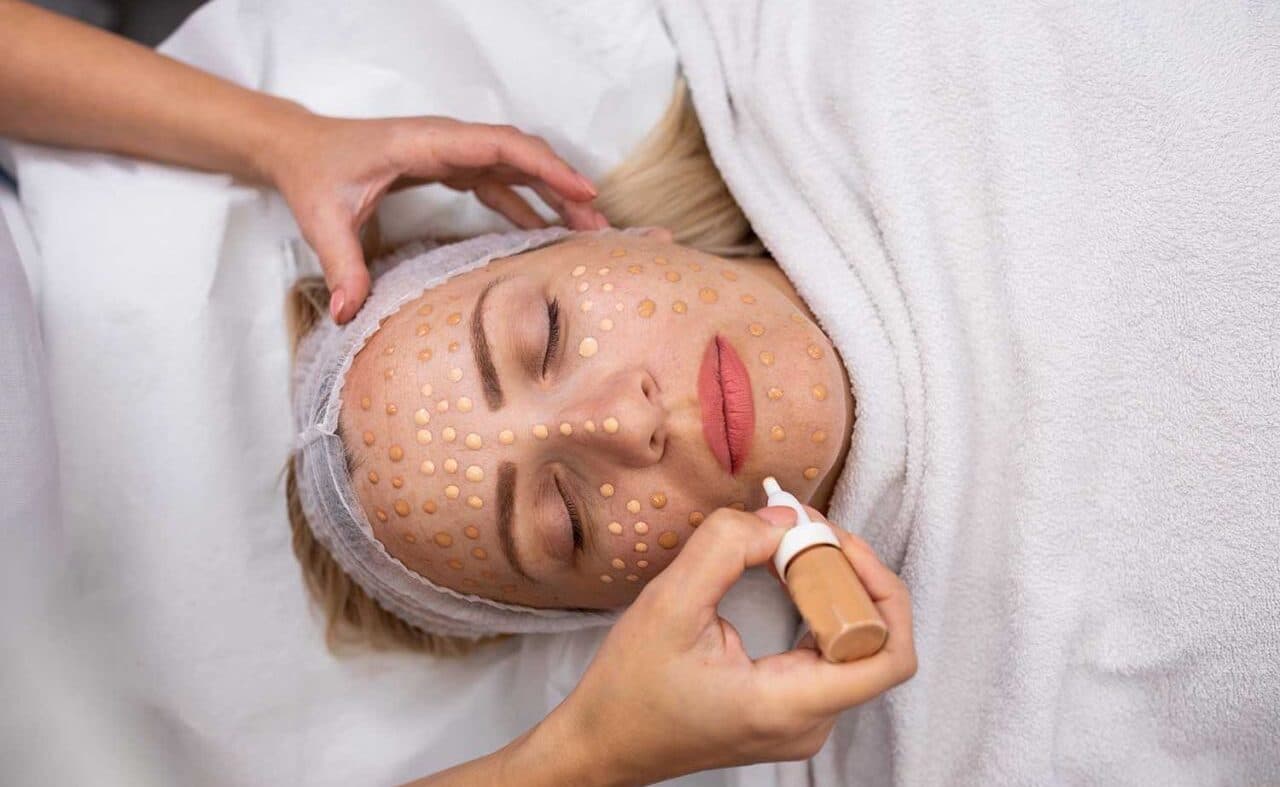
It is also worth being explicit about what BB Glow is not, because the framing around it in this market is often wrong. It is not a skin-whitening or fairness treatment. It does not bleach or lighten your natural skin colour. It places a tinted serum in the upper layers of the skin so that tone reads more evenly, and the effect fades as the skin renews itself. Undertone matters to that, which is why colour choices at this clinic are doctor-led — the same principle behind lip micropigmentation, where colour is matched to Indian skin undertones rather than picked from a chart.
What should make me contact the clinic?
Some tightness, redness and mild irritation in the first few days is expected and usually settles within three to four days. What our core asks you to report is the direction of travel: tell your doctor if redness is worsening rather than fading.
Ring the clinic if redness is getting worse instead of better, if irritation is still building after the first few days, or if anything about the treated skin concerns you. This is not something to work out for yourself from photographs online — call and let a doctor look. If in doubt, the call is the right move.
Where to start
With the assessment, not with a booking for a course. Consultation is ₹500, waived off against treatment, and it covers your skin type, your breakouts, the cause of your pigmentation and how many sessions your skin actually needs. Book an appointment at whichever of our two clinics you can reach on a Tuesday evening in traffic — that, genuinely, is the local factor that decides whether a fortnightly course gets finished.