
BB Glow Treatment on Indian Skin: What Changes and Why It Matters
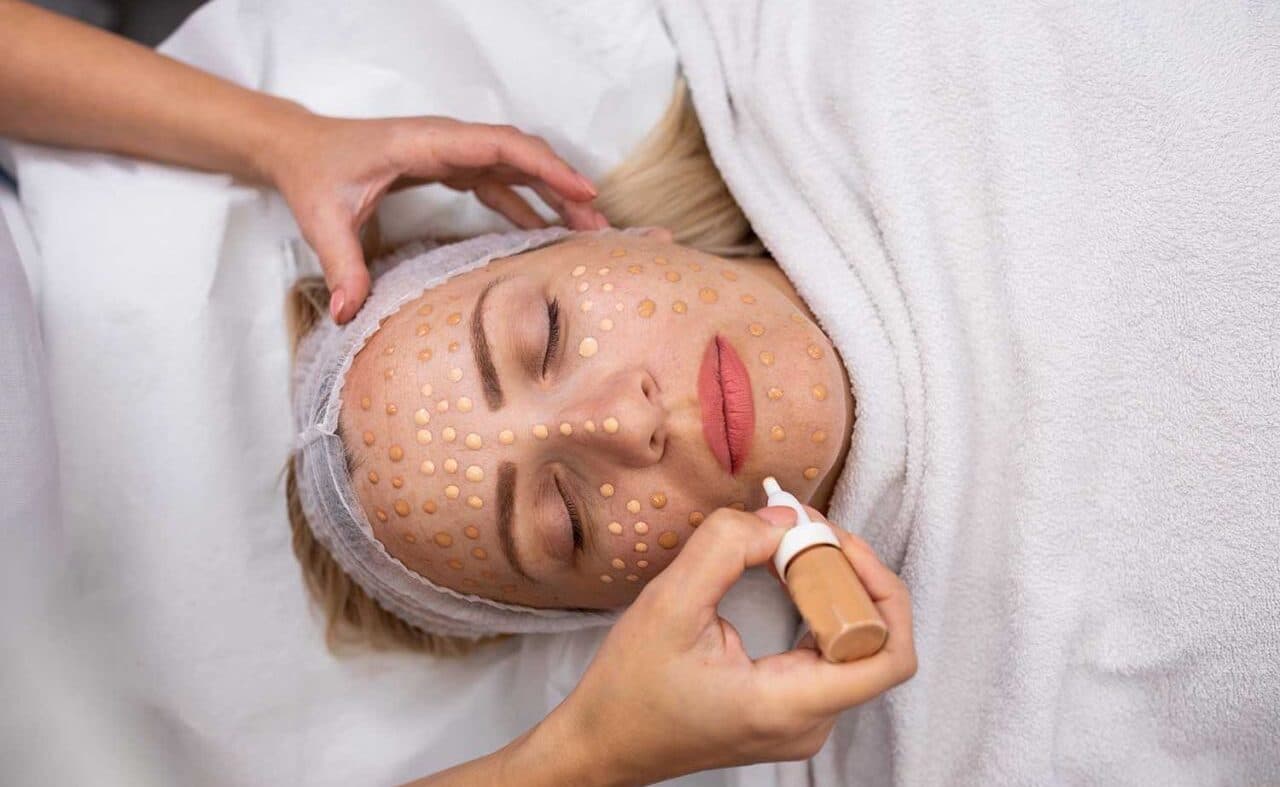
BB Glow does not lighten or bleach your skin. It places a tinted serum in the upper layers so uneven tone reads more evenly for several weeks. On deeper Indian skin tones, what genuinely changes is the risk of post-inflammatory pigmentation after needling, how the tint reads against your own undertone, and how carefully healing has to be managed.
Almost everything written and photographed about this treatment comes from markets where the average patient is several shades fairer than the average patient in Bangalore. The technique is the same. The margin for error is not.
Does BB Glow lighten my skin tone?
No, and this is worth settling before anything else. BB Glow does not bleach or lighten your natural skin colour. A tinted, hyaluronic-acid-rich serum is worked into the upper layers of the skin with a micro-needling pen, so patchiness and dullness read as softer and more uniform — and the effect fades as the skin renews itself.
That distinction is not a technicality. A treatment that evens out tone and a treatment that changes complexion are two different propositions, and only one of them is what BB Glow does. If what you want is a lighter skin colour, this is not that treatment, and a doctor here will say so rather than sell you a course.
What patients here usually describe wanting is narrower and more achievable: their bare skin to look more even, their tone to photograph less patchy, and to reach for foundation less often between sessions.
What does a deeper skin tone genuinely change about this treatment?
Three things: how likely your skin is to mark after being needled, how the tint sits against your undertone, and how much of your evenness problem is actually a pigmentation problem underneath.
BB Glow is not an energy-based treatment. There is no laser, no wavelength and no device setting being matched to your skin tone, so the questions that matter on a laser page do not apply here. What matters is that the pen makes very fine channels in the skin, and skin that carries more pigment tends to respond to any injury by making more of it.
Why does post-inflammatory pigmentation matter more here?
Because the skin's response to being injured is to produce pigment, and more pigment-active skin produces more of it.
Post-inflammatory hyperpigmentation is what happens when a spot, a scratch or a procedure leaves a darker mark behind after it has otherwise healed. It is common on Fitzpatrick IV to VI skin, which covers most patients at both our clinics, and it is the reason a doctor assesses your skin type and the cause of your pigmentation before any serum is chosen — rather than starting a course and finding out afterwards.
The single most useful thing you can tell your doctor at consultation is whether you mark easily. If a mosquito bite, a shaving nick or a healed spot tends to leave a brown patch that lingers for weeks, say so explicitly. It changes the risk calculation on any needling treatment, and it is information no examination picks up as reliably as your own history does.
How does the tint read on deeper skin?
The serum is a tint, not a foundation shade, and it works with what is already there rather than covering it.
Because the pigment sits in the upper layers of the skin rather than on top of it, what you see is your own tone with the patchiness softened — not a uniform colour laid over your face. On deeper skin that is a genuine advantage over makeup, which is notoriously hard to match on brown and olive undertones and tends to look either ashy or orange in photographs.
It also means the honest expectation is subtle. The core promise here is a more even-looking tone and less reliance on daily coverage, built gradually over four to six sessions about two weeks apart. It is not a dramatic change, and a clinic promising you one on any skin tone is describing something other than this treatment.
Is my pigmentation actually the right problem for this?
Often it is not, and that is the most important thing this article can tell you.
Deeper skin tones bring a particular set of concerns to a clinic — melasma across the cheeks and upper lip, post-acne marks that outlast the acne by months, darkening around the eyes and mouth, and tanning that sits unevenly. Those are pigment sitting in the skin. BB Glow changes how that unevenness reads; the tinted serum fades as the skin renews, so it is not working on the thing underneath.
That is not a criticism of the treatment — it is what it is designed to do, and for someone who wants their bare skin to look more even for a few weeks at a time it does it well. But if the same patches keep returning, the more useful conversation is about treating the pigment itself. A course of chemical peels works on surface pigment and texture, and your doctor may recommend that route, or a combination, instead. Where lip pigmentation specifically is the concern, that has its own treatment in lip micropigmentation and is assessed separately.
A doctor reviews the cause of your pigmentation at consultation precisely so this decision is made before you commit to a course, not after.
Does healing look different on brown skin?
The timeline is the same; what you are watching for is slightly different.
Expect tightness, redness and mild irritation in the first few days, usually settling within three to four days. On deeper skin, redness reads less as pink and more as a dusky, darker flush, which makes it genuinely harder to judge by eye whether things are settling or getting worse. That is a reason to go by timeline and symptoms rather than by how the mirror looks.
Treated skin is also more reactive to UV. Sunlight, steam rooms and saunas should be avoided for two weeks, and daily sunscreen is not optional. On skin that is already prone to pigment reactions, sun exposure in the fortnight after a session is the most avoidable way to end up with marks darker than the ones you came in for.
When should I contact the clinic rather than wait and see?
Ring the clinic rather than waiting if you get redness or heat that is spreading rather than fading after day two, swelling that worsens instead of settling, any weeping or crusting, or a fever. Also call if new dark patches appear in the treated area, or if the colour is still visibly uneven more than a week after a session.
Please do not try to work out what these mean yourself, and do not treat them at home with actives or scrubs — on pigment-prone skin that tends to make marking worse. Contact whichever clinic treated you, Indiranagar or Bellandur, and you will be seen; if it is out of hours, call at the start of the next working day rather than leaving it to the end of the week. Every one of these is uncommon, and all of them are easier to deal with early.
What should I raise at the consultation?
Bring the history the examination cannot see. Whether you mark after spots or minor injuries. Whether you have had melasma, and whether it flares in the sun or in pregnancy. Any skin treatment you have had in the last month. Everything you currently put on your face, retinoids and acids in particular. Whether you are pregnant or breastfeeding, since BB Glow is not offered then. Any allergy, because a known allergy to an ingredient in the serum rules the treatment out.
BB Glow is performed by a doctor here, always, and the assessment is where the plan is settled — how many sessions, how they are spaced, and whether this is the right route for your skin at all. The consultation is ₹500, waived off against treatment. Book an appointment at Indiranagar or Bellandur and bring your questions with you.