
At-Home Dermaplaning: The Worldwide Trend, Assessed for Indian Skin
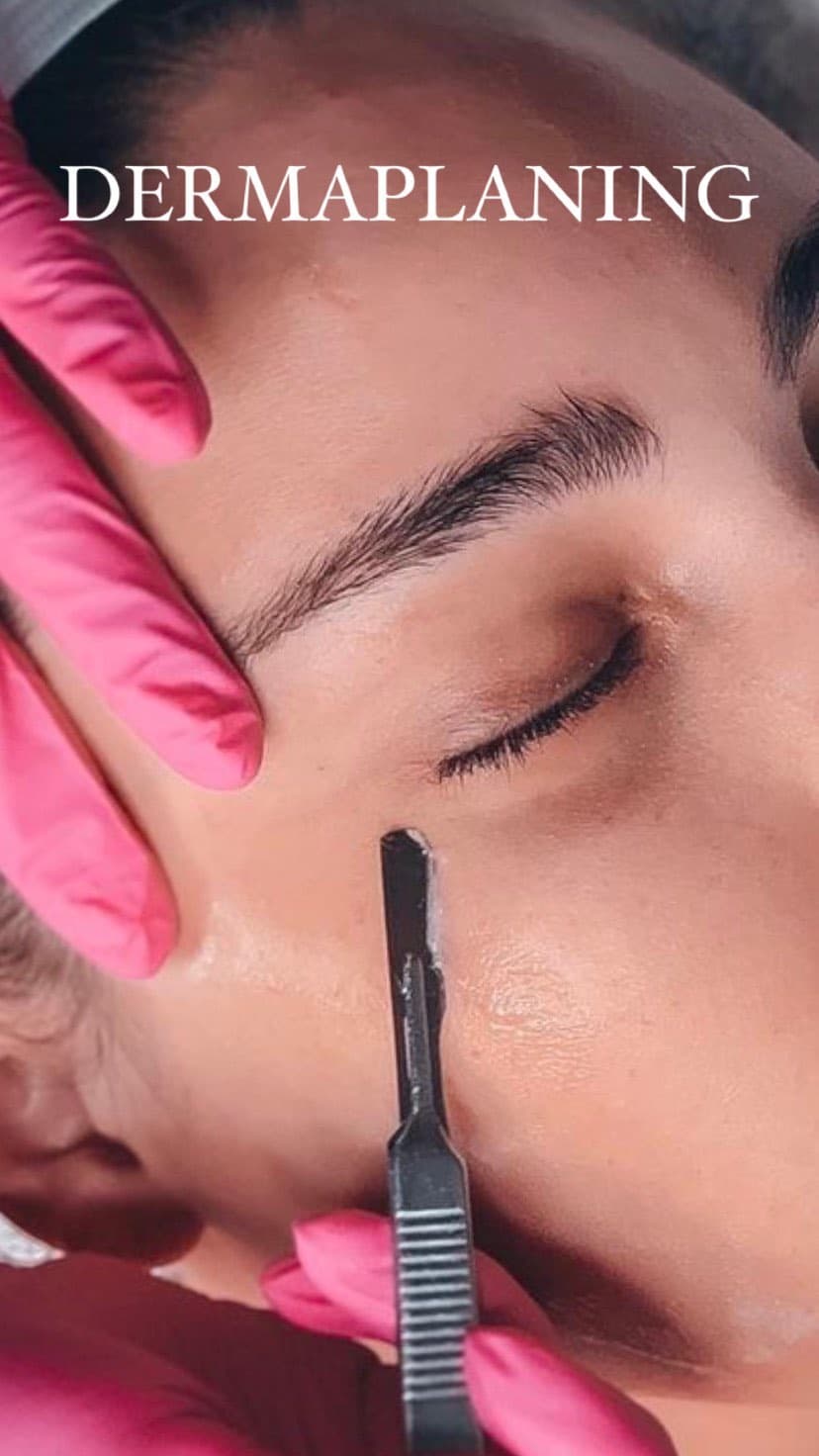
At-home dermaplaning tools do something real: drawn over dry skin, they remove fine facial hair, and makeup sits flatter straight away. What they do not reliably do is the shallow, angled lift of the dead cell layer that a clinic blade performs. Knowing where that line falls is the difference between a useful habit and an avoidable injury.
The trend has travelled widely, mostly through short videos where the whole thing looks effortless. Rather than dismiss it — "home tools do nothing" is simply not true — this post sets out what the tools genuinely achieve, where they stop, and which parts of the risk list actually matter for skin in Bangalore. Where a claim comes from the clinic's own dermaplaning page, that is said plainly.
What does an at-home dermaplaning tool actually do?
It removes fine vellus hair, and that alone produces a visible change. The clinic's own page is direct about why this matters: foundation catches on fine hair and flaking skin, and with both lifted, makeup applies evenly. That is the main reason patients book before an event, and it is also the reason home users see something on the first go and keep going.
So the honest version of the trend is not that it is a placebo. Hair comes off, the surface feels different under the fingertips, and products go on more smoothly. If your entire complaint is "my foundation looks patchy over peach fuzz", a home tool is doing something adjacent to what you want.
Where does the home version plateau?
At the exfoliation, which is the part that makes clinic dermaplaning a treatment rather than a grooming step. The distinction is set out on the treatment page: a razor is designed to cut hair at the skin's surface, whereas dermaplaning uses a surgical blade at a specific shallow angle to lift the dead cell layer as well. Angle and pressure are what convert the action from a shave into exfoliation.
That has a knock-on effect on the benefit most people actually want. Because a clinic session clears the dead surface layer, serums and actives penetrate far better afterwards — the routine you already own does more. A home tool that is mostly removing hair does not deliver that in the same way, which is why people often report the effect wearing thin after the first few uses: the visible win was the hair, and it was a one-off.
It also cannot do anything about the concerns that need a different mechanism altogether. Acne marks, uneven tone and congestion are not surface-hair problems, and no blade addresses them. A chemical peel works on marks and tone because pigmented surface cells are lifted and turnover is encouraged underneath, over a course a doctor sets. A Hydra Medi Facial clears congestion and infuses actives in one sitting. Reaching for a blade when the complaint is pigmentation is simply the wrong tool, at home or anywhere else.
Will the hair grow back thicker or darker?
No, and this is the single most repeated worry about the trend. The fine vellus hair on the face regrows exactly as it was — same texture, same colour. Cutting hair does not change the follicle. It can feel blunter for a few days because the tapered tip was cut straight across, which is where the myth comes from.
This is worth stating clearly because it is the one fear that stops people asking about dermaplaning at all, and it is not well founded.
What are the real risks of doing it yourself?
The list is short, specific and mostly about the assessment you skip.
Nicks, grazes and uneven patches. The treatment page names these as the common outcomes of attempting it at home, alongside irritation. In trained hands nicks are uncommon, and they are more likely on uneven or very reactive skin — which is exactly the skin least likely to get an honest self-assessment in a bathroom mirror.
Working over active acne. Drawing a blade across inflamed spots, pustules or cysts can spread bacteria and worsen them. This is why active inflammatory acne is a reason to postpone in clinic. At home there is nobody making that call, and the temptation is strongest precisely when the skin looks congested.
Skipping the contraindications. A clinician checks for active acne, broken skin, sunburn and cold sores before starting — all reasons to postpone rather than proceed. An active cold sore in particular is a reason the treatment is declined, and dragging a blade through that area is not a small mistake.
Damp skin. The face is cleansed and dried completely in clinic, because the blade needs a dry surface to work safely. In practice, home use often happens straight after a shower, which is the opposite of that.
Does it suit Indian skin and Bangalore's conditions?
Two things are worth separating: skin tone, and the local climate.
On tone, the dermaplaning page makes no skin-tone-specific claim, and neither will we. What the clinic's peel page does state — about peels — is that deeper pigmented skin is more prone to post-inflammatory pigmentation. Reading across from that is inference rather than an established fact about dermaplaning, and we would rather flag it as such than dress it up. The cautious position it supports is modest: avoidable irritation and avoidable nicks are worth avoiding rather than shrugging off, because inflamed skin settling is not the same thing as inflamed skin settling cleanly.
On climate, two points are concrete. First, sun. After dermaplaning the skin burns more easily for around a week, and in clinic sunscreen goes on before you leave — daily sunscreen is part of the treatment rather than an optional extra. Bangalore's daytime UV exposure is a year-round consideration rather than a seasonal one, so there is no low-risk month in which to skip that step. Home users, in our experience of what patients describe, very rarely treat sunscreen as part of the procedure.
Second, the humid stretch of the year makes the dry-skin requirement harder to meet. If the face is not dried completely, the blade is not being used the way it is meant to be used, and that is when the technique starts producing the uneven patches people complain about.
How often is too often?
In clinic, roughly every three to four weeks. That interval is not arbitrary — it matches the skin's own renewal cycle, and going more often exfoliates skin that has not finished rebuilding. Weekly home use, which the trend tends to encourage, is working against that cycle.
The result of a clinic session is visible immediately and holds for roughly three to four weeks, so the treatment rhythm and the result rhythm are matched. That is a reasonable benchmark to hold a home routine against.
What should I do if I have nicked myself, or my skin reacts?
Contact the clinic rather than deciding for yourself what it means. Get in touch if a nick is not healing over the course of a few days, if an area becomes increasingly sore, hot or inflamed rather than settling, if breakouts flare after you have used a blade, or if you have gone over a spot or a cold sore and are now unsure what you are looking at.
Please do not self-assess from search results. Skin you have just irritated looks alarming and often is not, and skin that needs attention sometimes looks unremarkable — you cannot reliably tell those apart on your own face, and nor can a blog post. Ring the clinic, describe what you are seeing, and let the team decide whether you should be seen. If something worsens outside clinic hours and you are concerned, seek medical attention locally rather than waiting.
Does the clinic sell home dermaplaning tools?
No. Dermaplaning is offered here as an in-clinic treatment performed by a trained clinician under doctor supervision, and that is the only version we can speak for. Mentioning that home tools exist is not a recommendation of any particular one, and we do not stock or supply them.
What would an in-clinic session add?
The assessment, the technique and the aftercare, in that order. A clinician checks for the things that mean not today; the blade is worked in short flat strokes section by section with the skin held taut, at the angle that makes it exfoliation; and a calming serum and sunscreen go on before you leave. The session takes 30 to 45 minutes and there is no downtime — you can return to work, and to makeup, the same day.
Dermaplaning is ₹1,999 per treatment, and the consultation is ₹500, waived off against treatment. If your skin is settled and the concern is texture, dullness or fine hair, it is often straightforward. If it is not, the assessment is where you find that out.
If you have been dermaplaning at home and are not sure whether your skin is tolerating it well, that is a perfectly good reason to book a consultation — bring what you have been doing and how often, and get a straight answer.