
Why a Drugstore Acne Routine Plateaus, and What Changes in Clinic
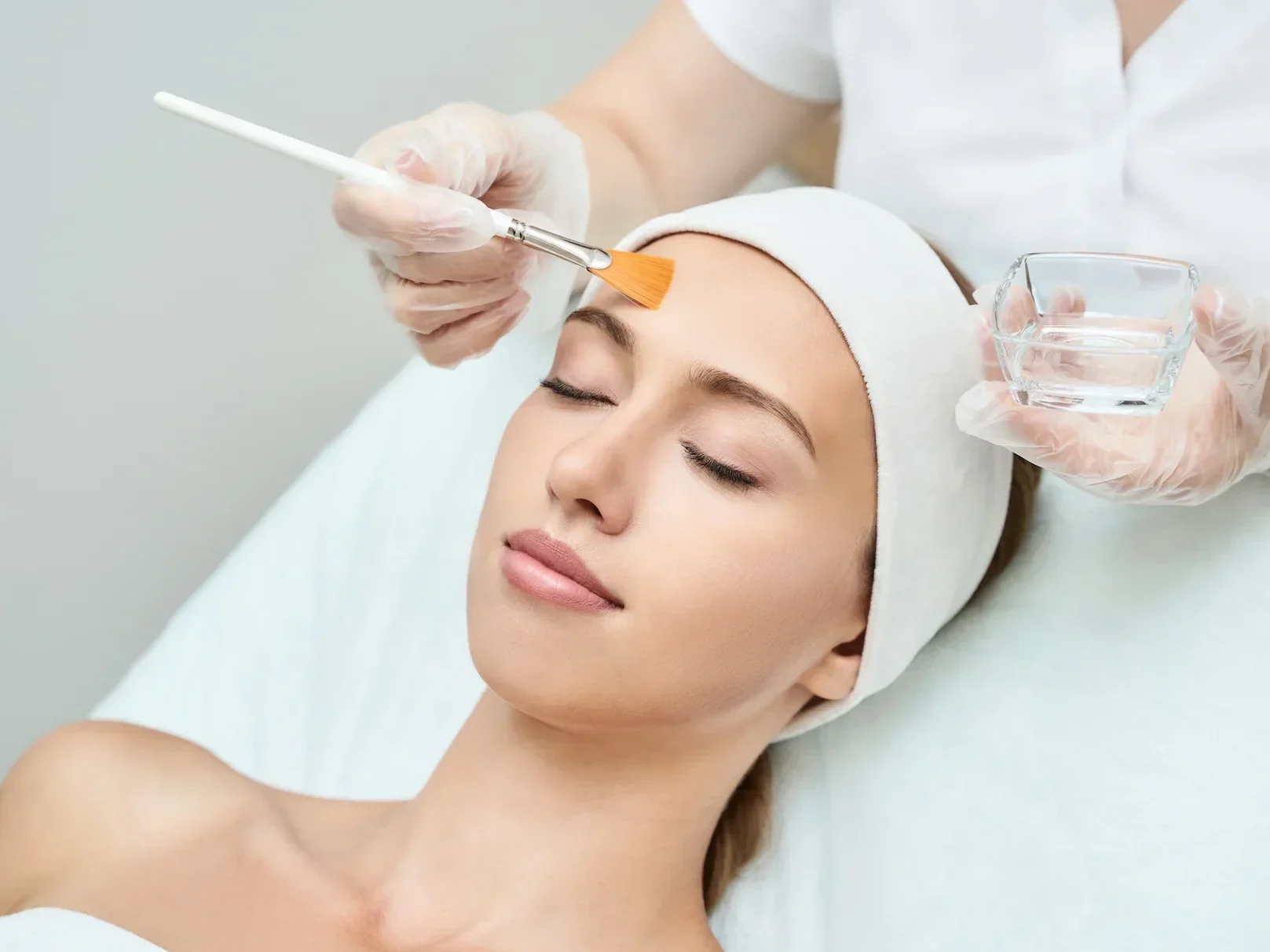
Most drugstore acne routines do not fail because the ingredients are useless. They plateau because the thing that decides whether an exfoliating agent helps or backfires is its strength and depth, matched to your particular skin — and that is a judgement nobody made when you picked the tube off a shelf.
There is a second reason, and it matters more on Indian skin than the packaging suggests. Something too strong for your skin type causes pigmentation rather than clearing it. So the instinct to escalate when a routine stalls is precisely the instinct that can leave you with marks to treat on top of the breakouts.
What does a clinical peel actually do for breakouts?
Two distinct things, and it is worth separating them because patients usually want both.
For active congestion: salicylic and other keratolytic peels clear the pore lining, which helps congested, breakout-prone skin settle between sessions.
For what breakouts leave behind: a Chemical Peel lifts pigmented surface cells and encourages turnover underneath, so post-acne marks and other shallow discolouration read lighter over a course. Removing the built-up dead layer is also what makes skin feel and photograph smoother, which is often the first change people notice after a single peel.
Those are different goals on different timelines. Marks fade across a course; texture can shift sooner.
Why does the doctor's selection matter so much?
Because depth and solution are the whole game. A peel that is too strong for your skin type causes pigmentation rather than clearing it, which is why the depth and the solution are selected after an assessment and a patch test — always, before the first full treatment.
Three depths exist: superficial, medium and deep, matched to your skin and your concern. Choosing between them is not a preference and it is not something to pick off a menu.
This is the specific reason it matters for our patients here. Deeper pigmented skin is more prone to post-inflammatory pigmentation, which is precisely why the peel is selected rather than chosen from a list. Peels are suitable for Indian skin when that selection is done properly and a patch test comes first — and the risk sits in skipping either step, whether in a clinic or in your own bathroom.
So when should I stop self-treating and get assessed?
When your routine has stopped making progress, and particularly before you decide the answer is something stronger.
That is the honest threshold. A plateau is information, not a reason to escalate on your own. If the last three things you tried each helped briefly and then stopped, the useful next step is an examination rather than a fourth product.
One thing to be clear about: this article is not here to tell you which kind of breakout you have. What you are actually dealing with is established by someone examining your skin, and that examination is what the strength and depth of any treatment gets matched to. Bring your history to it — what you have used, for how long, and what changed while you were using it. That list shortens the path considerably.
What does the course look like?
Superficial peels are usually repeated several times over a few months to build a result. Medium and deep peels need fewer sessions. Your doctor sets the schedule at consultation based on your concern and your skin type.
The solution itself stays on for roughly three to five minutes, varying by peel. So the appointment is short; the commitment is the course.
Downtime after a superficial peel is slight redness or flaking for a few days. Deeper peels take longer. And the aftercare genuinely shortens it: sunscreen, no picking, no scrubs.
Take the no-scrubs instruction seriously if your instinct when skin flakes is to exfoliate it. That instinct is the one to override.
How long do the results hold?
Long-lasting rather than permanent, ranging from months to years depending on the depth of the peel. Sun protection is the main thing that decides where in that range you land.
In Bangalore that is a year-round consideration rather than a seasonal one. The UV load here is steady, and between a two-wheeler commute and time waiting outdoors, treated skin gets exposed daily. Sunscreen is doing double duty on a peel course — protecting the result you paid for and reducing the pigmentation risk that made careful selection necessary in the first place.
What about facials?
Hydra Medi Facials sit in a different category, with their own page, their own protocol and their own timeline. Whether one belongs alongside a peel course, instead of it, or not at all is a question for the assessment rather than something to decide from reading — and a doctor who tells you a facial is not what your concern needs is being useful rather than unhelpful.
What to bring to the appointment
Write down every product you have used on your face in the past year, roughly how long you stayed with each, and what happened while you were using it. Note anything that left a mark, and anything that made your skin react. Mention whether marks from old breakouts are what bother you most, or whether it is the active breakouts themselves — the answer changes the plan.
To have your own skin assessed and the depth chosen for it, book an appointment at our Indiranagar or Bellandur branch. Come before you buy the next stronger product, not after.