
Why MNRF Is Planned as a Course, Not a Single Session
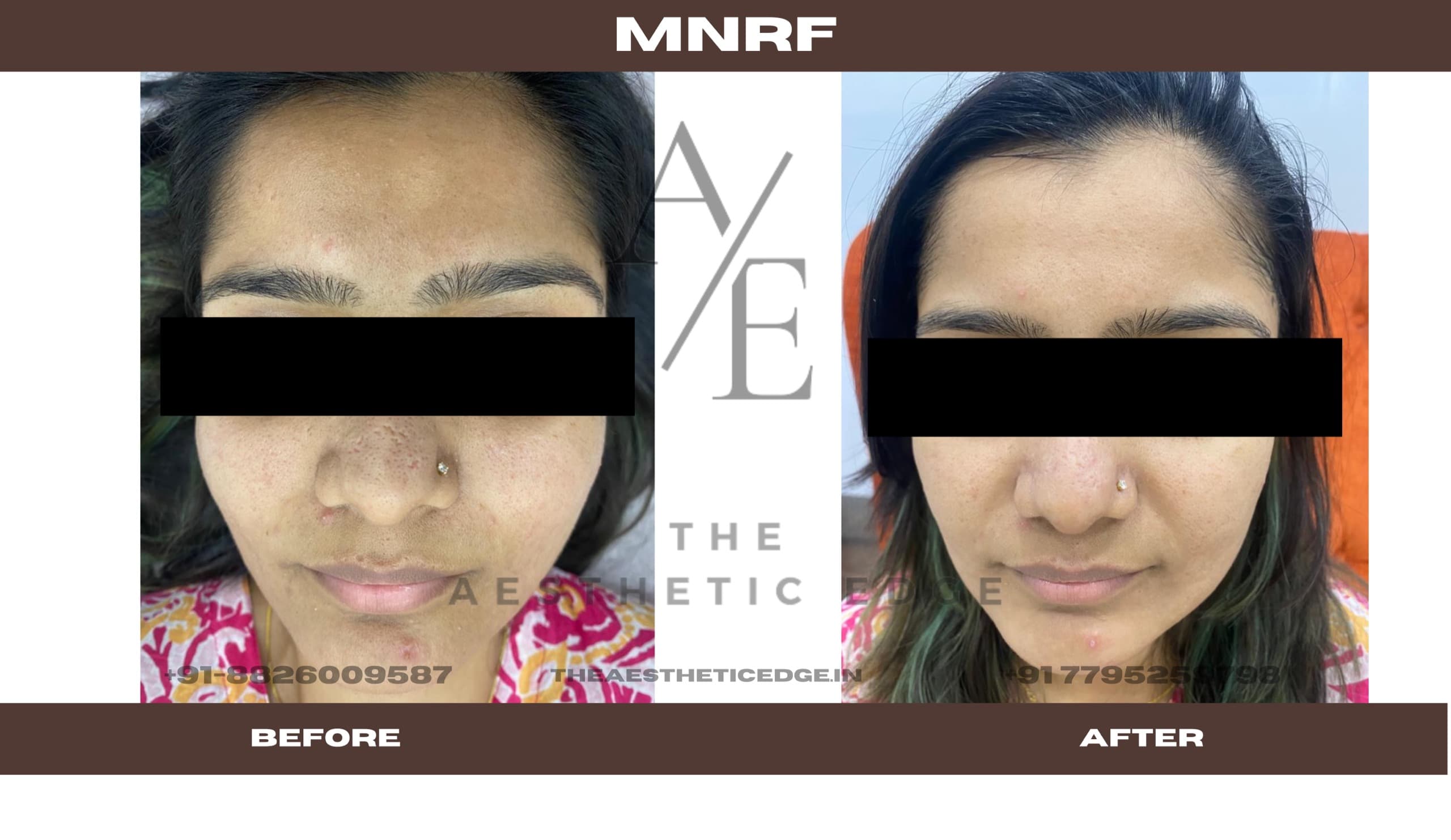
MNRF is planned as a course — typically three to four sessions — because the improvement comes from collagen being rebuilt, and rebuilding takes weeks to run after each treatment. One visit can produce visible change once it settles, but the depth of improvement people actually book for accumulates across the whole course. Your own number is set by the doctor after examining your skin.
Understanding that is worth more than it sounds, for two reasons. It stops you judging the treatment too early, and it gives you a way to tell a properly constructed plan from a pre-paid block of sessions sold before anyone has examined you.
What is happening in the weeks between visits?
Collagen remodelling — which is the entire point of the treatment, and it is not something that finishes on the treatment couch.
During an MNRF session, fine needles carry radiofrequency energy into the deeper layers of the skin, stimulating collagen at the level where acne scars, open pores and early laxity sit. That stimulation is the trigger, not the result. The skin then spends weeks laying down and reorganising collagen in response, which is why the treatment page describes the real result as building over weeks rather than appearing at the end of an appointment.
Book one session, look in the mirror a fortnight later and conclude the treatment did not work, and you have judged a process at roughly its first quarter.
How many sessions will a course actually run to?
Most plans run to three or four, depending on scar depth and on what is being treated. The doctor confirms your number at the consultation and tracks progress with photographs taken session by session.
Two things in that sentence do real work. The first is depending on scar depth — a shallow textural concern and a set of deep, tethered scars are not the same job, and pretending otherwise is how patients end up disappointed by a number they were quoted before anyone looked properly. The second is photographs. Progress on scarring is genuinely difficult to judge from memory, because you see your own face daily and change of this kind is gradual. Session-by-session photographs are what make the plan reviewable rather than a matter of opinion.
Why are the sessions spread out instead of run weekly?
Because the spacing is what allows the remodelling from the previous session to complete before the next stimulus is added.
The clinic's own description of MNRF ties these two facts together explicitly: sessions are spaced apart precisely because the result builds over the weeks in between. Compressing a course does not make it work faster; it stacks new inflammation on skin that is still resolving the last round, and it removes the information the doctor needs — namely, how your skin actually responded — before the next set of depth and energy settings is chosen.
This is not unique to MNRF. A course of microneedling with a Dermapen typically runs to six to eight sessions, spaced so that collagen remodelling can finish between them, usually across several months. A course of Q-Switch laser runs to around six sessions for overall rejuvenation, spaced so that your immune system can clear the fragmented pigment in between. Different mechanisms, same underlying logic: the biology sets the calendar.
Will I see anything after the first session?
Often, yes — early change can be visible after one treatment. But early change and final result are different things, and the gap between them is the reason the course exists.
It also helps to know what the first session feels like, because the recovery can read as more dramatic than it is. Numbing cream goes on first, and most patients describe warmth and pressure rather than pain, with brief discomfort over sensitive spots. Afterwards, redness and mild swelling are standard and usually settle within hours. Tiny crusts can appear at the needle points for a few days; they resolve on their own and must not be picked. Treated skin burns easily for a couple of weeks, so SPF 30 or higher and shade are part of the treatment rather than optional extras.
None of that is a reason to abandon a course after one visit. All of it is a reason to plan your first session with a couple of quiet days after it.
When should a package make me pause?
When it is sold before anyone has examined your skin.
This is the single most useful red flag in the category. A course of MNRF is a clinical plan whose length depends on scar depth, on the concern being treated and on your own response — none of which can be known from a phone call, a price list or a promotional offer. A pre-paid block of six or ten sessions quoted before an assessment reverses the logic: it fixes the number first and finds a justification afterwards.
Some other practices worth questioning, none of which is about any particular clinic:
A package with no review point. If nobody is comparing photographs and reassessing depth and energy between sessions, the sessions are being delivered rather than planned.
A course that cannot be shortened. If your scarring responds better than expected, a good plan ends early. If the money is already spent, the incentive runs the other way.
A session count quoted without a depth assessment. The MNRF assessment step exists to map scars, pores or laxity and to set the depth and energy for your skin. A number offered without that step has skipped the part that determines it.
Compressed scheduling to fit a promotion. A time-limited offer that requires sessions closer together than the doctor would otherwise space them is asking the biology to fit the marketing.
What should a properly constructed plan include?
A stated concern, a stated number of sessions with the reasoning behind it, a planned interval, a review point, and a clear position on what happens if your skin responds differently from expectation.
At this clinic, MNRF is performed by a doctor in every case, each session runs around sixty minutes, and the closing step of every visit is written aftercare plus a progress photograph. That last part is what makes the course auditable from your side as well as ours.
What does a course cost?
MNRF starts from ₹6,999 per session. The site quotes what one session costs rather than a course total, and that is deliberate: the total is a function of how many sessions your skin needs, which is a clinical judgement made at consultation and reviewed as the course runs.
The consultation itself is ₹500, waived off against treatment. It is also where the contraindications are screened — MNRF is not suitable during pregnancy or breastfeeding, where there is a keloid tendency, or where there is an active skin condition such as psoriasis or eczema in the treatment area.
If you would rather be given a plan than a package, book a consultation at Indiranagar or Bellandur and ask for the session count and the reasoning behind it in the same conversation.