
Are Dermal Fillers a Course of Sessions? What Actually Happens Over Time
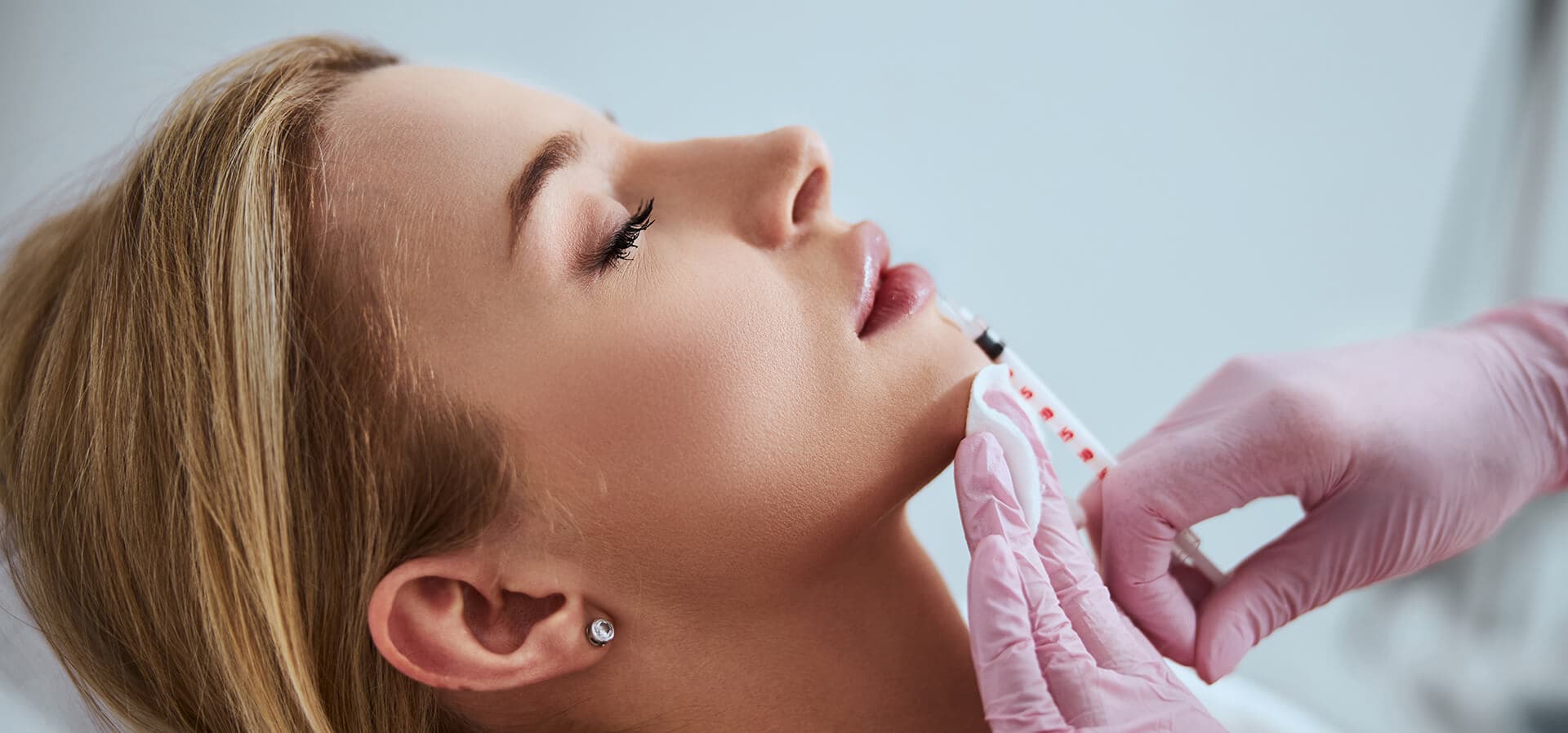
Dermal fillers are not usually a course of spaced sessions. The gel does its work the moment it is placed, so the visible change arrives almost immediately and settles fully within a day or two — there is no fixed number of sittings to complete. What a filler plan does have is a shape across time: the treatment itself, a review once everything has settled, and a return somewhere between six months and two years later when the product has metabolised.
That distinction matters commercially as much as clinically, and it is the reason a pre-paid block of sessions deserves a hard look before you pay for it.
Why does one appointment usually do it?
Because of how the treatment works. A filler is a gel placed beneath the skin to restore structure that has been lost. Nothing has to be stimulated, remodelled or built — the volume is physically there as soon as it is injected.
Compare that with treatments that rely on your own body doing the work afterwards. Those genuinely do need repeat sittings, because each one adds an increment to a response that accumulates. Filler skips the accumulation entirely. It is why the result is visible on the same day, and why judging it means waiting a day or two for swelling to subside rather than waiting six weeks to see whether anything happened.
Then why might a plan involve more than one visit?
Two reasons, and neither is a course in the packaged sense.
The review. Settling and review is a proper stage of this treatment, not an afterthought. Ice is applied for swelling, aftercare is explained, and the result is looked at again once it has actually settled. That is the point at which anything needing adjustment gets identified — and if the product has settled unevenly, hyaluronic acid fillers can be adjusted, or dissolved with an enzyme injection where that is the right call. Report unevenness rather than massaging it yourself.
Multiple areas. The injection takes roughly 15 minutes for a single area and up to about an hour where several are being treated, so more than one region can be handled in a sitting. Whether yours is done together or split across appointments is a decision made at your consultation, weighing what is being treated and how you would prefer to manage the recovery window. Ask which approach your doctor is proposing and why.
Neither of those is a package. They are stages of one plan.
What does the year after actually look like?
The effect holds roughly six months to two years, depending on which filler was used, which area was treated, and your own metabolism. That is a genuinely wide band, and where you land inside it is something your doctor can narrow for your specific plan far better than any average can.
When it fades, it fades gradually and your face returns towards where it started. Nothing obliges you to top it up. Choosing to stop is a complete option, which is worth knowing if what is making you hesitate is the idea of being locked into something.
If you do return, the assessment happens again. Faces change over a year, and what needed volume last time is not automatically what needs it now.
When is a package a red flag?
When it is sold before anyone has examined you.
Look at the order of operations in a proper filler plan. A doctor assesses your face and works out whether your concern is volume loss, movement, or skin quality. Only the first of those is a filler problem — lines that appear only when your face moves belong to a wrinkle relaxer, and loose tissue in the lower face may point towards a thread lift instead. Then the product, the plane and the volume are chosen for each injection site.
A pre-paid block of syringes reverses that entirely. It fixes the quantity before the question of whether you need any has been asked, and it commits you in advance to a treatment you might be told, honestly, that you do not need yet. There is no set age for starting fillers and no standard amount — it depends on what has actually changed in your face.
Three specific things to be wary of:
- A quantity quoted before an examination. Fillers come in pre-filled syringes, usually one millilitre, and how many your plan takes depends on the area and the volume that has been lost. A jawline and a lip are rarely the same number.
- A discount that only applies if you commit to several sittings up front. That is a pricing mechanism, not a clinical schedule.
- Any plan where the product is not named. The established hyaluronic acid families are Juvederm and Restylane, each with area-specific formulations such as Volbella and Kysse for lips. Which one is going into you should be settled at consultation, and the sealed box should be opened in front of you so you can check it against what was agreed.
How should the money actually work?
Treatment starts from ₹14,999 per treatment, and the plan is confirmed with you before anything is opened. That order — assess, plan, confirm, then open — is the whole safeguard, and a package bought in advance removes it.
The consultation is ₹500, waived against treatment. Paying that to be told your concern needs a different treatment is a better outcome than a discount on the wrong one.
What should you expect on the day itself?
Anaesthetic cream is applied for 30 to 45 minutes, the injection points are marked on your face, and the gel is placed. The session runs about 15 to 30 minutes once the consultation is behind you.
Swelling and redness in the first hours to days are very common, particularly around lips and eyes, and typically settle within one to two days. Bruising and tenderness at the injection site are a normal possibility — more likely if you take blood thinners or fish oil, both of which you should disclose — and generally clear within a few days. Most people recover fully within one to two days.
The rare complications are worth knowing because they shape who should be doing this. Infection, allergic reaction and blockage of a blood vessel are uncommon but real with any filler, and they are the reason the treatment belongs with a doctor who can recognise and manage them, in a clinic that stocks the reversal agent.
The short version
One session, one review, then a decision six months to two years later. Anyone selling you a fixed course before they have looked at your face is describing a payment plan, not a treatment plan.
Read the dermal fillers page for the full detail, then book an appointment and ask what your plan looks like across the next twelve months. A clear answer to that is a good sign.