
What Is Yuskin GFC Treatment? A Plain-English Explanation
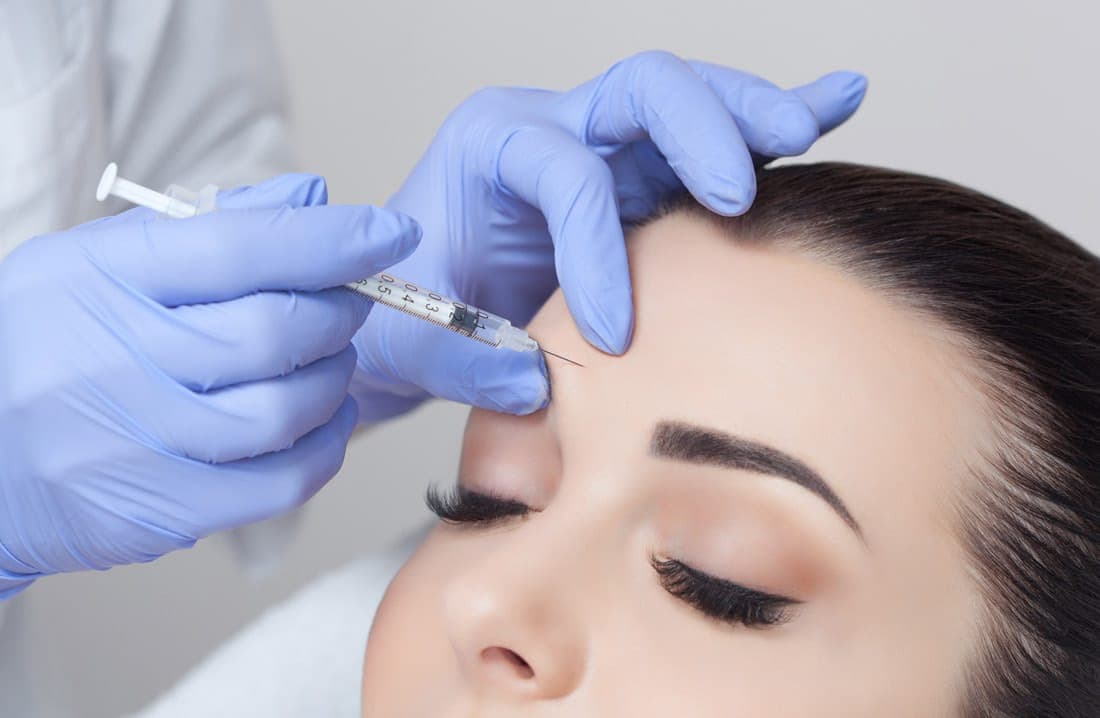
Yuskin GFC concentrates the growth factors from a small sample of your own blood and returns them where they are needed — into facial skin for texture, glow and early ageing, or into the scalp to support thinning hair. About 10ml of blood is drawn, roughly 4 to 5ml of concentrate is prepared from it, and a doctor places that concentrate through fine micro-injections. One preparation, two possible applications.
That last sentence is the part people find surprising, so it is worth taking slowly.
What does GFC stand for?
Growth Factor Concentrate. The name is a description of the material rather than a brand promise: it is a concentrate of the growth factors your own platelets release, isolated from a blood sample taken at the start of your appointment.
The preparation step is what distinguishes it. The process removes cells and debris, so what ends up in the syringe is a cleaner, more concentrated preparation than the platelet fraction used in standard PRP. If you have already looked at PRP, that is the practical difference in one line — and which of the two suits you is a decision for the consultation rather than something to settle from a website.
Where does the material come from?
You. That is the whole point of the category, and it is why reactions are rare: nothing synthetic is being introduced.
A doctor draws about 10ml of blood, roughly the volume of a routine blood test. That sample is processed in the GFC kit while numbing cream takes effect, and it yields somewhere between 4 and 5ml of growth factor concentrate. Nothing is added from a bottle. Everything injected came out of your arm twenty minutes earlier.
The blood draw is worth mentioning honestly, because it is the part people do not expect and occasionally the part they mind. It can leave a small bruise at the draw site, exactly as any blood test can.
Why is the same treatment used on skin and on hair?
Because growth factors do the same job in both places, and the difference is where the doctor puts them.
On facial skin, the concentrate supports collagen and repair. That translates into the things people actually come in describing — skin that looks tired and uneven when creams have stopped making a difference, or fine lines, dark circles and old acne marks that have started showing up in photographs.
On the scalp, the same concentrate is placed across thinning areas to support follicles that are weakening. The core claim there is a modest and specific one: GFC delivers a higher, more consistent growth-factor yield than standard PRP, so what reaches the follicle is more predictable session to session.
At consultation your doctor confirms which application you need — face, scalp, or both. It is a genuine question rather than a formality, and it is answered by looking at you rather than by asking which you would prefer.
What actually happens in a session?
Four steps, and around thirty minutes of chair time.
Assessment. The doctor confirms the application — face, scalp or both — reviews your history and rules out anything that makes the treatment inappropriate. This happens before anything is drawn.
Draw and preparation. About 10ml of blood is taken and processed in the GFC kit to produce 4 to 5ml of concentrate. Numbing cream goes on while that runs.
The procedure itself. Fine micro-injections of the concentrate across the planned facial zones or the thinning scalp areas.
Review. Progress is tracked with standardised photographs — for skin, across the session course; for scalp, at the three-month mark. Photographs rather than memory, because memory is unreliable about slow change and hair changes slowly.
How many sessions does a course take?
Most plans run four to six sessions, spaced by the doctor.
The two applications then diverge in how you judge them. Facial results build gradually across the course, so the comparison is between the start and the end of it. Hair is slower and is assessed honestly at three months against the photographs taken on day one, rather than promised in advance at the consultation.
That distinction matters more than it sounds. A scalp protocol that is reviewed at three months is one where somebody has committed to telling you whether it is working, which is not the same as one where the answer is decided before you start.
What are the side effects?
Modest and short, and there are three worth knowing about.
Redness and small bumps at the injection points are common for a day or two, wherever the concentrate has been placed. Mild soreness, or occasionally a headache, is possible after scalp sessions and settles quickly. And the blood draw can leave a small bruise, as described above.
Because the concentrate comes from your own blood, allergic reactions are rare. If anything at an injection site is getting worse rather than better — pain increasing, or redness spreading rather than fading — contact the clinic and let the people who treated you look at it, rather than waiting to see.
What can it not do?
One clear limit, stated plainly on the treatment page: it does not work on completely bald areas.
Like PRP, GFC supports follicles that are still present and still alive. Where an area has been bare for a long time there is nothing left to support, and a doctor who examines your scalp will tell you that at the consultation rather than after four sessions. No one can promise regrowth from a treatment that depends on how much active follicle remains.
The same honesty applies on the face. Growth factors support texture, fine lines, dark circles and acne marks. They are not a volumising treatment and they do not change the shape of anything.
Is this the same as the clinic's GFC hair treatment?
Not quite, and the names make that genuinely confusing.
GFC Hair Loss Treatment is a scalp-only protocol, with its own aftercare and its own maintenance schedule. Yuskin GFC covers facial skin as well as scalp. Both start from the same idea and the same blood draw, so if you have been told you are having "GFC" without being told which, it is a fair question to ask at your next appointment.
Where to start
The full protocol, session figures and contraindications are on the Yuskin GFC treatment page. When you are ready, book a consultation — it is ₹500 and is waived against treatment, and the price of a course is quoted there, once a doctor knows whether they are treating your face, your scalp or both.
Come with the concern rather than the acronym. Whether growth factors are the right tool at all is the first thing the appointment is there to establish.