
What Is Wrinkle Relaxer? A Plain-English Explanation
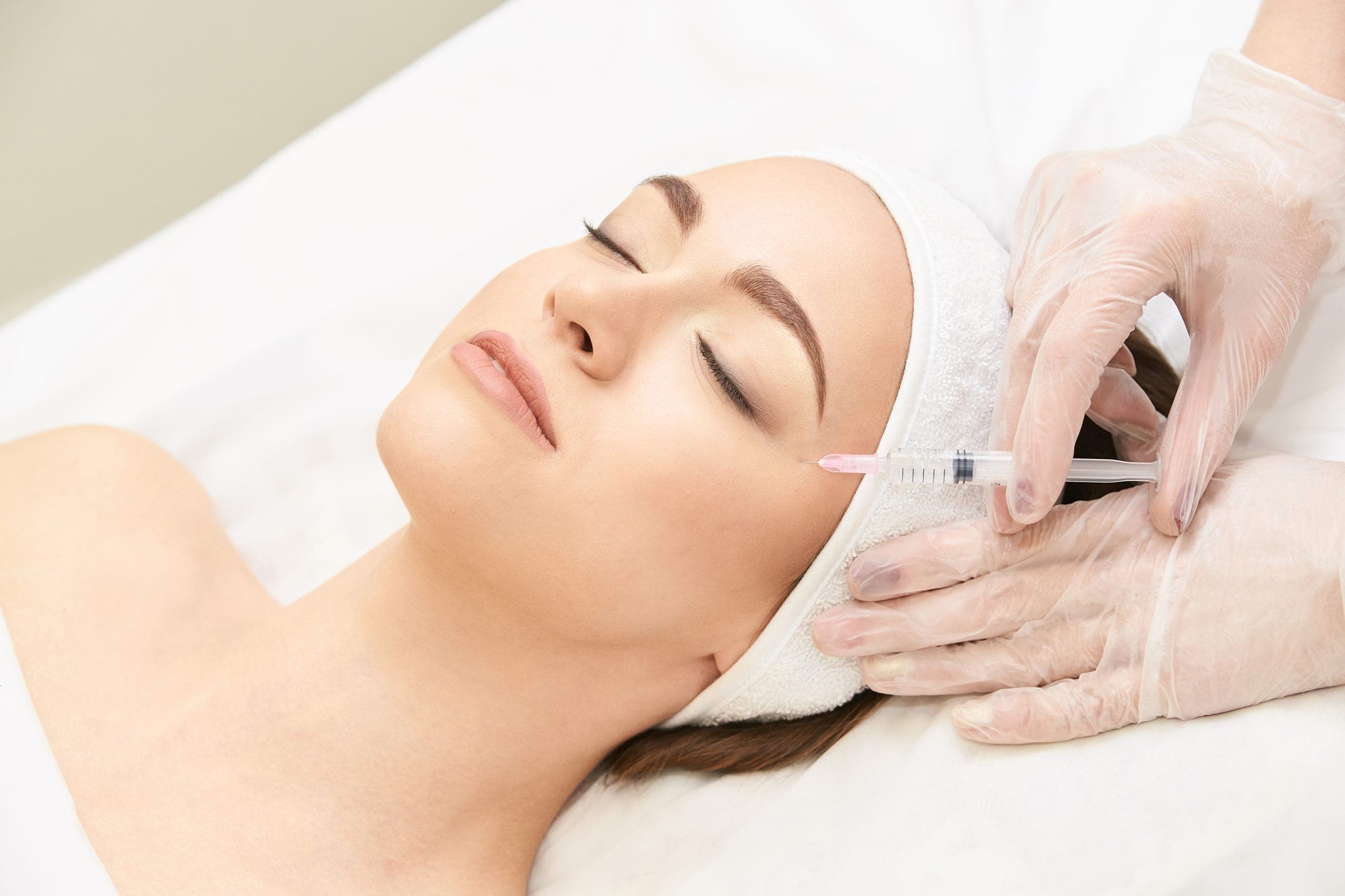
A wrinkle relaxer is a botulinum toxin injection that eases the muscle contractions behind forehead lines, frown lines and crow's feet. Relaxing the movement lets the skin above it crease less. The same injection has recognised medical uses too — jaw clenching, tension headaches and excessive underarm sweating among them. It is a single-sitting treatment, and the effect is temporary.
That is the whole definition. The rest of this article is the detail people actually want next: what it works on, what it does not, and what the appointment is like.
What does it actually do?
Some lines on a face are there because of movement. Every time you raise your brows, frown or squint, a muscle underneath contracts and the skin above it folds. Do that several thousand times a week for years and the fold starts to stay put after the expression has gone.
A wrinkle relaxer works on the muscle, not on the skin. By easing that repeated contraction, the skin above it creases less. It is not filling the line in, and it is not resurfacing anything — it is turning down the force that keeps re-creating it.
Which is why the treatment is described here as a plan rather than a dose: the doctor decides the areas, the injection points and the amount after examining how your face and jaw actually move, and after taking a full medical history.
Which lines does it work on — and which does it not?
This is the most useful thing to understand before you book anything, because three quite different problems look identical in a bathroom mirror.
- Movement lines — forehead lines, the frown lines between the brows, crow's feet. These come from muscle contraction, and they are what a wrinkle relaxer addresses.
- Volume loss — hollowing and creases that are there whatever your face is doing. Relaxing a muscle does not restore volume.
- Skin quality — texture, pore size, surface dullness. A different problem again, needing different treatment.
Our own consultation step exists precisely for this: muscle movement, volume loss and skin quality all look similar in a mirror and need different treatments. If someone offers to treat all three with one injection without examining you, that is worth questioning.
Is it the same as a dermal filler?
No, and they are close to opposites in mechanism.
A wrinkle relaxer reduces muscle movement, so it suits lines caused by expression. A filler adds volume, so it suits hollowing and static creases. Some patients need one, some need the other, and some need both — which is a consultation decision rather than something to settle in advance.
What about Botox and Skin Botox — are those different things?
You will meet several names for treatments in this family, and two of them have their own pages here.
Our Botox page describes a non-surgical injectable that temporarily relaxes the muscles behind expression lines, softening forehead lines, frown lines and crow's feet — the same mechanism described in this article, and likewise assessed, dosed and injected by a doctor.
Skin Botox is genuinely different, and the difference is depth. Also called micro-Botox or mesobotox, it places heavily diluted botulinum toxin into the most superficial layer of the skin rather than into the muscle beneath it. The aim there is texture, pore size and oiliness — not the softening of expression lines. People who want smoother-looking skin without their expressions changing are usually describing that treatment rather than this one.
What happens at the appointment?
Four stages, and the first and last are the ones that matter most to the result.
- Consultation and history. The doctor confirms what is actually causing your concern, and takes a full medical history.
- Marking the injection points. Points are mapped for your own muscle anatomy and marked on the skin. Numbing cream is left on for 30 to 45 minutes if you would like one.
- The injections. Botulinum toxin is placed with a fine needle at each marked point. Most people describe it as a quick sting rather than pain.
- Follow-up. Once the effect has fully settled, the doctor reviews the result and adjusts individual points if anything has taken unevenly.
The injecting itself takes about 20 to 30 minutes, plus numbing time. There is no downtime for most patients — normal activity the same day, avoiding exercise and lying flat for the first few hours.
How soon will I see it, and how long does it last?
Not immediately, which surprises people who expect an injectable to work like a filler.
Most patients begin to notice a change from about four to seven days, and the result settles by around two weeks. That settling period is why the follow-up appointment is scheduled where it is — judging the result on day three and asking for more is how people end up overdone.
The effect is temporary. For cosmetic areas it typically lasts around three to six months, after which normal muscle movement returns and repeat sessions are usually spaced at that interval.
Will it freeze my face?
A frozen look comes from over-dosing rather than from the treatment itself.
Dosing here is deliberately conservative and reviewed at follow-up, so the aim is softer lines with expression intact. It is also a reasonable thing to say out loud at your consultation — plenty of our patients open with exactly that, and it is a legitimate instruction to give your doctor, not a fussy one.
What are the side effects?
Four are worth knowing about, none of them exotic:
- Short-lived redness or small bumps at the injection points, usually gone within an hour or two.
- Bruising, particularly around the eyes or if you take blood thinners. Generally clears within a few days.
- A mild headache in the first day or two after treatment of the upper face. Usually brief, and settles on its own.
- Uneven settling — occasionally one side takes more than the other, or a brow sits slightly differently. This is what the follow-up visit is for; small adjustments are made then.
Is it only a cosmetic treatment?
No, and this is the part most people have not heard.
Botulinum toxin has established medical uses. This clinic offers it for jaw clenching and grinding — injected into the masseter muscle, it can reduce the force of clenching, which many patients find eases jaw soreness and tension headaches, and the lower face softens as the muscle relaxes. It is also used for excessive underarm sweating, where injections can meaningfully reduce sweat production for several months at a time.
Whether your particular concern is one it can help is something your doctor will tell you at consultation.
Is it right for me?
The honest answer is that it depends on whether your lines are movement lines, and that is a five-minute examination rather than a guess.
We do not publish a starting figure for this treatment, because there is no fixed dose to attach one to — the areas and the number of points are decided after seeing how your face moves. Our consultation is ₹500, waived against treatment, and you will leave it knowing whether this is the right treatment for what is bothering you, or whether something else is.
Book an appointment if you would like that assessed properly.