
Preventative Injectables in Your Twenties: The USA Trend, Assessed for Indian Skin
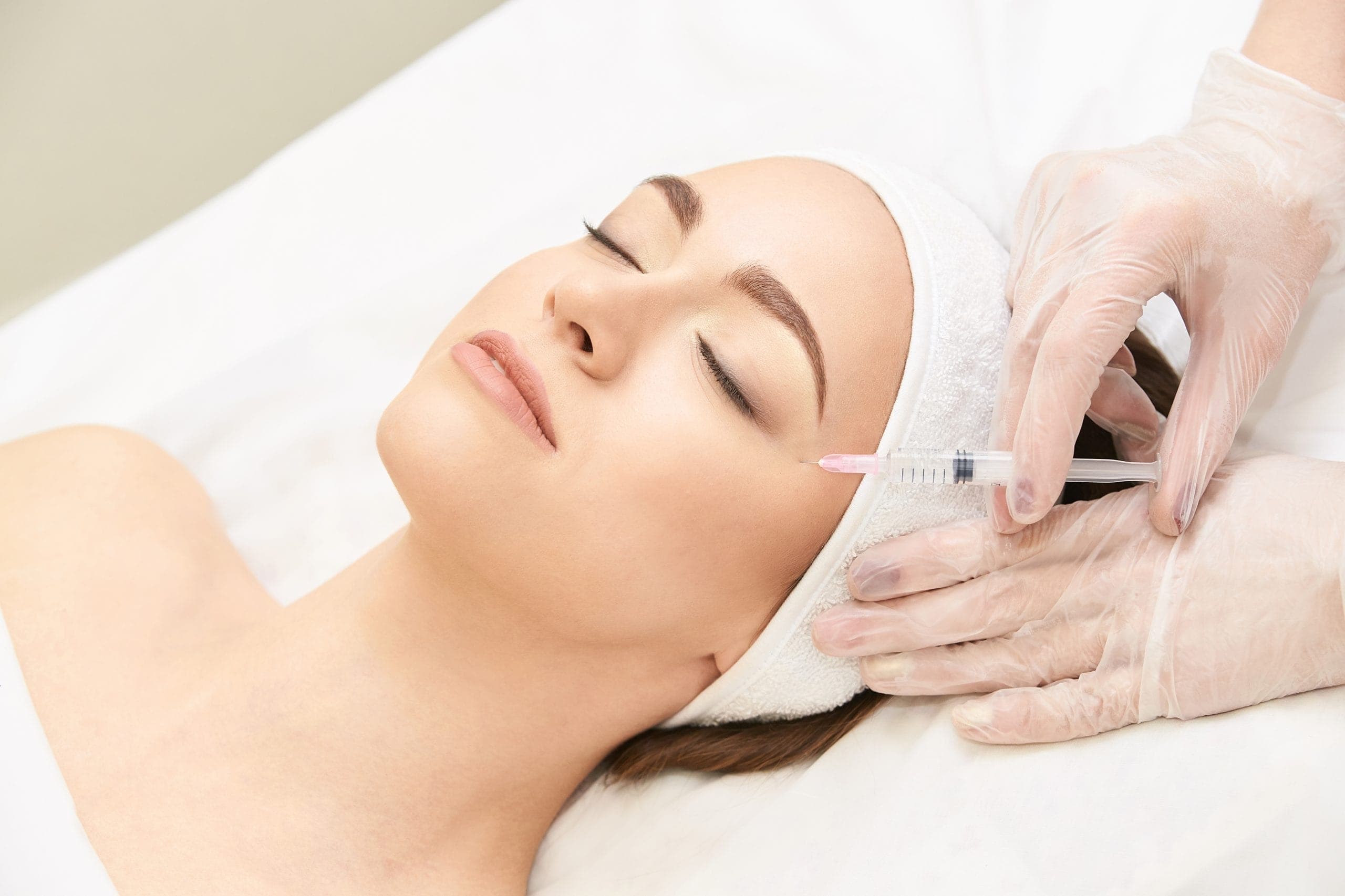
"Preventative injectables" is a marketing frame rather than a treatment. The idea is that relaxing facial muscles before lines appear stops them forming later. This clinic makes no such claim. What a wrinkle relaxer treats is lines caused by movement, so the honest test in your twenties is not your age — it is whether you already have one.
That distinction is the whole article. Everything below is an attempt to give you enough to decide with, rather than a reason to book.
What does the trend actually claim?
Two things, and they are worth separating.
The modest claim is that a line which has not yet set into the skin is easier to soften than one that has. The ambitious claim — the one that sells — is that treating a face at 25 buys you a face at 45 that never developed the line at all.
The first is a statement about how wrinkle relaxers work, and it is uncontroversial in this sense: the treatment eases the muscle contractions behind forehead lines, frown lines and crow's feet, and the skin above a muscle that is contracting less creases less while the effect lasts. The second is a claim about the next twenty years of your face, and it is not one this clinic's own treatment page makes anywhere.
Is there evidence that starting young stops lines forming?
Not that we publish, and we are not going to borrow someone else's.
What this clinic documents is short-horizon and specific: results begin to show from about four to seven days, settle by roughly two weeks, and the effect on cosmetic areas typically lasts three to six months before normal muscle movement returns. Nothing in that describes a permanent change to how your skin ages. The effects are explicitly temporary.
So if you want a number for how much line-formation an early start prevents over a decade, nobody here will give you one, because we do not have it. A clinic that hands you a figure for that has almost certainly taken it from marketing rather than from its own records.
What is the honest test, then — my age or my face?
Your face, and specifically what it does when it moves.
A wrinkle relaxer suits lines caused by expression. That is the criterion the treatment page uses, and it is also the criterion that separates the people this helps from the people it disappoints. The clinic's own description of when to consider it is blunt: expression lines have started to stay on your face after the expression has gone.
If you can only see the line while you are frowning, and your forehead is smooth the moment your face relaxes, then you are describing normal facial movement rather than a line. If the crease is still visible when your face is completely still, that is a static line, and a relaxer alone may not be the answer — a filler adds volume and suits hollowing and static creases, which is a different job. Some patients need one, some need both.
You are twenty-six years old or you are not, and it changes nothing about which of those two you are looking at in the mirror.
Does the clinic treat a twenty-something differently?
Not by a rule about age, no. The process is the same one everybody gets, and it starts before any injection: the doctor confirms what is actually causing your concern, because muscle movement, volume loss and skin quality all look similar in a mirror and need different treatments.
The dose is also not a template. Points are mapped for your own muscle anatomy, marked on the skin, and the areas and dose are decided after the doctor has watched how your face and jaw genuinely move and taken a full medical history. Then there is a follow-up once the effect has settled, where individual points are adjusted if anything has taken unevenly.
That assessment is the part a trend cannot give you, and it is the part most worth having if you are young and unsure. It is entirely possible to be told that what is bothering you is not a muscle problem.
What am I committing to if I start now?
Repetition, and it is fair to think about that before the first appointment rather than after.
The effect is temporary and typically lasts three to six months for cosmetic areas. Starting a decade earlier than you otherwise would means a decade more of that cycle. This clinic publishes no full-course figure and no annual figure, and the cost of a session depends on the areas and the dose your doctor decides you need — so the number that matters to you personally is one you get at consultation, not from an article.
None of that is an argument against starting. It is an argument against starting casually.
Does the trend translate to India at all?
The mechanism does. Melanin sits in the skin; the muscle this injection targets is underneath it. That is genuinely unlike a light-based device, where skin tone sits at the centre of the settings.
Where the trend translates less well is in what people in their twenties here usually walk in wanting. In the conversation at this clinic, a younger patient far more often opens with texture, pore appearance or mid-day oiliness than with a frown line — and that is not what a wrinkle relaxer is for. Skin Botox is the page for that complaint, and it is a different treatment placed differently in the skin, not a lighter version of this one. If you arrived at a wrinkle relaxer because it was the injectable you had heard of, that is worth saying out loud at the consultation.
The other thing that travels badly is the American assumption that this is a retail decision. Botulinum toxin is a prescription medicine here, and the assessment is not a formality attached to the sale.
What should I raise, and when should I call?
Tell the doctor about every medication you take, blood thinners included, and about any planned pregnancy or breastfeeding.
Afterwards, expect short-lived redness or small bumps at the injection points, usually gone within an hour or two. Bruising is possible, particularly around the eyes or if you take blood thinners, and generally clears within a few days. A mild headache in the first day or two is reported by some patients after treatment of the upper face and usually settles on its own. Occasionally one side takes more than the other, or a brow sits slightly differently — that is what the follow-up visit exists for, and it is corrected there rather than lived with.
If anything worries you in the days afterwards, contact the clinic rather than waiting to see whether it passes.
How to ask for it without asking for a trend
Do not open with the phrase "preventative Botox". Point at the line, tell the doctor when you can see it — only when you move, or all the time — and say what you are hoping will be different. That is assessable. An age is not.
A consultation is ₹500, waived against treatment, and includes the examination that decides whether an injectable is the right tool for what is bothering you or whether something else is. Book a consultation when you want a straight answer about your own face.