
"Korean HydraFacial" — What the Term Actually Means Before You Book One
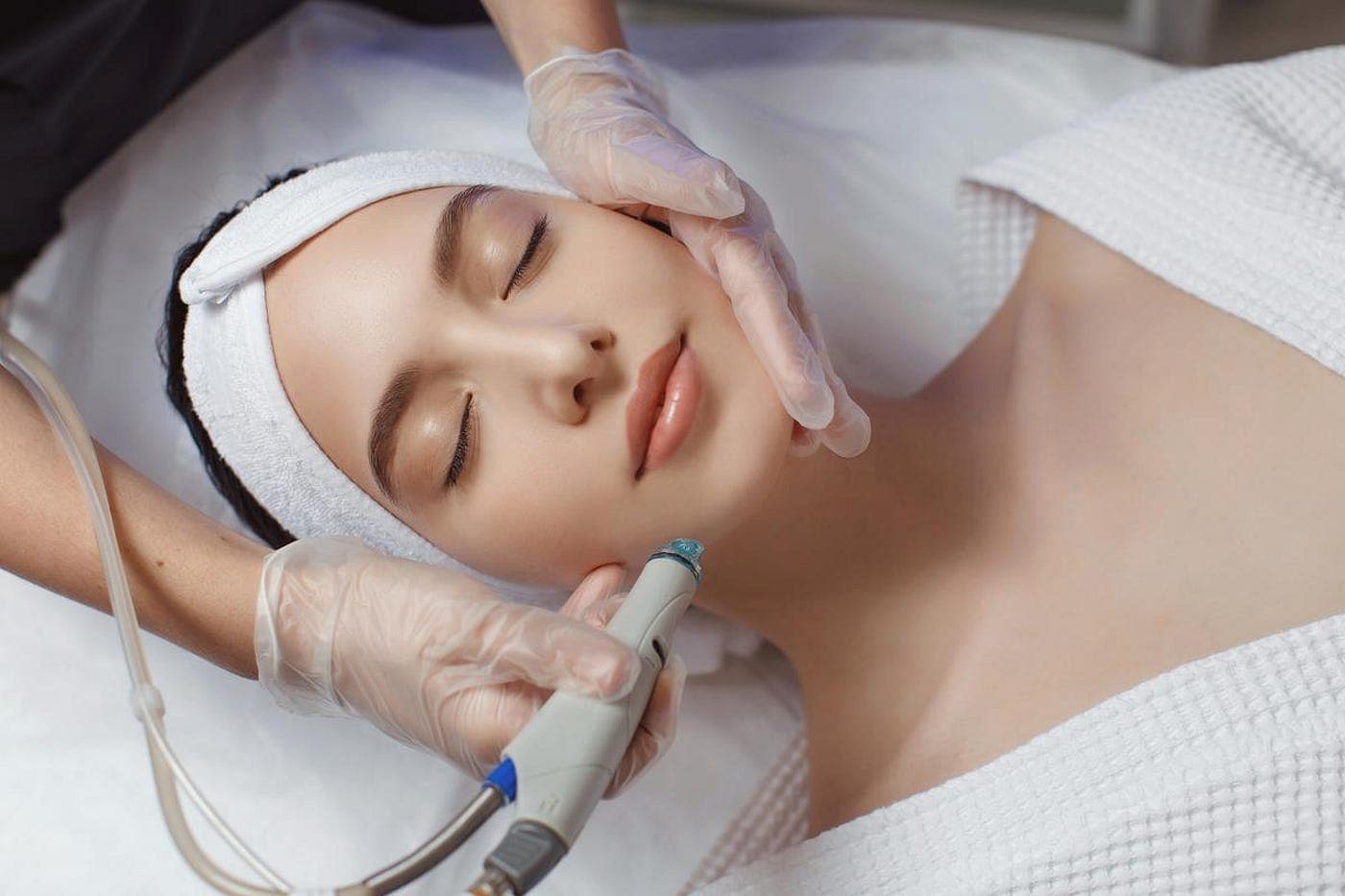
A "Korean HydraFacial" is not a separate device or a different technology — it is a standard HydraFacial extended into a longer, fourteen-step protocol built around the central idea of Korean skincare: that a healthy barrier and thin, repeated layers beat one strong treatment. The machine is the same medical-grade device, the supervision is the same doctor-led setup, and what changes is everything layered around it — sequenced serum infusion, a cooling mask, LED and massage.
If you have been searching the term and finding contradictory answers, that confusion is understandable, because the name describes a protocol, not a product. This post explains exactly what happens in a Korean HydraFacial session, how it differs from the standard version, and — just as importantly — what "glass skin" does and does not mean, so you book it for the right reasons.
What makes a HydraFacial "Korean"?
The layering. Korean skincare's defining habit is applying several thin, light steps in sequence rather than one rich, heavy one — because thin serums applied in sequence absorb better than a single concentrated product. The Korean HydraFacial takes that idea into the treatment room: instead of the standard three-stage session, the protocol runs fourteen steps, with serums infused in layers and the session finishing with a cooling mask, LED and lymphatic massage.
That is why the appointment is longer — 75 to 90 minutes, against roughly 45 for a standard Hydra Medi Facial. It is a longer appointment, not a different machine, and any clinic implying you are paying for new technology is describing it wrongly.
The philosophy also shapes how the skin is treated along the way. Exfoliation is deliberately gentle, and the protocol closes with barrier support — which is why reactive and sensitive skin generally tolerates this better than a stronger single-step treatment. Congestion is cleared by the device's suction rather than manual squeezing, so blackheads and surface build-up lift away with far less trauma to the skin. Nothing is injected, and there is no downtime at all: you can put on makeup and go back to work the same day, with any mild redness settling within an hour or two.
Will I actually get "glass skin"?
You should expect visibly brighter, smoother, more even-looking skin the same day. What you should not expect is the poreless finish you see in edited photos and short videos — that is lighting and retouching as much as it is skincare. Pores do not close. What actually happens is simpler and more honest: a cleared, evenly hydrated surface reflects light evenly, and that even light reflection is the whole glass-skin effect. Texture creates the glow, not a product sitting on top of the skin.
This matters for anyone whose reference point is a filtered reel. Anyone promising flawless skin from a facial is overselling it, and a doctor-led clinic should tell you so before you book. What the protocol genuinely delivers — dewiness, smoothness, an even tone that photographs well — is real, same-day, and particularly noticeable on Indian skin tones, where uneven texture and dullness tend to show as patchiness under harsh light rather than as redness.
Bangalore adds its own argument for the treatment. Between the traffic on the Outer Ring Road, construction dust, and days that swing from bright sun to sudden rain, skin here collects surface build-up faster than most people realise — the kind of congestion that makes a complexion look tired even when nothing is visibly wrong. A facial whose first job is clearing and evenly rehydrating the surface is well matched to exactly that.
How is it different from a plain HydraFacial — and which should you book?
A standard Hydra Medi Facial covers cleanse, exfoliate and oxygenate in one sitting of around 45 minutes, and for most people on a maintenance schedule that is genuinely enough. The Korean protocol adds the layered serum infusions, the cooling mask, LED and lymphatic massage on top, which is what stretches the session to 75–90 minutes.
The practical way to choose: if you want regular upkeep and your skin is uncomplicated, the standard session does the job. The fourteen-step version earns its extra time in two situations — an event on the calendar, where the same-day glow is the point, and skin that needs the extra barrier work, such as sensitive or easily reactive skin that has not coped well with stronger one-step treatments. It suits all skin types, including sensitive skin, and every session at our clinics includes complimentary LED light therapy, worth ₹1,299 on its own.
For skin that needs hydration held deeper and for longer than any facial can manage, a different category of treatment — such as Skin Boosters — is worth discussing at a consultation, since that is an injectable approach with its own considerations rather than a longer facial.
How many sessions will I need, and how often?
One session gives a visible same-day result — which is why this is a common booking in the run-up to a wedding, a reception or a big photograph-heavy event. But this is a maintenance facial, not a corrective procedure, and the benefit comes from regularity rather than from any single visit. Once a month is the schedule, the same as any maintenance facial, and the course compounds: each session builds on the last, so skin quality holds between visits instead of drifting back to where it started.
That framing is worth keeping in mind when you compare clinics. A glass-skin protocol is not something a single dramatic appointment can deliver permanently; it is a rhythm, and the honest promise is that skin looks consistently well kept rather than transformed once.
Ready to see what your skin does with it?
If you are curious whether the fourteen-step protocol or the standard session is the right fit for your skin, the simplest next step is to ask a doctor rather than guess. Book a consultation at The Aesthetic Edge — at either our Indiranagar or Bellandur clinic — and we will look at your skin, talk through what you want it to do, and recommend the version that actually serves it.