
What Is Hair Botox? A Plain-English Explanation
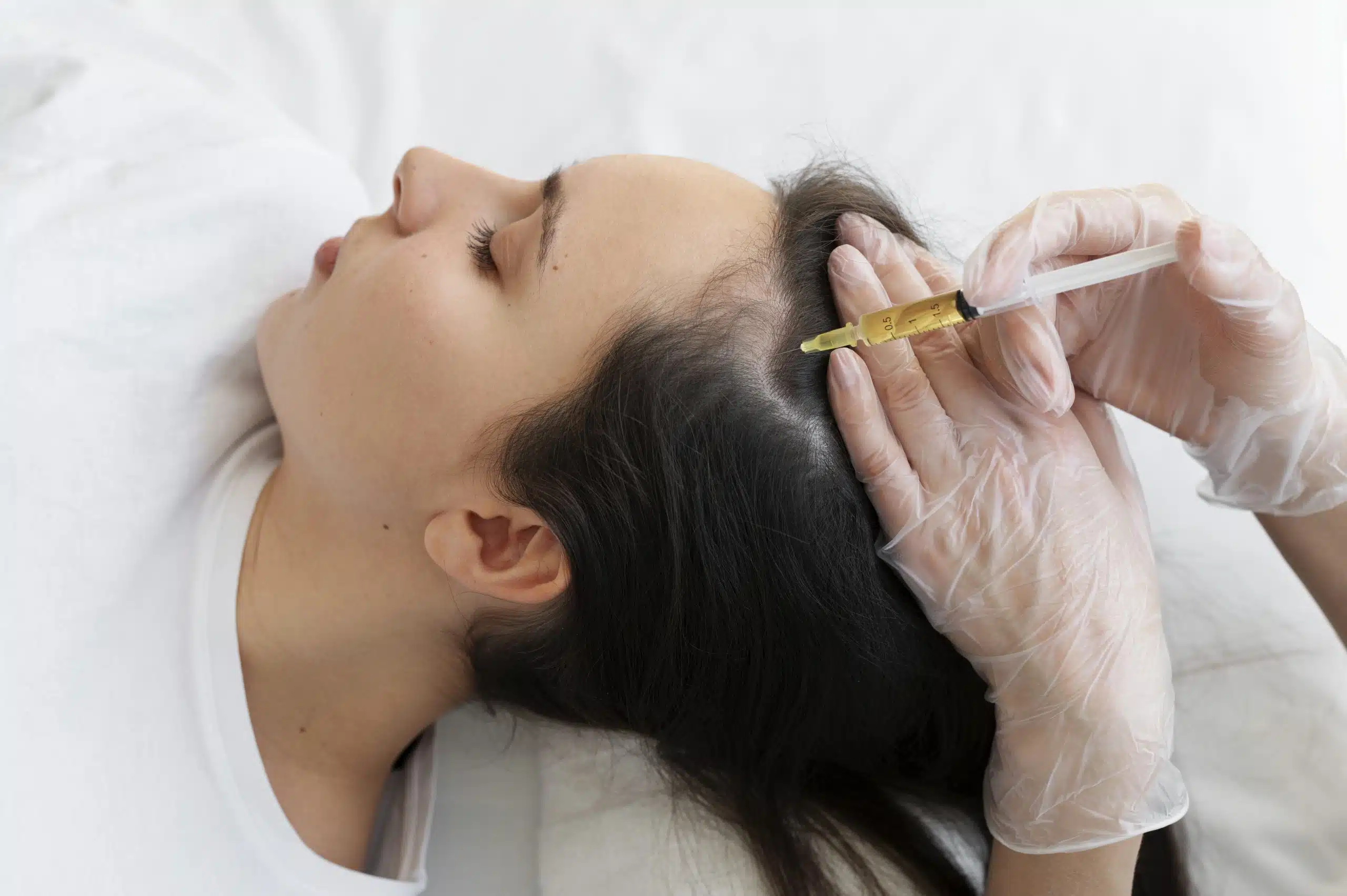
Hair botox is one term covering two unrelated procedures. In salons it names a conditioning mask worked through the hair shaft, containing no botulinum toxin. At The Aesthetic Edge it names the medical treatment those words literally describe: a doctor injecting small mapped amounts of botulinum toxin into the scalp to reduce excessive sweating and oiliness.
Those two procedures sit in different buildings, answer different complaints and involve different people. Almost everything confusing about this subject traces back to the shared label, so it is worth sorting out before anything else.
Which of the two am I reading about?
Ask one question: is a needle involved?
The salon version says no. It is topical — a mask or cream worked along the length of the hair, concerned with how the strand looks and behaves. The name is borrowed for marketing; there is no botulinum toxin in the tub, and there is no prescription behind it.
The medical version, which is what Hair Botox means on this site, says yes. Botulinum toxin, in doses mapped for one scalp, placed into the skin of the scalp by a doctor. Its subject is what the scalp does — how much it sweats, how much oil it produces — and it has nothing at all to say about the condition of a hair strand.
So if you arrived wanting smoother, glossier lengths after colouring or heat styling, the thing you have been reading about lives on a salon menu, and this page is describing something else.
What is botulinum toxin, and why put it in a scalp?
Botulinum toxin is a prescription medicine. Used in tiny, measured quantities, it quietens the chemical signal nerves send to the structures they control — which is why it is familiar from muscle-related uses, and why it also has a role where overactive glands are the complaint.
The scalp is dense with sweat glands. For some people they are simply more active than they need to be: the head sweats through ordinary days, not only hard workouts. Placing the medicine into that skin, in mapped positions, is how this treatment reaches the glands rather than the hair.
That is also why it can only be a prescribed, doctor-administered treatment. The dose and the placement are clinical decisions, not preferences on an order form.
What problem is it actually meant to solve?
Three complaints, and they are narrower than the name suggests.
The first is styling that will not survive the day — a scalp sweating so much that a blow-dry barely lasts the commute. The second is oil: roots that turn greasy and flat by evening, every single day, and the daily washing that follows. The third is subtler and usually comes from patients already spending money on their hair — the sense that scalp sweat and buildup are quietly undoing every treatment being invested in.
What the clinic documents in return is proportionate to that. Calmer scalp sweating means styling survives Bangalore commutes and workouts rather than collapsing by evening. Reduced sebum and sweat mean the roots stay fresher for longer, so hair gets washed less often and stripped less often. And a drier, calmer scalp is a better environment for the follicles sitting in it, which is why it can complement a regrowth protocol rather than compete with one.
What happens during an appointment?
Four stages, in order, none of them long.
It opens with an assessment rather than a treatment. Your sweat and oil pattern, the state of your scalp and your medical history are all reviewed before anything at all is planned — this is the stage that decides whether you should be having the treatment.
Then the mapping. The doctor works out where the injections go and how much medicine each point takes, for your scalp specifically. There is no fixed template being applied.
Then the procedure itself: numbing cream first, then fine micro-injections across the mapped zones. What patients report is a run of brief pinpricks rather than pain. The whole appointment takes about half an hour, and downtime is none to minimal — normal routine resumes the same day.
Finally, a review. The effect is checked at follow-up, and repeat sessions are typically planned at four-to-six-month intervals from there.
How long does one treatment hold?
Typically four to six months. After that, scalp sweating gradually returns to the pattern it had before, and the treatment can be repeated.
It is worth reading that as maintenance rather than as a purchase that settles the matter. Nothing about it is permanent, and any clinic implying otherwise is describing a different medicine from this one.
What does it not do?
It does not regrow hair. That is the single most common misunderstanding, and the clinic's own position is plain about it: hair botox calms scalp sweating and oiliness, which supports scalp health, and that is the whole of its claim. Where regrowth is the actual goal, a doctor may pair it with PRP or GFC after reviewing your scalp — but the pairing is groundwork plus protocol, not one treatment doing two jobs.
It also does nothing for the hair strand. Frizz, dryness, split ends and colour damage are problems of the shaft, and the shaft is not what this injection reaches.
What are the known side effects?
Three, documented rather than downplayed.
Injection-site soreness is the common one — small bumps, redness or tenderness where the needle went, usually for a day or two, settling without treatment. A mild, short-lived headache can follow scalp injections. And very rarely, muscles near the treated area can feel temporarily weak; doctor-led dose mapping exists specifically to keep that risk low.
Knowing the list is what lets you notice something departing from it. If soreness or bumps are still there well past those first couple of days, if a headache does not lift, or if you notice weakness anywhere near the treated area, telephone the clinic and ask to be seen. Do not try to work out what it means yourself — that is the clinic's job, and asking early costs nothing.
Who is it not suitable for?
Anyone with a neuromuscular disorder, and anyone who is pregnant or breastfeeding. Those are documented exclusions, not cautions to be negotiated.
Beyond them, suitability is decided in person. The doctor reviews your medical history at the consultation before confirming you are a candidate, which is also the point at which any other medicine you take gets discussed.
How do I find out whether it applies to me?
By being examined, because the honest answer depends on your scalp rather than on your search history. A consultation at The Aesthetic Edge costs ₹500 and is waived off against treatment if you go ahead.
Bring the awkward version of your question — the one about whether the problem is your hair or the skin underneath it. Sorting that out is precisely what the appointment is for. Book a consultation at Indiranagar or Bellandur, and if the answer turns out to be that a different treatment suits you better, you will be told so before anything is scheduled.