
What Are Dermal Fillers? A Plain-English Explanation
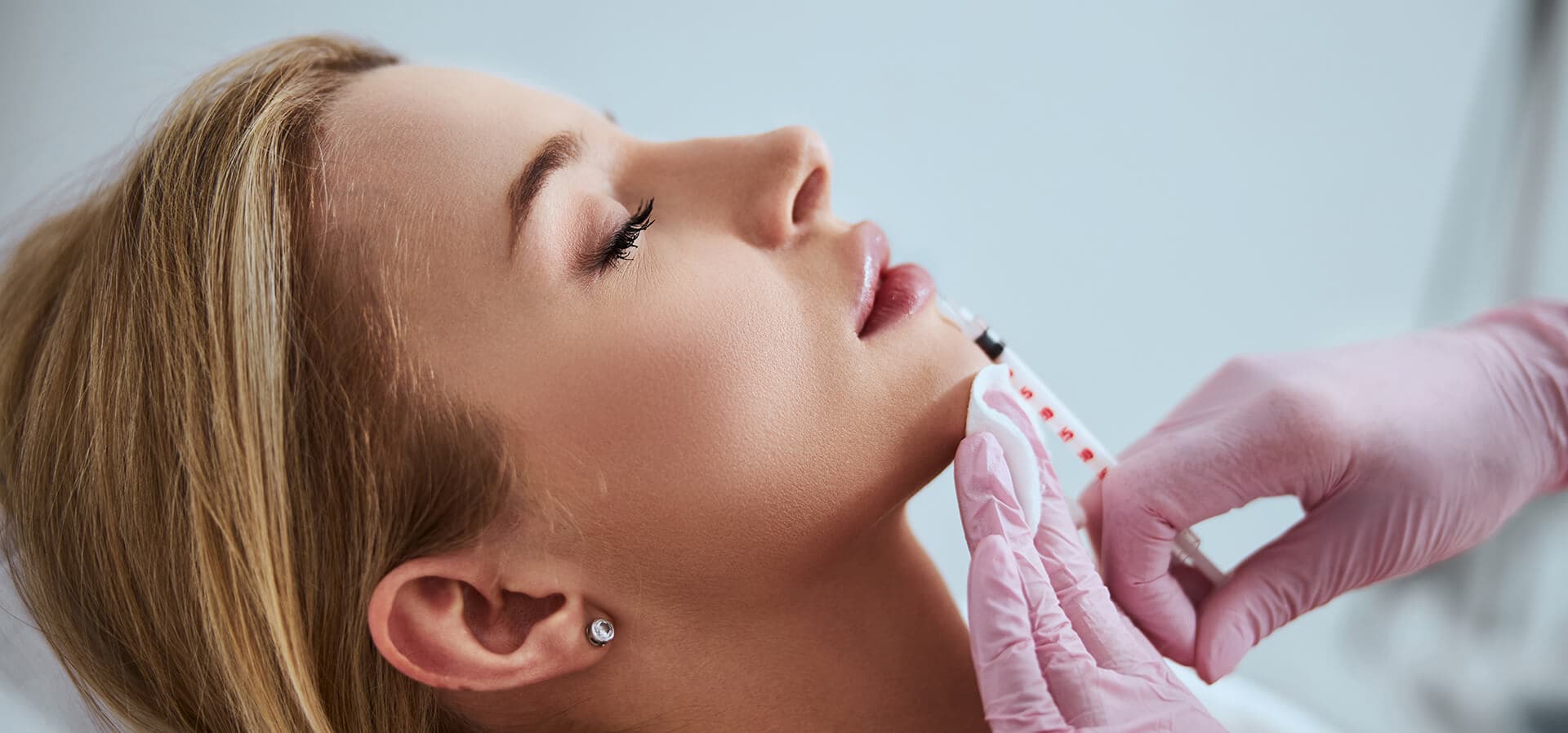
Dermal fillers are gel-like injectables placed beneath the skin to replace volume your face has lost, soften creases that stay put even when your face is completely still, and refine contour along the jaw, chin or lips. They add structure rather than reducing movement, which is why the change is visible almost straight away and settles fully over the following day or two.
That is the whole idea in a paragraph. The rest of this piece is the detail underneath it — because "filler" is one word covering a decision about anatomy, and the decision matters considerably more than the syringe.
What is actually being injected?
A gel, placed at a chosen depth beneath the skin. The filler families most commonly used in cosmetic practice are hyaluronic acid based — Juvederm and Restylane are the two established names, and each makes products formulated for specific areas, with Juvederm Volbella and Kysse designed for lips. Which brand and which product suit your plan is confirmed at your consultation, and the sealed box is opened in front of you before anything is injected, so you can see exactly what is going in.
Hyaluronic acid matters for one practical reason: it can be dissolved. If a result is not what you wanted, an enzyme injection can break it down. That reversibility is the single most reassuring fact about this category of treatment, and it is worth confirming that the product in your plan has it.
How is a filler different from a wrinkle relaxer?
They solve opposite problems. A wrinkle relaxer reduces the muscle movement that folds skin into expression lines. A filler puts volume back where something is physically missing. Neither can do the other's job, which is why a line that stays visible when your face is at rest will not respond to a relaxer, and why a crease that only appears when you smile is rarely a filler problem.
The two are often used together in one plan, on different parts of the face, for exactly that reason. A third option, thread lifts, works differently again — by repositioning tissue rather than adding to it.
What can dermal fillers actually change?
Volume, creases, and contour, in roughly that order of what they do well.
Volume you have lost. Cheeks, temples and the area beneath the eyes lose fat and bone support with age. Filler replaces that support directly, and the reason a face can then read as rested rather than merely smoother is that the underlying structure has been restored, not the surface polished.
Deep static creases. The folds running from nose to the corners of the mouth are the classic example. They sit there whether you are speaking or asleep, and filler is the tool that addresses them.
Contour and definition. Along the jawline, at the chin, or in the lips, filler can sharpen an edge or add fullness in measured amounts — including through technique-led approaches such as Russian lips, where the gel is placed in fine vertical threads from the lip border inward to build height and a flatter shape rather than forward projection. That is a technique, not a separate product, and whether it suits your lip anatomy is decided at examination.
Some depressed scars. Rolling or depressed scars sit lower than the skin around them, and filling that depression can make them less noticeable. It is not the right approach for every scar type, which is a judgement made in person.
What can they not change?
Pigment. This distinction catches a lot of people out under the eyes. Tear trough is simply the anatomical name for the groove beneath the eye, so tear trough filler and under-eye filler describe the same treatment — and what that treatment addresses is hollowing, plus the shadow the hollowing casts. Dark circles caused by pigment rather than shadow are a different problem altogether, and filler is not the answer to them. Telling the two apart is something an examination does and a photograph generally cannot.
What happens during the appointment?
Four stages, and the first is the longest in terms of consequence.
The doctor assesses your face and works out whether what is bothering you is volume loss, movement, or skin quality. Filler answers the first of those. Using the wrong tool on a real problem is what produces results that look done, so this conversation is not a formality.
Anaesthetic cream then goes on for 30 to 45 minutes, and the injection points are marked. The injection itself takes about 15 minutes, or up to an hour if several areas are being treated — the session is generally in the 15 to 30 minute range once the consultation is behind you. Ice is applied afterwards for any swelling, aftercare is explained, and the result is reviewed once it has settled.
How long does the effect last?
Roughly six months to two years, depending on which filler is used, which area is treated, and your own metabolism. That is a genuinely wide range, and your doctor will tell you what to expect for your specific plan rather than the category average.
Treatment starts from ₹14,999 per treatment. What you actually need depends on the area and on how much volume has gone, since fillers come in pre-filled syringes — usually one millilitre — and a jawline and a lip are rarely the same number. The plan is confirmed before anything is opened. The consultation is ₹500, waived against treatment.
What are the side effects?
Swelling and redness are very common in the first hours to days, particularly around lips and eyes, and typically settle within one to two days. Bruising and tenderness at the injection site are a normal possibility, more likely if you take blood thinners or fish oil, and generally resolve within a few days. Occasionally the product settles unevenly in the first days — tell your doctor rather than massaging it yourself, since hyaluronic acid can be adjusted or dissolved.
The rare complications are the ones that decide who should be holding the needle. Infection, allergic reaction, and blockage of a blood vessel are uncommon but real risks of any filler. They are the reason this should be performed by a doctor who can recognise and manage them, in a clinic that stocks the reversal agent. Most people are fully recovered within one to two days.
Is there a right age to start?
There is no set age. What matters is what has actually changed in your face, not what year you were born in — and a doctor should tell you honestly when a filler is not yet the right answer for what is bothering you.
If you want that assessment, read the full dermal fillers page for what the treatment involves, then book an appointment and bring your questions with you.