
What Is Botox? A Plain-English Explanation
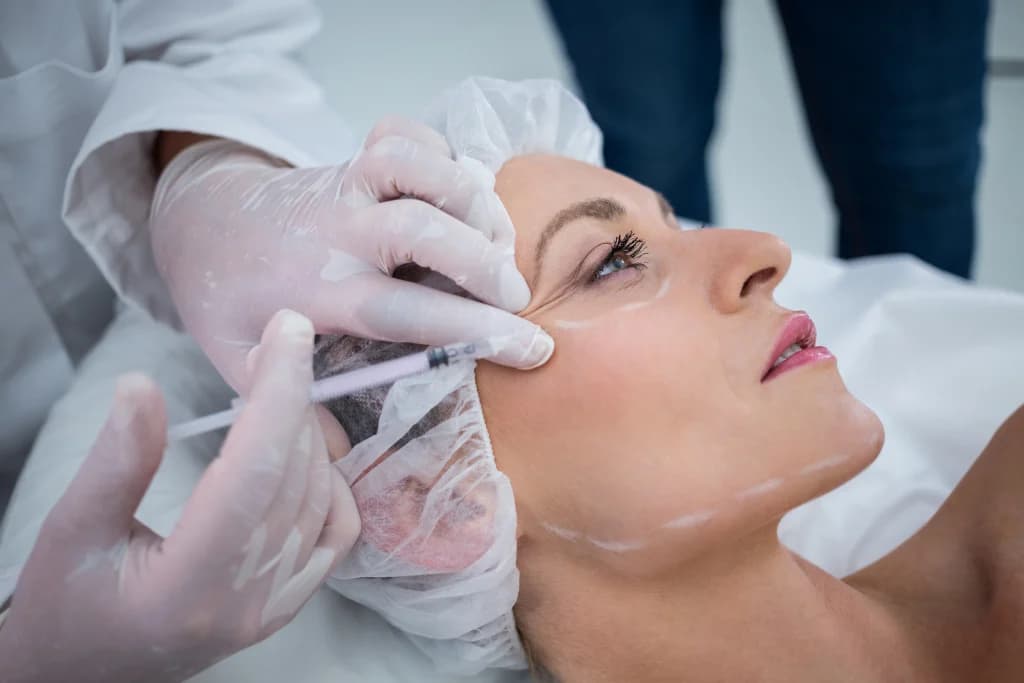
Botox is a brand of botulinum toxin: a purified protein injected in very small, measured amounts to temporarily reduce the contraction of specific facial muscles. Less contraction means the skin above those muscles creases less, so forehead lines, frown lines and crow's feet soften. It is a prescription medicine, its effect is temporary, and at this clinic a doctor assesses, doses and injects it.
That is the whole of it. Everything below is the detail behind that paragraph, in the order people tend to ask for it.
Is it really a toxin?
Yes, and the word is doing less work than it looks. Botulinum toxin is a purified protein used as a medicine, and what separates a medicine from a hazard here is the quantity and the placement. Clinical doses are minute and are put into named muscles that have been identified beforehand, rather than spread across a face.
The practical version of that fact is the one worth carrying around: this is a prescription medicine. It requires a medical history to be taken, a prescriber to decide it is appropriate for you, and someone qualified to place it. That is why every treatment at The Aesthetic Edge is performed by a doctor rather than delegated, and why your medical history is reviewed before anything is planned.
How does quietening a muscle change a line on your skin?
Because the muscle is what makes the fold. Raise your eyebrows and the skin of your forehead has nowhere to go but into horizontal pleats. Draw your brows together and the skin between them gathers into the vertical pair many people call the elevens. Screw up your eyes against sunlight and the skin at the outer corners fans into crow's feet.
Do any of those a few hundred thousand times over a couple of decades and the pleat stops unfolding completely. Reduce how hard the muscle underneath pulls, and the skin above it is folded less often and less sharply. Nothing is added to the line and nothing is removed from it — the folding simply eases off.
Which lines respond, and which are left alone?
Only the ones movement creates. This is the distinction the whole treatment turns on, and it is made at assessment rather than assumed: the doctor examines your face at rest and then in movement, and sorts what they see into dynamic lines and static ones. Only the dynamic group responds well to a wrinkle-relaxing injectable.
The home version of that test is a mirror. Hold your face completely still and look. A line that fades when nothing is moving is dynamic. A line that is fully present on a still face has already etched into the skin, and relaxing the muscle beneath will not lift it out. Anyone offering to erase every line on your forehead with this one treatment has skipped that step.
Why is it dosed in units rather than millilitres?
Because the amount of protein is what determines the effect, and units measure that directly. A treatment is a number of units distributed across mapped points, so the plan is a list of positions and quantities rather than a volume drawn into a syringe.
This is also why a single flat price for "Botox" tells you very little. The rate here starts at from ₹299 per unit, and what you actually pay depends on how many units your plan calls for — which follows the area being treated and how strong the muscle is. Two people can leave on the same afternoon having paid quite different amounts for the same rate.
What happens between booking and walking out?
Four stages, in this order.
Assessment. Your face is examined still and moving, and your lines are sorted as above. Medical history and medication are gone through.
Planning the map. Injection points and dose are planned for your own muscle pattern and for how much softening you have said you want, then marked on the skin before anything is injected. The dose is not taken from a template.
The injections. Botulinum toxin is placed with a fine needle at the marked points. Most patients describe a brief sting at each point rather than pain, and numbing cream can be applied beforehand if you would prefer it. The appointment runs roughly fifteen to thirty minutes.
The two-week review. You come back once the effect has fully settled. If a point needs a small adjustment, it is made then rather than guessed at on the day.
How soon does it show, and how long does it stay?
Changes usually begin at around four to seven days and settle by about two weeks. Nothing meaningful happens overnight, and judging the result on day two is the commonest reason people conclude it has not worked.
Once settled, the effect typically lasts three to six months, after which the muscle gradually returns to its usual movement. Downtime in the meantime is minimal — most patients go straight back to the rest of their day.
Is this the same thing as a wrinkle relaxer, or as Skin Botox?
Two different answers.
A wrinkle relaxer is the same injectable under a descriptive name rather than a brand one. Where the two pages on this site differ is emphasis: that one also covers the recognised medical uses — jaw clenching and grinding, the tension headaches that come with it, and excessive underarm sweating.
Skin Botox is a genuinely different technique using the same medicine. It is heavily diluted and placed into the most superficial layer of the skin rather than into the muscle, and it is aimed at texture, pore size and oiliness rather than at softening expression lines.
What can go wrong?
Three things are documented here. Tiny raised bumps and mild redness at the injection points are common and usually settle within an hour or two. Bruising is occasional, more likely if you take blood-thinning medication or fish oil, generally clears within a few days, and can be covered with makeup after the first 24 hours. Temporary heaviness or asymmetry is uncommon, and is usually the effect settling unevenly in the first fortnight — which is precisely what the two-week review exists to catch and correct.
Do not sit at home trying to work out whether something counts. Ring the clinic if a bruise is deepening rather than fading after a few days, if redness or swelling at a point is increasing rather than settling, or if heaviness or asymmetry is bothering you before the review comes round. And because this is a botulinum toxin injection, any weakness that seems to be spreading beyond the treated area, or any difficulty with swallowing, breathing, speaking or vision after treatment, is a reason to contact the clinic straight away rather than wait and see. Assessing what a symptom means is our job, not yours.
Who should not have it?
It is not advised during pregnancy or breastfeeding, where there is an active infection at the injection site, or with certain neuromuscular conditions. Tell your doctor about all your medication, including blood thinners — that conversation happens before anything is planned, not after.
What happens if you stop having it?
Nothing sudden. The effect wears off across months, the muscle returns to its previous movement, and the lines come back to how they were rather than worse than they were. That temporariness is why a first treatment is a comparatively low-commitment way to find out whether you like the result at all.
Where to start
With a conversation rather than a needle. A consultation is ₹500, waived off against treatment, and its job is to establish whether your lines are the kind that respond and what a sensible plan would look like for your face.
Book a consultation at Indiranagar or Bellandur, and bring a list of your medication with you.