
Planning Botox Before Your Wedding: The Bride's Runway
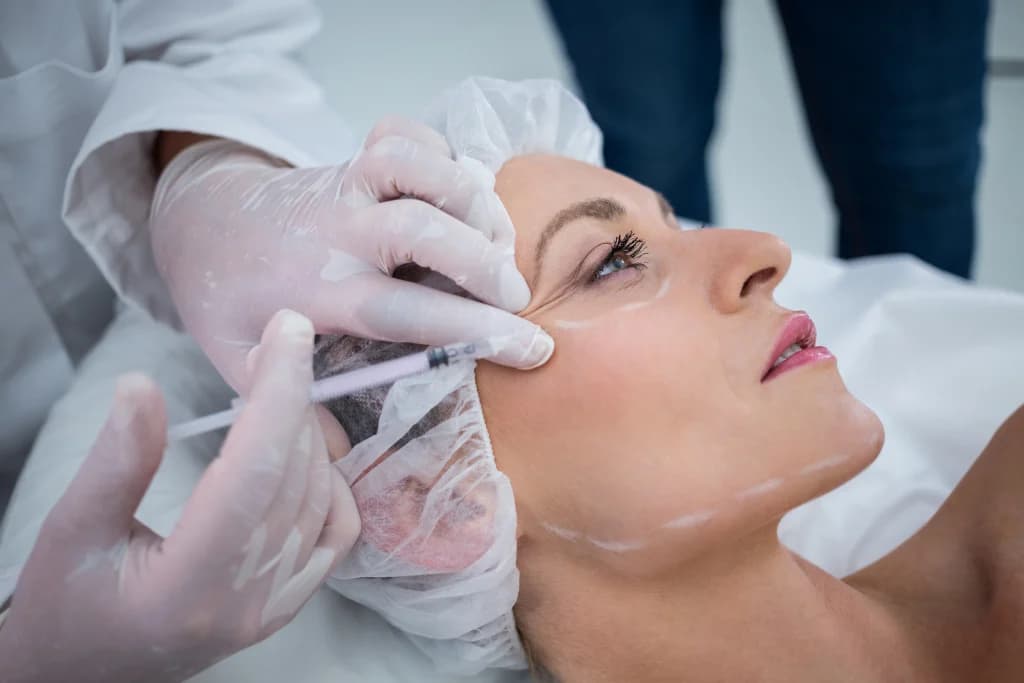
Two numbers set the entire wedding runway. The effect begins around four to seven days after the injections and settles by about two weeks, which is when the doctor reviews it. So the round that carries your wedding day needs to be done with enough room for both the settling and the review — and a first-ever appointment needs to happen months earlier than that, not weeks.
Everything below is built backwards from those two numbers and from the three- to six-month window the effect typically lasts. There are no shortcuts in it, because the timings are physiological rather than negotiable.
If I have never had Botox, when should the first appointment be?
Months ahead — and think of it as a rehearsal rather than the treatment that carries the day. A first round tells you three things nothing else can: how quickly you respond, how much movement you are left with, and whether you actually like the result on your own face.
The full arc takes a fortnight. The change starts at four to seven days, settles by two weeks, and only then does the doctor review it and make any small adjustment. If that adjustment is needed, it too takes days to show and a fortnight to settle. A bride discovering all of this for the first time four weeks before her wedding has no room to use what she has learned.
Book the first round early enough that a second, corrected round can happen long before the invitations go out. In practice that means treating this as something you start a season ahead, not a task on the wedding checklist.
Why does the two-week review decide everything?
Because it is the only appointment at which the result can honestly be judged and adjusted. Before two weeks the effect is still settling, so a doctor looking at your face at day seven is looking at something unfinished.
That single fact is what turns the runway from "book it a week before" into something far longer. Work it forwards:
- Day 0 — the appointment. Fifteen to thirty minutes.
- Days 4 to 7 — the effect starts to show.
- Day 14 — it has settled, and the review happens. Any point needing a small adjustment is corrected here.
- A further fortnight — if an adjustment was made, it follows the same four-to-seven-day and two-week pattern.
A wedding date that falls inside that sequence rather than after it is a wedding date with no margin.
When should the round that carries the day actually happen?
Comfortably far enough back that the review, and any correction the review calls for, both finish before the day. Following the sequence above, that points at roughly six weeks ahead rather than two or three — treat, settle, review at four weeks out, and leave the remaining fortnight for anything adjusted to come good.
Bring your actual dates to the consultation and let the doctor set the appointment against them. Six weeks is a sensible planning figure, not a rule; your doctor may move it depending on the areas, the dose and how you responded last time.
Could I be too early?
Yes, and brides who plan carefully are the ones this catches. The effect typically lasts three to six months, so a round done seven or eight months out will have worn off well before the day, and one done at the far edge of that window may be fading on it.
Where you sit in the three-to-six-month range is personal — muscle strength, area and dose all move it — which is another argument for having had at least one round previously. If you already know your own interval, the wedding round can be timed against it instead of against an average.
What should not be attempted in the final month?
Four things, and they are all the same mistake in different clothes: leaving no room to correct.
- A first-ever treatment. You would be finding out how you respond with no time to act on the answer.
- A new area. If you have only ever treated the frown line, the wedding run-up is not when to add crow's feet or a jawline.
- A dose change. Asking for "a bit more this time" close to the day changes the variable you were relying on.
- A top-up squeezed into the final fortnight. It may not have finished settling by the day, and the review would fall after your wedding.
If any of those is where you find yourself, the honest answer is to go into the wedding with the face you have, and start properly afterwards. That is a better outcome than a result nobody has had the chance to check.
How do I protect against a bruise close to the day?
Bruising is occasional rather than routine, and it generally clears within a few days. It is more likely if you take blood-thinning medication or fish oil, so tell the doctor about everything you take, including supplements — and stop prescribed medication only if your own doctor specifically advises it, never on your own initiative before a wedding.
A bruise can be covered with makeup once the first twenty-four hours have passed, which is one more reason the appointment does not belong in the final week. Alcohol is worth avoiding in the twenty-four hours before the appointment, and the aftercare on the day itself is simple: stay upright for about four hours, and leave the area alone and skip exercise for twenty-four.
Something you did not expect — redness or tenderness at an injection point that increases after the first day, a bruise still spreading after several days, a heavy brow or eyelid, or a headache that is not settling — should go to the clinic by phone rather than into a search engine. Do not try to work out what it means yourself, and do not wait for a scheduled appointment to mention it.
Which date am I actually planning for?
Almost never the wedding alone. The pre-wedding shoot, the mehendi and the reception are frequently on different days, and the shoot is often weeks earlier than everything else. Bring the whole list of dates to the consultation, because a plan built around one of them can easily land badly on another.
If the shoot is the photograph you will keep, say so. It changes which date the runway is anchored to.
Will I look frozen in the photographs?
That is a dosing question rather than something inherent to the treatment. Dosing here is deliberately conservative, and the aim is softened lines with enough movement left that you smile, frown and look like yourself. Tell the doctor plainly that photographs are the point — it is exactly the kind of brief that shapes the dose.
What the consultation settles
Which of your lines are dynamic and likely to respond, the injection points and dose planned for your own muscle pattern, and the calendar: treatment date, review date, and how they sit against your wedding. The rate here starts from ₹299 per unit, and the unit count — not the rate — is what decides your quote, so the number comes out of the assessment rather than off a page.
Your medical history is reviewed first. This is a prescription medicine, and it is not advised during pregnancy or breastfeeding, with an active infection at the injection site, or with certain neuromuscular conditions.
Read what the treatment addresses on the Botox page. If your concern is jaw clenching in the run-up rather than lines, the same injection is described under wrinkle relaxer; if it is pores and mid-day shine in photographs, that is Skin Botox, which works differently and has its own timeline.
To fix the dates properly, book a consultation — ₹500, waived off against treatment.