
What Changes the Cost of PRP Hair Regrowth Treatment in India
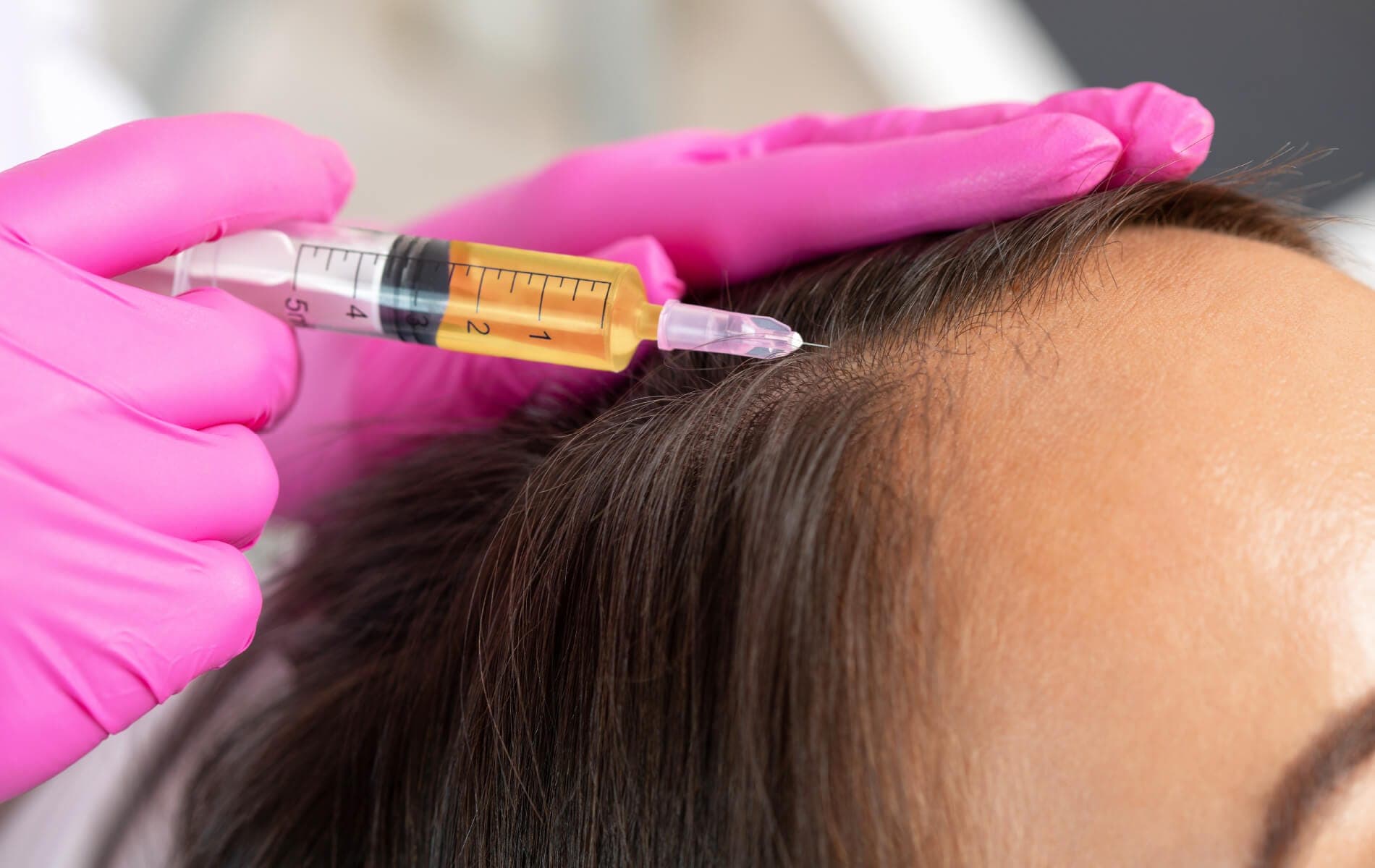
Four things move the number: how long a session occupies a doctor, how much scalp is being injected, how many sessions the course runs to, and what is bundled with them. PRP is unusual in that the injecting takes about twenty minutes while the appointment takes closer to an hour — and a doctor is present for all of it.
Why does a twenty-minute treatment cost like an hour?
Start here, because this is the driver most specific to PRP and the one patients almost never account for.
The injections themselves take about twenty minutes. Before that, numbing cream sits on the scalp for thirty to forty-five minutes, and the blood is drawn and spun in a centrifuge while you wait. So the appointment is roughly an hour of clinic time even though the treatment part of it is short.
At The Aesthetic Edge that hour has a doctor attached to it. Every session is performed by a doctor — that is not a marketing line, it is a staffing decision that shows up directly in the price. A clinic where a technician injects and a doctor signs off can run the same treatment cheaper, and the difference you are paying for is who is holding the needle and who is deciding, session by session, what changes.
The preparation is also single-use and per-session. Your blood is drawn, spun and injected on the same visit. There is no shared vial and nothing carried over to the next patient, which is what people are really asking about when they ask why a treatment made from their own blood costs anything at all.
Are you buying a session or a course?
This is where most quoted comparisons fall apart. A per-session figure is easy to compare and is not what you will spend.
The usual structure for PRP is one session a month across three to five months, then spaced maintenance sessions once that initial course is complete. That is a range, not a fixed number, and it is deliberately not decided on day one — density is reassessed against your baseline photographs at the three-month mark, and the plan for what follows is made then.
So a clinic quoting you a confident all-in figure before it has seen your scalp respond is quoting a guess. The honest answer is a per-session price, a likely range of sessions, and a review point where the rest is decided. We do not publish course totals for this reason, and we would treat one you are shown elsewhere with some caution.
Maintenance is the part that gets left out of every comparison. The course ends; pattern hair loss does not. Ask what maintenance looks like and what it costs before you commit to the first course, not after the fifth session.
Does the amount of scalp being treated change the price?
Yes, and it is the second-largest lever after chair time.
PRP is injected across the thinning areas. A widening parting is a smaller field than diffuse thinning across the whole crown, and the volume of prepared concentrate and the injecting time scale with it. Two people can be quoted differently for the same treatment on the same day, entirely legitimately.
There is a limit worth knowing about, and it protects you rather than the clinic. PRP acts on follicles that are still present and active — it supports what is thinning, it does not create what is gone. An area that has been fully bare for a long period is unlikely to respond, and a doctor should tell you that at consultation rather than selling you a course that cannot work. If someone quotes you for treating a fully bare patch, that is a reason to ask more questions, not a bargain.
This is also why PRP tends to be discussed with people in the earlier and moderate stages of pattern loss. Arriving earlier does not just improve the odds — it usually means a smaller area to treat.
What should a PRP quote already include?
Before comparing two numbers, check they cover the same things. A quote here covers the visit: the doctor's examination and screening, the blood draw, the centrifuge preparation, the numbing, the injections, and the baseline photographs that make the three-month review a measurement rather than an impression.
What it does not cover is the rest of the plan. PRP is designed to sit alongside topical and oral medical therapy rather than replace it, and your doctor decides that combination at consultation. Those medicines are a separate, ongoing cost and they are frequently the difference between a course that holds and one that does not.
Two other injectables at the clinic price differently again, because what is being injected is not the same thing: GFC and QR678. Which of the three is appropriate for your pattern of loss is a consultation question and not a price question — the cheapest of them is poor value if it is the wrong one for you.
What about the city you are treated in?
Rent, staffing and clinical standards vary across Indian cities and across neighbourhoods within them, and PRP prices follow. That is real, and it is also the least useful thing to optimise for.
The variables that decide whether the money was worth spending are earlier in this article: whether a doctor performed the session, whether the pattern of loss was correctly identified before injecting, whether there is a baseline photograph to measure against, and whether anyone is honest with you about maintenance. A cheaper session that skips the screening is not a cheaper treatment; it is a different one.
When is PRP not appropriate at all?
Some situations rule it out, and disclosing them at consultation costs nothing while discovering them later costs a course. PRP is not carried out during pregnancy or breastfeeding, while you are taking antibiotics or blood-thinning medication, or where there is an active scalp infection or a platelet disorder. Bring your full medication list to the consultation.
Afterwards, expect no downtime — most patients go back to work the same day — with some tenderness or a heavy feeling in the scalp for a day or two. Skip hair washing for about forty-eight hours, and avoid exercise, swimming, steam and direct sun for two days. If the scalp becomes increasingly painful, swollen or inflamed instead of settling over those couple of days, contact the clinic and have it looked at rather than waiting for your next session.
On results: reduced shedding is usually noticed first, within the first few weeks, and visible density takes longer. No one can promise an outcome, which is exactly why the review happens against photographs at three months rather than against memory.
The cheapest useful step
A consultation is ₹500, waived off against treatment. It is where the pattern of loss is identified, the area to be treated is defined, and you get a real number for your scalp rather than a national average for somebody else's.
Book an appointment at Indiranagar or Bellandur, and bring any medication and any treatments you have already tried — both change the plan, and therefore the cost.