
What Changes the Cost of GFC Hair Loss Treatment in India
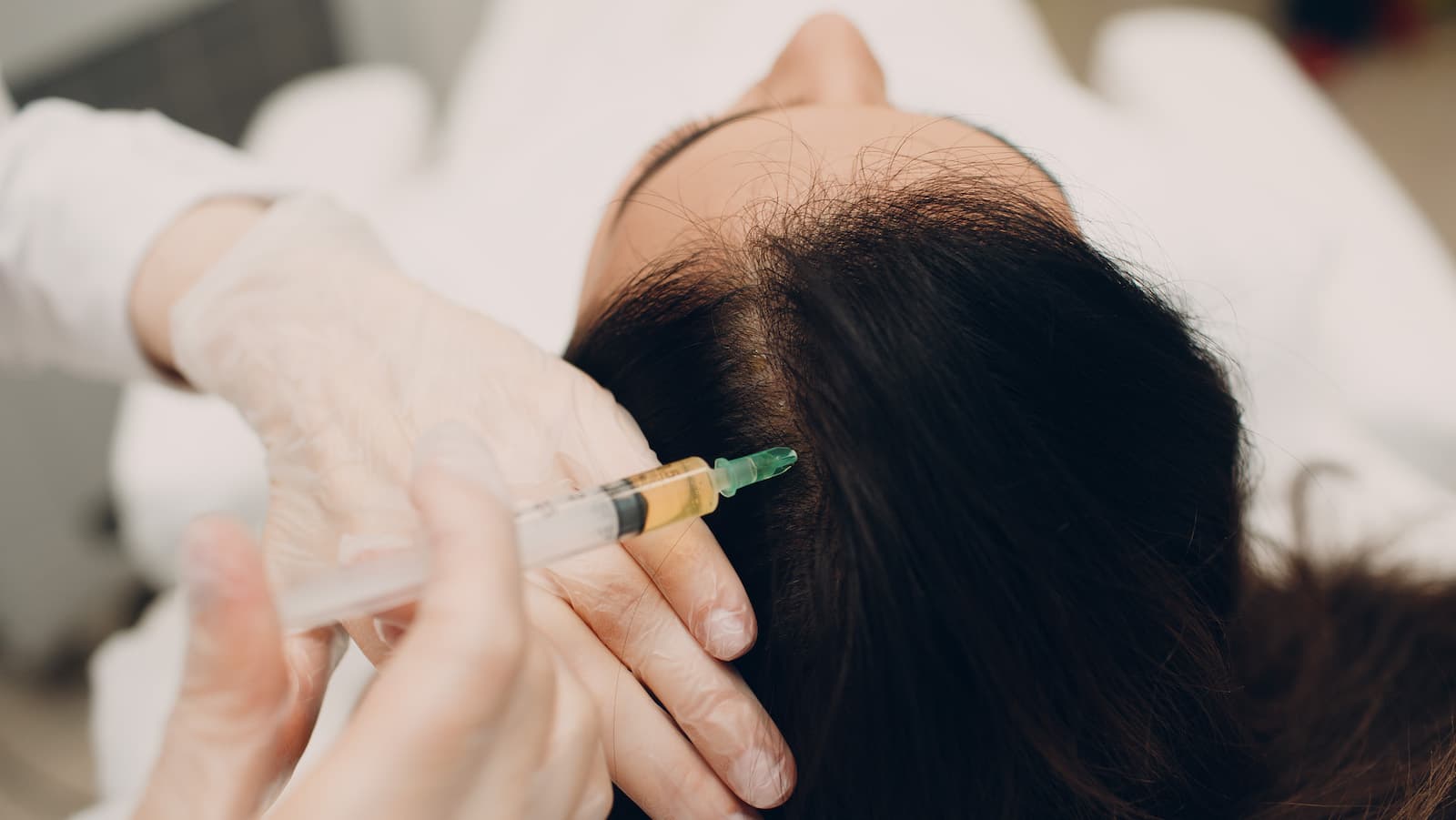
Five things move the price of GFC: how the concentrate is prepared, whether a doctor performs the injection, how many sessions your scalp actually needs, how much area is being treated, and the city and clinic you choose. At The Aesthetic Edge, GFC starts from ₹6,499 per session, and the consultation is ₹500, waived against treatment.
Each of those five behaves differently, and only one of them is really about the clinic's overheads. Here is what sits behind each.
Why does the way GFC is prepared change what it costs?
GFC does not arrive in a box. Around 10ml of your own blood is drawn at the start of the appointment, processed in the clinic, and roughly 4 to 5ml of growth factor concentrate is injected back across the thinning areas with fine needles.
That processing step is what separates GFC from standard PRP, and it is the driver most specific to this treatment. PRP injects the concentrated platelet fraction. GFC processes that fraction further to isolate the growth factors the platelets release, which is why it is described as the more concentrated preparation. The extra step consumes time, single-use materials and equipment on the day — it is real cost, incurred per patient, per session, and it is the main reason a GFC session sits above a PRP session at the same clinic.
It also makes the comparison less obvious than it looks on a price list. Because GFC is the more concentrated preparation, a course is usually shorter than a comparable PRP course. A higher price per session therefore does not automatically mean more money overall, and a lower one does not automatically mean less. The per-session figure is the wrong number to compare on its own.
Does it matter who actually performs the injection?
It is one of the widest sources of price variation in Indian clinics, and it is rarely on the price list.
At The Aesthetic Edge a doctor performs every GFC session. That is not only the injection itself — it is the examination before the first one, the review of your medication and history, and the decision about whether GFC suits your stage of hair loss at all. GFC is not carried out during pregnancy or breastfeeding, while you are on antibiotics or blood-thinning medication, or where there is an active scalp infection, and somebody has to be qualified to ask and to act on the answer. A clinic where a technician injects and a doctor signs off afterwards carries a different cost base, and prices accordingly.
The most valuable thing a doctor can say at that appointment is no. GFC supports follicles that are still present and active; an area that has been bare for years is unlikely to respond. Being told that before you buy anything is worth more than a discount.
How many sessions am I actually paying for?
Four to six sessions is typical, spaced by your doctor, with maintenance roughly every two to three months afterwards. Session count is the largest single multiplier on what you spend, and it is the one number nobody can quote you honestly on the phone.
That is deliberate rather than evasive. The course is not fixed at the start. Scalp photographs are taken before the first session, density is reassessed against them at around the three-month mark, and the protocol is adjusted from there. Reduced shedding is usually the first change patients notice; visible density takes months, because hair simply grows slowly. No one can promise regrowth, and how much you get depends on how much active follicle is still there.
This is why we publish a per-session price and not a course total. A course total implies a course length that has not been decided yet.
Does the size of the thinning area change the price?
It changes the work, so in most clinics it changes the price. A crown that is thinning in one patch and a diffuse loss across the whole top of the scalp are not the same appointment, even though both take around 30 minutes.
The more useful question is which parts of the scalp are worth treating at all. GFC acts on follicles that are weakened but still active, in both men and women, which makes the earlier stages of pattern hair loss the strongest candidates. Mapping that at consultation is a cost conversation as much as a clinical one — there is no sense buying sessions for ground that cannot respond.
Why do two clinics in the same city quote differently?
City and locality account for less of the gap than people expect; what usually differs is what is bundled in. Ask whether the quoted figure includes the anaesthetic cream and the 30 to 45 minutes it needs to work, whether baseline photographs are taken and stored, whether the three-month review against those photographs is charged separately, and whether the consultation is refundable against treatment.
Two identical-looking numbers can describe quite different things once those four questions are answered.
What is included in our price, and what is not?
GFC at The Aesthetic Edge starts from ₹6,499 per session. The consultation is ₹500, waived off against treatment.
A session covers the examination and screening, the anaesthetic cream and its waiting time, the blood draw and in-clinic processing, the injection itself, and the baseline photographs and the review against them. The session runs about 30 minutes including preparation.
There is one cost that never appears on any invoice and is worth counting: time off. There is no downtime with GFC — you return to normal activity the same day. In a city where a clinic appointment can cost more in traffic than in fees, a 30-minute session that does not require you to take the rest of the day off is a genuine part of the arithmetic. Exercise, swimming, steam and direct sun are avoided for two days, and hair products for six hours, but none of that stops you going back to work.
Is a cheaper session actually cheaper?
Sometimes. Compare on four things rather than one: who performs the injection, how many sessions the plan runs to, whether photographs and the review are included, and what happens at follow-up. A course that runs longer at a lower per-session rate can end up costing more than a shorter one — and the reverse is equally true.
How does this compare with PRP or QR678?
PRP also starts from your own blood and is usually priced lower per session, with a course that typically runs longer. QR678 is a different route again. Which of the three suits you is decided with your scalp in front of a doctor, not from a price list — the treatment that costs less and does nothing for your pattern of loss is the expensive one.
What should I watch for afterwards?
Mild soreness, redness or itching for a couple of days is normal. If any of that runs on well beyond a couple of days, or the scalp looks or feels infected, contact the clinic rather than waiting for your next session. Disclose all medication at consultation, including anything started between sessions.
Ask before you pay
If you want a straight answer about session count, area and what a course would realistically involve for your scalp, that is a consultation rather than a phone quote. Book an appointment at Indiranagar or Bellandur — ₹500, waived against treatment — and you will leave with a plan and a number that match each other.