
Unwanted Facial & Body Hair: What Actually Works, and What Only Sounds Like It Does
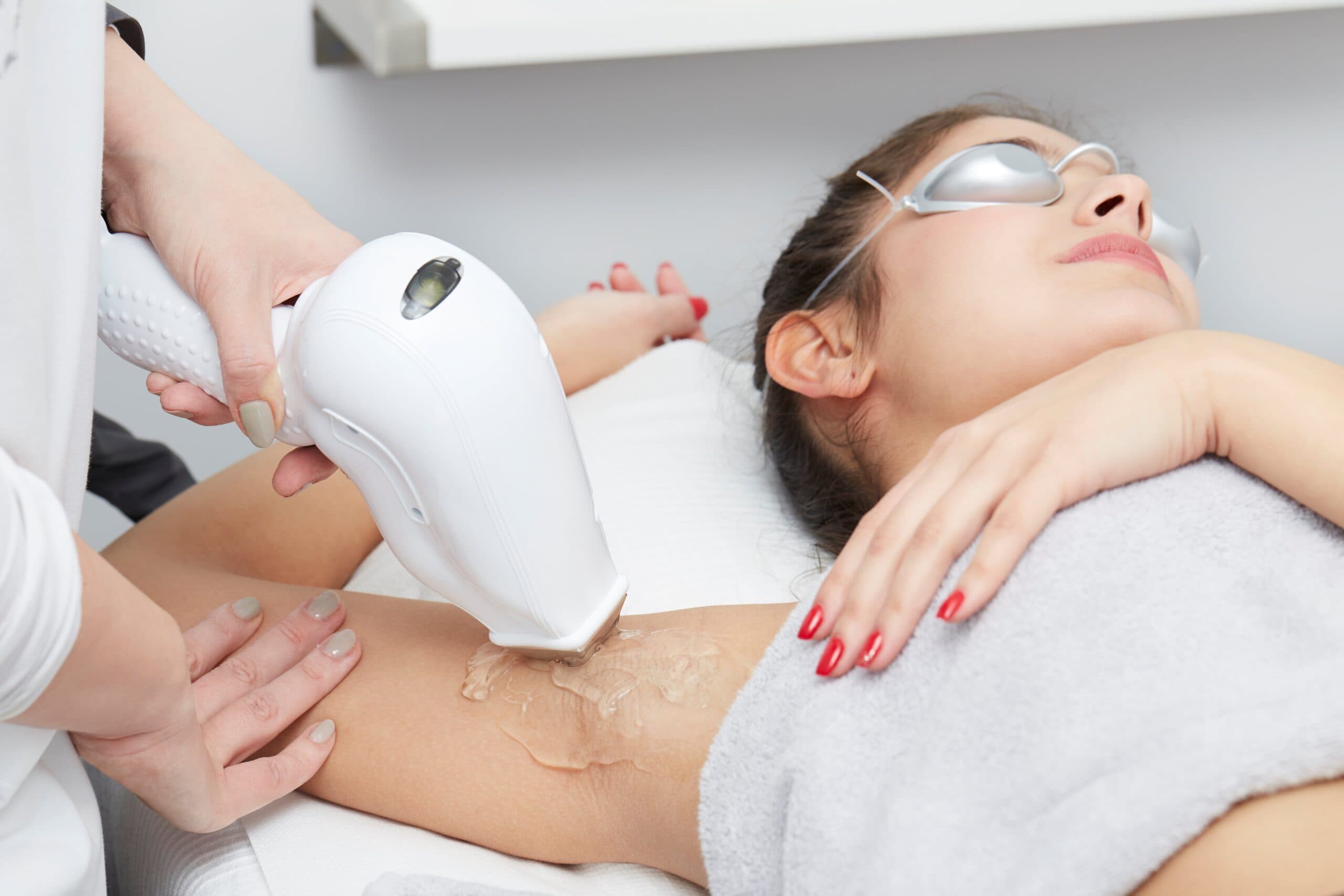
Waxing, shaving and plucking all remove hair you can see; none of them changes the follicle that grows it, which is why the routine repeats forever. The one approach that works on the follicle itself is laser hair reduction — and even that is a long-term reduction across a course of sessions, not a single permanent fix. Any method promising permanence is overstating what the technology does.
That distinction is the whole subject. Almost every question people arrive with — why the hair came back, whether the salon device is the same thing as the clinic one, whether it is safe on their skin tone — resolves once you separate removing hair from reducing it. Laser hair reduction is the treatment that sits on the reduction side of that line, and it is worth understanding what it can and cannot do before booking anything.
Why does the hair keep coming back however I remove it?
Because the follicle is still there and still working. A razor cuts the shaft at skin level. Wax and tweezers pull the hair out with its root attached, which buys a few weeks rather than a few days, but the follicle underneath is undamaged and simply grows a replacement.
The knock-on effects are the part people find hardest to live with. Shaving leaves razor bumps and stubble because the hair is cut, not treated. Ingrown hairs happen when a hair curls back under the skin after waxing or shaving, so the cycle keeps reproducing itself. And repeated waxing is irritating to the skin in its own right. None of that is a failure of technique — it is what surface-level removal is.
Is my facial hair something a doctor should look at first?
Sometimes, yes, and this is the step that gets skipped most often. Facial hair on the upper lip, chin, sides and jawline is one of the most commonly requested treatment areas, but hormonal causes are checked first — because treating the hair without checking the cause disappoints people. If something is driving the growth, reducing the hair that already exists does not address it.
Nothing in a blog post can tell you whether that applies to you. It is a conversation at consultation, where your doctor reviews your history and any medication or condition that affects suitability alongside your skin tone, hair colour and thickness.
What actually reduces hair at the source?
Laser hair reduction works by putting light into the skin that is absorbed by the pigment in the hair, and using that absorbed energy to disable the follicle at its root. Hair that does grow back afterwards comes back finer and sparser with each session.
The catch — and it is the reason a single visit is not on offer — is that only hairs in their active growth phase respond. A session cannot catch every follicle, because at any moment most of them are not in that phase. Sessions are therefore spaced to catch follicles as they cycle into growth, which is why a full course runs to six to eight sessions rather than one appointment. After that, some patients have an occasional top-up every six to twelve months.
Treated hairs shed over roughly 5 to 30 days after each session, so the visible change arrives gradually. Many patients notice a difference after each session, but the full picture is only clear once the whole course is done.
Is IPL the same as laser?
No, and the difference matters when you are comparing a salon package to a clinic one. IPL is a broad-spectrum light, not a laser, and it scatters across more of the skin. A laser targets a single wavelength.
Neither of them delivers permanent hair removal in the literal sense. Both are long-term reduction, which is exactly why maintenance sessions are planned into a proper course. If a device or a package is sold to you on permanence, that is the claim to be sceptical of — not the price.
Does it work safely on Indian and deeper skin tones?
Yes, with the right technology, and this is worth being specific about because it is the main historic risk with hair lasers. Older systems struggled on melanin-rich skin: the light meant for the hair pigment could be absorbed by the surrounding skin instead.
We use FDA-approved diode laser technology (Soprano Ice) with integrated cooling, chosen specifically because it treats deeper skin more safely than those older systems. Correct settings for your skin type are what keep problems uncommon — which is also why this is a doctor-supervised treatment rather than a machine anyone can point at you. Laser hair reduction has been recognised by the US Food and Drug Administration as a method of hair reduction since 1997, and that recognition still depends on qualified supervision at appropriate settings.
What do I have to stop doing before I start?
Waxing and plucking have to stop two weeks before the first session, and stay stopped for the duration of the course. The reason is simple: they remove the root, which is the thing the laser needs to target. A razor is fine throughout, and the area is shaved and cleaned at the clinic on the day.
Sun exposure is the other one. Treated skin reacts more strongly to UV, so sun before or after a session raises the risk of burns and pigmentation. Sunscreen and shade matter for the whole course, not just the week of an appointment.
What does a session feel like, and what happens after?
Eye protection goes on, and the laser is passed over the area at settings matched to your hair and skin, with cooling applied throughout. Most patients describe warmth or a light flick rather than pain, though people who are sensitive may find some areas more intense than others.
Afterwards, expect redness and sensitivity for a few hours up to about two days. A cold compress helps. Nothing needs to be planned around it — there is no downtime and no time off. Facial skin is thinner and more reactive than the body, so settings there are lower and sessions are usually spaced closer together than for legs or arms.
What can go wrong, and when should I contact the clinic?
Redness and sensitivity are the usual response and settle on their own. Two things should be reported to us rather than waited out: persistent redness, and any blistering. Occasional lightening or darkening of the treated area can also occur, particularly on deeper skin tones, and usually settles — but tell us if you see it, because it is a signal about the settings used.
Laser hair reduction is not recommended during pregnancy, or for people with vitiligo or other autoimmune skin conditions. Tell your doctor about either at consultation rather than at the first session.
What does it cost, and where do I start?
Pricing is per area, starting from ₹999 per area, because a chin and a full leg are not the same piece of work. The number of sessions and the areas you actually want treated are set at consultation, which is ₹500 and is waived against treatment.
If the honest version of this is what you were looking for — a long-term reduction with maintenance, rather than a promise of permanence — the next step is a doctor's assessment of your skin tone, hair type and anything that might be driving the growth. You can book an appointment at either of our Bangalore clinics.