
Laser Hair Reduction for Men: The Back and the Beard Line Are Not the Same Request
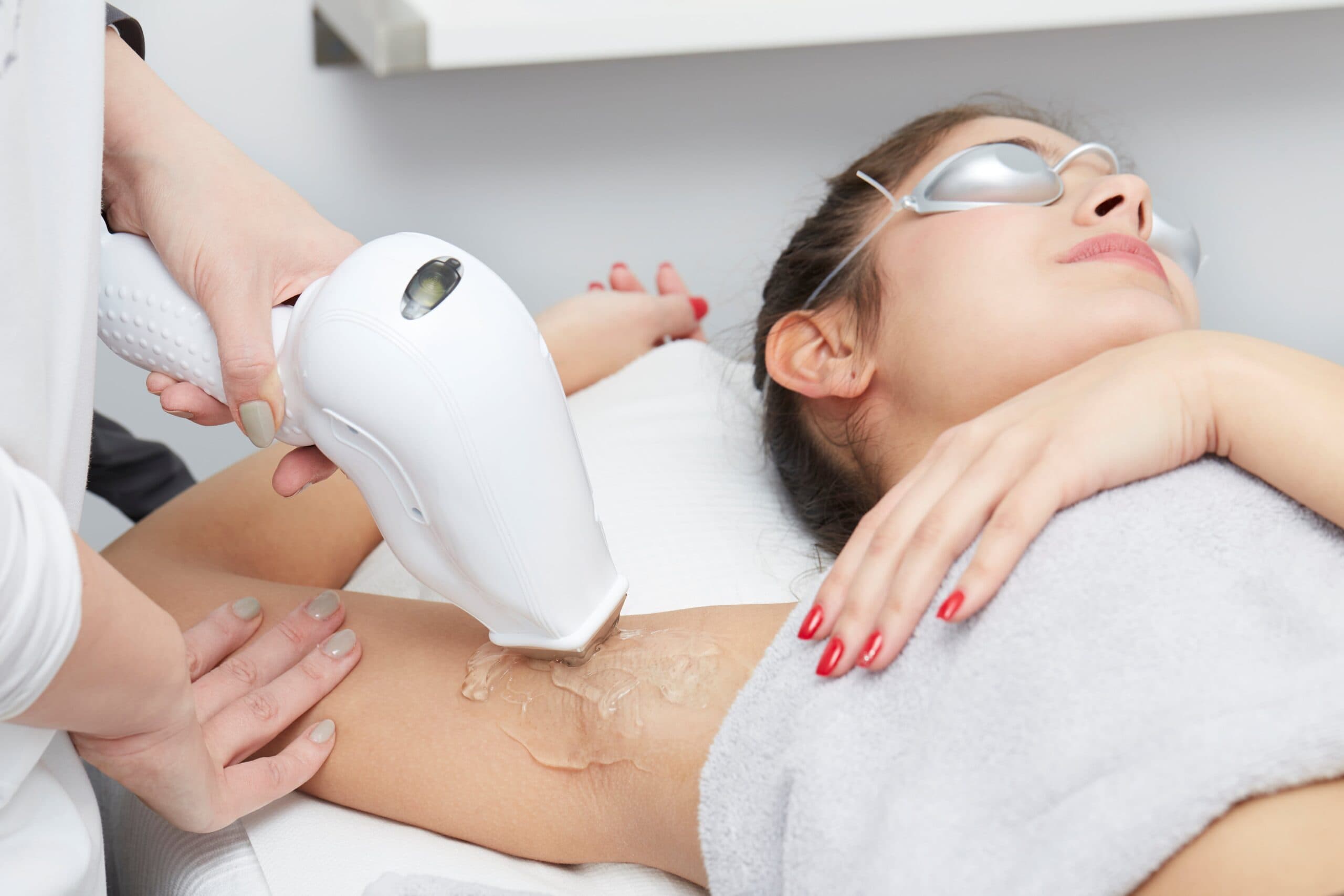
The laser does not change because the patient is a man. What changes is the brief. Most men who ask about hair reduction are not asking for the smooth, cleared result that the usual advertising shows — they are asking for a back they cannot reach themselves, arms they want thinned rather than bare, or a beard line they want held in one place. Those are three different instructions to give a clinic, and the plan that follows is different for each.
That distinction matters more than anything else on this page, because a course of sessions is built around the result you asked for. "Reduce it" and "shape it" are not interchangeable, and a clinic that treats them as the same thing will give you a result you did not want.
Why is men's body hair treated differently at all?
It is not treated differently in principle. Laser Hair Reduction works by sending light that is absorbed by the pigment in the hair, which disables the follicle at its root, so what grows back comes in finer and sparser with each session. That mechanism is the same wherever the hair is and whoever it belongs to.
What differs is what the mechanism is working with. Hair colour, thickness and the area being treated all affect how many sessions a course takes, and a lot of men come in with hair that is coarser and denser across a much larger area than the underarm-and-legs case that most before-and-after galleries are built from. That does not make it harder to treat. It means the number you are quoted at assessment is a judgement about your hair and your area, not a figure lifted from an advertisement.
The other variable is the settings, and this is the part worth being direct about: correct settings are a function of your skin tone, not of how thick your hair is. The diode system we use has integrated cooling and was chosen specifically because it treats deeper skin more safely than older systems — which was historically the main risk with hair lasers. Safety depends on the treatment being performed under qualified supervision at settings correct for your skin tone. Anyone who sets the machine by eye, or who uses one setting for every patient, is the problem the equipment was chosen to avoid.
Which areas are actually on the list?
The areas treated with this laser are the underarms, bikini area, legs, back, arms and face. So the two requests men bring most often — the back, and the face or beard line — are squarely covered, and so are the arms.
If what you want treated is the chest or the shoulders, raise it at the consultation rather than assuming it maps onto the same plan. It is a short question with a straight answer, and it is better asked before you book a course than after.
The back is the area that changes people's minds. It is the one place most men cannot manage themselves, so it tends to be ignored for years, shaved badly by someone else, or waxed on a cycle that never ends. Treating the follicle rather than cutting the hair at the surface is what interrupts that cycle: the burn and prickly regrowth that follow shaving do not come back between sessions, and the ingrown hairs that happen when a cut hair curls back under the skin stop recurring because there is progressively less hair to curl. For a large area that someone else has been maintaining for you, that is usually the real appeal — not bareness, but the end of the maintenance.
Is a beard line removal or shaping?
Shaping, in most cases — and you have to say so. Reducing growth on the neck where a collar sits all day, or holding a beard line where you want it instead of watching it creep, is a different instruction from clearing the face. The face is on the list of treatable areas, but which parts of it suit your skin and your hair is decided at assessment rather than from a description on a page, and the boundary you want is something you should be able to point to on your own face before any light is fired.
Bring a clear brief to that appointment. Where does the line sit now, where do you want it, and what do you want left alone? A clinic can work precisely to that. It cannot reverse-engineer it from "tidy up the beard".
How many sessions should I expect, and why not one?
Six to eight sessions is typical for a full course, after which some patients have a top-up every six to twelve months. One session cannot catch every follicle, because only hairs in their active growth phase respond to the light — which is the whole reason a course is spaced out rather than compressed.
It is also why the honest word for the outcome is reduction rather than removal. After a full course most people see a marked, long-lasting reduction, and any hair that does return is typically finer and lighter than what was there before. What replaces the weekly or fortnightly routine is occasional maintenance, not nothing at all. Anyone promising you a single permanent session is selling something the treatment does not do.
What happens in the days after a session?
Treated hairs shed over roughly five to thirty days after a session, and that shedding often looks like regrowth to someone seeing it for the first time. Hair appearing at the surface in week two is the process working, not failing — a point worth knowing in advance, because it is the stage at which people assume a course is not working and stop.
Comfort-wise, most patients describe warmth or a light flick rather than pain, helped by the cooling that runs throughout. People who are generally sensitive may find some areas more intense than others. Sensitivity usually settles within a day or two, there is no recovery time, and sessions are quick enough that nothing has to be planned around them.
The Bangalore part of this
If you spend an hour each way on the Outer Ring Road, you already know what a collar does to a freshly shaved neck in this humidity. Bangalore's climate is kind compared with the coast, but it is humid enough that stubble, a shirt collar and a long commute combine into exactly the irritation that keeps men shaving more often than they want to. Skin left smoother and less irritated between sessions, rather than on a waxing cycle, is a practical difference on a working week here, not a cosmetic one.
Appointments are quick enough to sit inside a working day at either branch — Bellandur or Indiranagar — which matters when the alternative is finding a weekend slot for something you would rather not discuss at length.
One thing this page is not about: if your question is actually about the hair on your head — frizz, texture, how it behaves after a week of helmet and humidity — that is a different treatment entirely, and Hair Botox has its own page. Hair reduction and hair smoothing get confused in enquiries more often than you would expect.
Where to start
Bring the specific request, not a general one. Tell us whether you want an area reduced or a line held, point to the boundary if there is one, and let the assessment do the rest — suitability, settings for your skin tone and a realistic session count are all decided there rather than online. You can book an appointment at either branch, and the consultation fee is waived against treatment if you go ahead.