
Teeth Whitening vs Smile Makeover: How to Choose
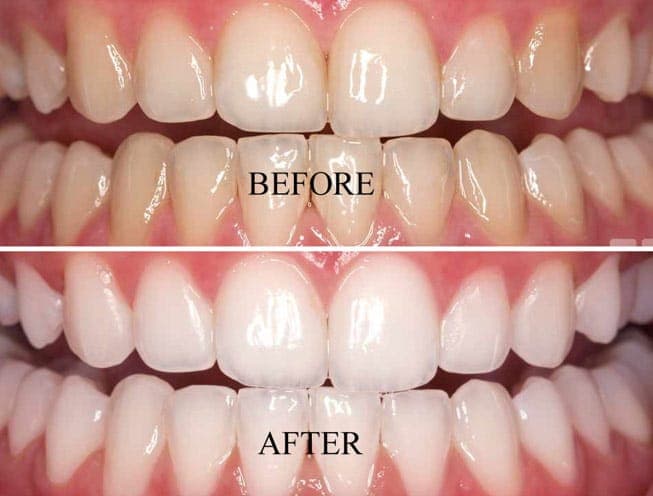
They answer different questions. Whitening lightens the shade of the natural enamel you already have and changes nothing else — not the shape of a tooth, not its position, not a chip. A smile makeover is a planned combination of treatments that can change shape, alignment, surface and colour together, over weeks to months. Which one you need follows from what is bothering you, not from which is more thorough.
What actually separates them
Whitening is a single procedure with a narrow job. A peroxide-based gel is applied to the enamel by a dentist, with the gums isolated and protected and the exposure timed, and it breaks down pigment left by age, tea, coffee, tobacco and pigmented foods. Nothing is drilled and no enamel is removed. That narrowness is the point: it is one of the few cosmetic dental options that is entirely additive.
A smile makeover is not a procedure at all. It is a plan, and which treatments end up in it — whitening, veneers, crowns, bonding, gum contouring, alignment or implants — is decided at assessment rather than in advance. The plan exists because these things interact: shade is settled before restorations are made, alignment before veneers, so the finished result matches instead of accumulating mismatches over the years.
So the honest framing is not which one is stronger. It is whether your complaint is about colour, or about the teeth themselves.
When whitening is the answer
If your teeth are healthy and what you want is for them to look brighter, this is the treatment that does that, and there is little reason to reach for anything larger. The clearest cases are the ordinary ones: years of filter coffee and chai leaving things dull and yellow, a wedding coming up and a reluctance to be self-conscious in photographs, or months on a whitening toothpaste with nothing to show for it — those pastes are mildly abrasive and act on surface stain only, without enough active agent to shift the underlying shade.
Whitening also wins outright on three practical rows. It is usually one in-clinic session and sometimes two, against several visits spread over weeks to months. It has no downtime, beyond avoiding strongly staining food and drink for a couple of days. And nothing about it is irreversible — which matters more than it sounds, because it means a disappointing outcome leaves you no worse off structurally than before you started.
When a smile makeover is the answer
If several things bother you at once — the colour, plus a chip, plus a gap — whitening will address exactly one of them and leave you looking at the other two. That is the situation a makeover exists for.
The same goes for piecemeal work accumulated over years that has never quite matched, and for the position people reach where they have simply stopped showing their teeth in photographs. There is also a category whitening cannot touch at all: chipped teeth, an uneven bite and missing teeth are structural problems, and addressing them as part of a plan means the result is not purely cosmetic.
A makeover wins one more row that is easy to miss. Some discolouration does not respond to external bleaching — staining from tetracycline, from fluorosis, from trauma or from a tooth whose nerve has died responds poorly or unevenly, and your dentist will say so at assessment rather than afterwards. For those, a planned approach is the conversation worth having, because bleaching harder is not an option that exists.
And it wins on being able to see the plan first. Photographs, study models or a digital mock-up let you and your dentist agree what the outcome should look like before anything irreversible happens, with a trial smile as the point at which to say the teeth look too long, too white or the wrong shape.
The row that catches people: your existing dental work
Crowns, veneers and tooth-coloured fillings do not bleach. They were colour matched to your teeth on the day they were made, and whitening lightens the natural enamel around them while they stay exactly where they were. A restoration in the smile line that currently blends in can therefore end up looking darker than its neighbours, and may need replacing to match.
This single fact moves a lot of people from one column to the other. If you have no visible restorations, it is irrelevant. If you have several, the sequencing question is real, and it is precisely what a makeover plan is built to handle — shade first, then restorative work made to the settled shade. Doing it the other way round means paying for the same crown twice.
Side by side
| Teeth whitening | Smile makeover | |
|---|---|---|
| What it changes | Shade of natural enamel | Shape, length, alignment, gum line, missing teeth — and shade as one part |
| What it leaves alone | Shape, position, chips, gaps, existing restorations | Little, by design; the plan is built around what you want changed |
| Visits | Usually one session, sometimes two | Several, over weeks to months |
| Planning | Target shade agreed at assessment | Photographs, models or a digital design before treatment starts |
| Reversibility | Nothing drilled or removed | Some steps are irreversible — veneers and crowns permanently reshape the tooth |
| Anaesthesia | Not part of the procedure | Local anaesthesia for the steps that need it |
| Afterwards | No downtime; staining foods avoided a couple of days | An adaptation period while you get used to new shapes; minor adjustments at review are normal |
| How long it lasts | Several months to a few years, depending on diet and habits | Well-made restorations commonly last many years, but are not permanent |
| Keeping it | Good hygiene plus periodic cleaning | Hygiene appointments to protect the work; restorations can chip or stain at the margin |
| Performed by | A dentist, always | A dentist, always |
| Consultation | ₹500, waived off against treatment | ₹500, waived off against treatment |
Read down the reversibility row twice before anything else. Veneers and crowns require permanently reshaping the natural tooth, and once that is done the tooth will always need a restoration on it. That is the single most important thing to understand before agreeing to a plan, and it is the row on which whitening is unambiguously the gentler option.
Then read down the "what it changes" row, where the position reverses entirely.
Is it actually either/or?
Often not, and this is the part the comparison format hides. Whitening is one of the treatments a makeover can include, and a good plan reaches for it early: where whitening and bonding will achieve the goal, they are used in preference to crowns and veneers, precisely because those require permanently reshaping the tooth.
Which means a makeover consultation can quite reasonably end with a recommendation of whitening and nothing more. That is not a failed consultation. It is the conservative-first principle working as intended, and it is a good reason to book the assessment even if the word makeover sounds larger than your problem.
What each costs, and what moves the figure
The consultation is ₹500 for either, waived off against treatment. Neither treatment has a single figure, and the reason is different in each case.
For whitening, it turns on how many sessions are needed to reach the shade you agreed, whether a cleaning appointment comes first, and whether an existing restoration will need replacing afterwards to match. For a makeover, it turns on which treatments the plan actually contains and how many teeth are involved, which is not known until the examination, the photographs and the design stage are done. A plan can also be staged over time — the order matters more than the pace — so phasing is worth raising at the planning appointment.
Anyone quoting either number before looking in your mouth is quoting a different patient's treatment.
When to contact the clinic
After whitening, sensitivity to cold for a day or two is the most common effect and usually settles on its own, with a desensitising toothpaste helping. Brief gum soreness where gel has touched the margin settles quickly too. After preparation for veneers or crowns, sensitivity to temperature while temporaries are worn is common, and so is a short spell of speech and bite feeling different.
In either case, contact the clinic rather than waiting if sensitivity persists beyond a few days or is worsening, if gum soreness has not settled, if a single tooth is sharply painful, if a temporary comes loose, or if anything is disturbing your eating or your sleep. Do not attempt to work out the cause yourself — ring Indiranagar or Bellandur, describe what you are noticing, and let the clinic decide whether you need to be seen.
How to arrive at the right answer
Write down what you would change, in your own words, before you go. If the list is one item and that item is colour, you are very likely looking at whitening. If the list has three items and two of them are about shape, position or old work that does not match, you are looking at a smile makeover — and the examination is what turns that list into a sequence with dates on it.
Either way the next step is the same one. Book an appointment at Indiranagar or Bellandur, bring the list, and ask which of the things on it each option would actually change.