
Teeth Whitening: The Myths Worth Clearing Up Before You Book
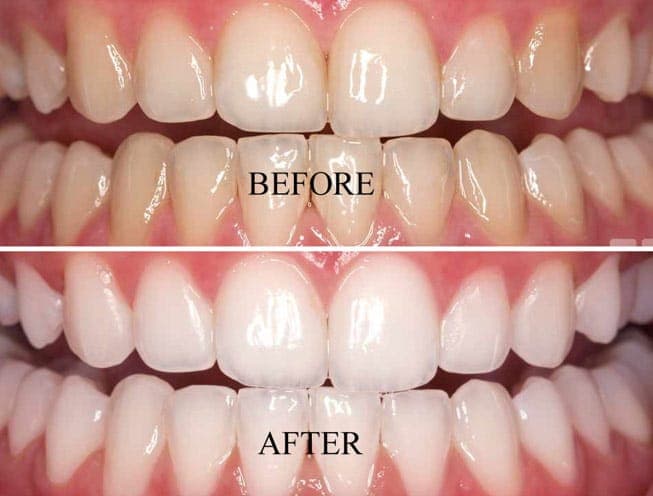
Three beliefs cause most of the disappointment: that whitening strips enamel, that a whitening toothpaste does the same job more slowly, and that everything in your mouth will lighten. Under dental supervision whitening is not expected to damage enamel, toothpaste only reaches surface stain, and crowns and fillings do not bleach at all.
Those three between them explain both the people who avoid the treatment unnecessarily and the people who are unhappy with a result that was always going to happen. Here they are properly, along with the others that come up at consultation.
"Whitening strips the enamel off your teeth"
Used as directed under dental supervision, professional whitening is not expected to damage enamel. Nothing is drilled and no tooth structure is removed — the peroxide gel works into the enamel and breaks down the pigment sitting in it, which is why whitening is one of the few cosmetic dental options that is entirely additive.
The belief is not baseless, though; it is misdirected. The genuine risks come from unsupervised overuse and from bleaching teeth that have untreated decay or exposed roots. That is a description of an unsupervised kit used indefinitely, not of a monitored session. Which is also why the examination beforehand is not paperwork.
"It is only cosmetic, so the check-up is a formality"
The examination is the part that keeps the treatment uneventful. It looks for decay, cracks and exposed roots — and bleaching over any of those causes real pain. It also establishes what actually caused the discolouration, which determines whether whitening is the right treatment for you at all.
That question is genuinely not answerable from a photograph or a search result, and it is not something to work out about yourself. It needs someone looking in your mouth.
"A whitening toothpaste will get me there eventually"
It will not, and it is worth being precise about why rather than dismissive. Whitening toothpastes are mildly abrasive and work on surface stain only. They do genuinely lift film left by tea, coffee and food, and for someone whose discolouration is mostly superficial they can make teeth look noticeably cleaner. What they do not contain is enough active agent to change the underlying shade of the enamel — which is the thing a professional treatment does.
So the patient who used one diligently for six months and saw nothing was not using it wrong. They were using a product that was never going to reach the layer their staining was in.
Over-the-counter strips and kits are a step up from that: they do contain peroxide, at a lower concentration, and they can produce a modest change over several weeks. The difference in clinic is not only strength. It is that your gums are isolated and protected before the gel is applied and the exposure is timed and monitored, which is what makes a stronger agent appropriate to use. A generic strip fits everybody's teeth approximately and nobody's exactly, so coverage is uneven and gel reaches soft tissue.
"Whitening will lighten my crowns and fillings too"
No. Whitening affects natural enamel and nothing else. Crowns, veneers and tooth-coloured fillings will not change colour.
The consequence catches people out. If you have visible restorations and the natural teeth around them lighten, those restorations can end up looking darker than everything else, and matching them means replacing them. This is a sequencing conversation to have at the assessment — often the whitening is done first and the restorations replaced afterwards to match the new shade. If you have several in the smile line, the discussion may move towards a smile makeover rather than whitening alone.
"Any stain will come out if the gel is strong enough"
Not every discolouration responds. Staining from tetracycline, fluorosis, trauma or a nerve that has died responds poorly or unevenly to external bleaching, and no increase in strength changes that — those stains sit differently in the tooth from the pigment that coffee and tobacco leave behind.
A dentist should tell you this at the assessment rather than after the appointment. If your discolouration is in that group, being told so early is the useful outcome of the visit, not a disappointing one.
"Sensitive teeth mean I cannot have whitening"
Often you can — but tell your dentist beforehand rather than discovering it in the chair. Sensitivity can be managed with a desensitising regimen before and after, or by using a gentler protocol spread over more sessions.
Some sensitivity afterwards is also normal rather than a sign of damage. Teeth may react to cold for a day or two, it typically resolves on its own, and a desensitising toothpaste helps. Do not try to assess for yourself whether yours has gone beyond that — contact the clinic if it is severe enough to disturb eating or sleep, if it is worsening rather than settling after two or three days, or if you get sharp pain on biting. Persistent gum soreness or bleeding is worth a call too, and facial swelling or fever needs prompt care rather than a wait.
"The result is permanent"
It is not, and any clinic suggesting otherwise is overselling. Whitening usually lasts several months to a few years, and the range is that wide because it depends heavily on your diet, whether you smoke, and your oral hygiene. Heavy tea, coffee or tobacco use will shorten it considerably.
Maintenance is mostly unglamorous: good hygiene plus periodic scaling and polishing, which starts from ₹1,499 per treatment, rather than repeated bleaching.
"It will look obviously fake"
Only if nobody agreed a shade with you. The target shade is decided with you before treatment starts, which is precisely so the result reads as a healthy version of your own teeth rather than an artificial white. If a very light shade is what you have in mind, say so and your dentist will tell you honestly whether your teeth can reach it and whether it will suit your face.
"I can have it done any time"
Elective cosmetic whitening is generally postponed during pregnancy and breastfeeding. It is not an emergency treatment, and there is no cost to waiting — tell your dentist and the appointment is simply planned for later.
Where to check any of this against your own teeth
Every correction above is general. Which of them applies to you depends on what is in your mouth and why it discoloured, and that is established by examination rather than by reading. The full protocol is on the teeth whitening page, and consultation is ₹500, waived off against treatment. If a myth on this list is the reason you have been putting the appointment off, book an appointment at Indiranagar or Bellandur and ask about it directly.