
Teeth Whitening in India: What Patients Here Ask That Guides Written Abroad Never Answer
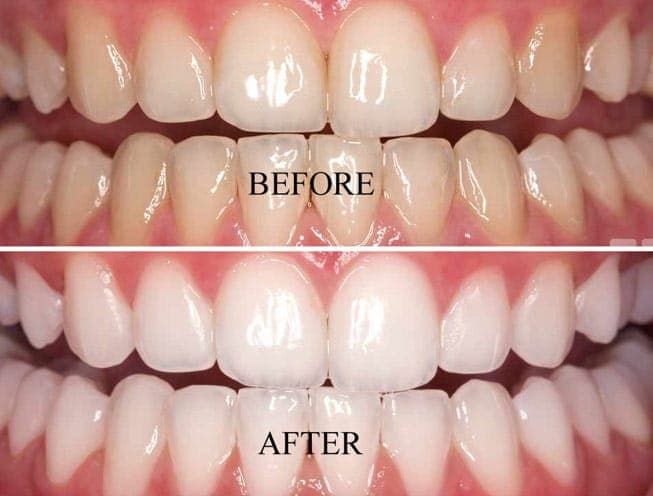
Most whitening guides are written for a reader whose main stain is red wine, whose water has never carried fluoride, and who buys strips off a supermarket shelf. Here, the usual culprits are chai, filter coffee and tobacco; fluorosis is a real possibility; and the first question is often who is holding the gel.
The underlying treatment is the same everywhere — a peroxide-based gel lightens the shade of natural enamel and lifts stains left by age and diet. What differs is what stained your teeth, what else might be going on with them, and how the appointment is sold to you.
What actually stains teeth here?
The same pigments an imported guide names, arriving through different habits. Years of filter coffee and chai is the single most common history patients give, and it is exactly the sort of stain professional whitening is designed for: the bleaching agent works into the enamel to break down pigment from tea, coffee, tobacco and pigmented foods, rather than scrubbing at the surface.
Tobacco deserves a separate line because it is used in more forms here than in the countries these guides are written in, and because it is the habit that most shortens how long a result lasts. Whitening usually holds for several months to a few years, and that range is wide because diet, smoking and oral hygiene move it enormously.
None of this is a reason to be embarrassed at the appointment. Your dentist needs an accurate history to predict how your teeth will respond, and a heavily understated one produces an over-optimistic estimate.
Why does fluorosis matter more in this country?
Because dental fluorosis is more commonly seen in parts of India where groundwater fluoride is high, and it is one of the discolourations that responds poorly to whitening. So does staining from tetracycline, from trauma, and from a nerve that has died.
That is the single most useful thing an Indian reader can take from this page. If your discolouration is mottled, patchy, or present since childhood rather than accumulated over adult years, external bleaching may lighten it unevenly or barely at all — and a clinic promising otherwise is guessing. Your dentist should say so at the assessment rather than after the appointment, and the conversation often moves towards a smile makeover instead, which is a different treatment rather than a stronger version of this one.
Whether any of this applies to you is not something to conclude from a mirror or a search result. It needs an examination.
Who should actually be doing the whitening?
A dentist, always. Whitening here is sometimes offered in settings that are not dental clinics, and the distinction is not a matter of professional territory — it is the whole reason a stronger agent can be used safely.
In clinic, the gums and soft tissues are isolated and protected before any gel is applied and the exposure is timed and monitored. Before that, an examination looks for decay, cracks and exposed roots, because bleaching over any of those causes real pain. Somebody who has not examined your teeth cannot know whether any of those is present. If you are being offered whitening somewhere that will not do that examination, that is the thing to walk away from.
What about charcoal pastes and the whitening toothpastes on every shelf?
They belong to the same category and behave the same way. Whitening toothpastes, charcoal ones included, are mildly abrasive and work on surface stain only. They can genuinely make teeth look cleaner by lifting film, and if that is all you want, that is a reasonable place to stop. What they do not contain is enough active agent to change the underlying shade of your enamel, which is what a professional treatment does — so months of use with no shade change is the product working as designed rather than you using it wrongly.
Over-the-counter kits and strips are a genuine step up: they contain peroxide at a lower concentration and can produce a modest change over weeks. The trade-offs are real, though. There is no gum isolation, the fit is generic rather than made for your mouth, and nobody has checked your teeth first. The risks with whitening come from unsupervised overuse and from bleaching teeth that have untreated problems, which is precisely the situation an unexamined kit creates.
What should a quote include?
Ask for it itemised, and check specifically whether these are inside the number or outside it:
- The cleaning appointment. Whitening is preceded by a scaling and polishing so the gel contacts clean enamel rather than plaque. Scaling and polishing starts from ₹1,499 per treatment and is a separate treatment, so expect it as a separate line.
- A second visit. Whitening is usually one in-clinic session, sometimes two. Ask what happens if the agreed shade is not reached first time.
- Existing crowns, veneers and tooth-coloured fillings. These do not bleach. If yours are visible, lightening the teeth around them can leave them looking darker, and matching them means replacing them — a cost that belongs in the first conversation, not the third.
- Taxes, so the figure you are quoted is the figure you pay.
We have deliberately not published an all-India range on this page. The plan depends on how much staining there is, on the method, and on what dental work you already have, and a range invented to satisfy a search query is not information. Consultation here is ₹500, waived off against treatment, which means the examination that produces a real number costs you nothing if you proceed.
How does the wedding calendar change the planning?
More than patients expect. Most people book whitening before a wedding, a shoot or a new job, and the constraint is not the appointment — there is no downtime, and you can return to work the same day.
The constraint is everything around it. You need the cleaning appointment first, possibly a second whitening session, a couple of days afterwards during which staining foods are avoided, and room for a day or two of sensitivity. During wedding season, appointment slots are also the scarce resource. Plan in weeks rather than days, and if restorations may need replacing to match, plan in longer.
There is one exception to fit around: elective cosmetic whitening is generally postponed during pregnancy and breastfeeding. Say so and the appointment is planned for later.
What patients here ask most often
Will it damage my enamel? Used as directed under dental supervision, professional whitening is not expected to damage enamel — nothing is drilled and no tooth structure is removed.
My teeth are already sensitive — am I ruled out? Often not, but say so beforehand so the plan is built for it, either with a desensitising regimen before and after or with a gentler protocol over more sessions.
Is the scaling appointment an upsell? No. The gel has to reach clean enamel; plaque sitting over the tooth gives you a patchy result.
What if something feels wrong afterwards? Some sensitivity to cold for a day or two is expected and usually settles, and a desensitising toothpaste helps. Do not try to judge it yourself. Contact the clinic if sensitivity is severe or worsening after two or three days, if you get sharp pain on biting, or if gum soreness or bleeding persists; if you develop facial swelling or fever, seek care promptly rather than waiting.
The full protocol is on the teeth whitening page. For a plan built around your teeth, your diet and your date, book an appointment at Indiranagar or Bellandur.