
Planning Teeth Whitening Before a Job Interview
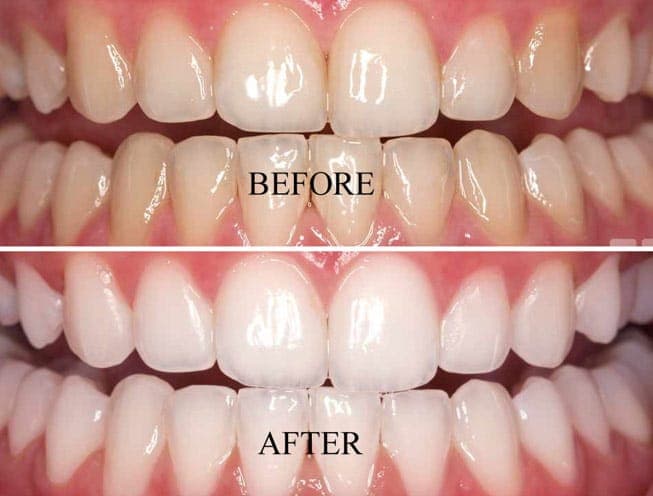
Give it three to four weeks if you can. The sequence has parts that cannot be compressed: an assessment, a scaling and polishing appointment so the gel meets clean enamel, then the whitening session itself — usually one, sometimes two. Afterwards, strongly staining food and drink are avoided for a couple of days and teeth may be sensitive to cold for a day or two. None of that is long, but it is not nothing, and it wants to land before the interview rather than on it.
Why is there more than one appointment?
Because the enamel has to be clean before the gel goes on, and because nobody whitens a mouth they have not examined. Those are two separate pieces of work.
The assessment establishes what is actually staining your teeth, checks the teeth and gums, and settles the shade you are aiming at. The cleaning appointment then removes the plaque and hardened deposit a brush cannot shift and polishes off surface discolouration. Only after that does the peroxide gel go on, with the gums isolated and protected and the exposure timed. Whether any of those can share a day is for the clinic to decide when they see your diary and your teeth — plan on the assumption that they cannot, and be pleasantly surprised.
The interview is four weeks away
That is comfortable, and it is the version of this where nothing has to be rushed. Book the assessment now rather than in a fortnight. The reason is not that whitening takes four weeks; it is that the assessment is the only step that can change the plan, and you want it to change the plan early.
Four weeks also leaves room for the case where a second session is needed to reach the agreed shade. Whether that happens, and when it is scheduled, is decided by your dentist at the time — it is not an interval you can look up and plan around in advance, which is exactly why slack in the calendar is worth more than a precise schedule.
The interview is two weeks away
Still workable, and this is where most people actually start reading. Ring for the assessment on the first working day you can, tell whoever answers that you are working to a date, and give them the date. A clinic can sequence around a deadline it has been told about and cannot sequence around one it has not.
Two weeks is enough for assessment, cleaning and one whitening session with a few days spare at the end. What it does not comfortably absorb is a second session plus a couple of days of avoiding coffee plus an unlucky patch of sensitivity, all stacked into the final week. Say the date out loud early and let the plan be built backwards from it.
The interview is this week
Book the assessment anyway, and go into it prepared for the answer to be that this interview is not the one to whiten for.
That is a genuinely reasonable outcome rather than a wasted trip. A scaling and polishing appointment on its own lifts surface discolouration left by tea, coffee and tobacco, and for a fair number of people that accounts for more of what was bothering them than they had assumed. It has no downtime, you can eat and go back to work the same day, and it will not leave you managing cold sensitivity in a meeting room. If the shade still bothers you afterwards, the whitening is there for the next date rather than this one.
What should I not try to squeeze in late?
Four things, and they are worth stating plainly because the temptation runs the other way as the date closes in.
Do not whiten in the last forty-eight hours. Teeth may react to cold for a day or two afterwards, and staining food and drink are avoided for a couple of days — which on the morning of an interview means no coffee, at the exact moment you would most like one.
Do not try to compress two sessions into consecutive days to reach a deeper shade. If a second session is indicated, the timing of it is a clinical decision made at the appointment, not a lever you can pull against a deadline.
Do not start a smile makeover on an interview runway. That is a planned sequence of several treatments spread over weeks to months, with photographs, models or a digital design before anything begins. It is the right answer to a different question, and it is not a fortnight's work.
Do not buy an unsupervised kit to close the gap. What makes a stronger agent appropriate in clinic is that the gums are isolated first and the exposure is timed and monitored, on a mouth that has been examined. Take those three things away and you have changed the procedure, not sped it up.
What could push the date back, and how would I know?
The assessment is what finds out. Bleaching over untreated decay, a crack or an exposed root causes real pain, so the examination that catches those is not a formality — and if it catches one, that is dealt with before any whitening, which moves your date.
The other outcome worth knowing about in advance is that not every discolouration responds to external bleaching. Staining from tetracycline, from fluorosis, from an old injury or from a tooth whose nerve has died responds poorly or unevenly. Your dentist will say so at assessment rather than afterwards, and only an examination can establish which kind you have. It is not something to diagnose from a mirror or from a photo on your phone.
If you already have a crown, veneer or tooth-coloured filling in the smile line, raise it at the assessment. Those materials do not bleach, so they can end up looking darker than the teeth around them once the natural enamel lightens. Sequencing that properly — whitening, letting the shade settle, then replacing the restoration to match — is more than an interview runway allows.
Will anyone at the interview be able to tell?
There is nothing to see, which is usually the actual worry underneath the question. Whitening does not drill or remove anything, there is no swelling and no dressing, and there is no recovery to explain away. The shade target is agreed with you beforehand precisely so the result reads as a healthy version of your own teeth rather than an obviously artificial white — and if you want it kept conservative, that is a sentence to say at the assessment.
When to contact the clinic instead of pressing on
Sensitivity to cold for a day or two is the most common effect and usually settles on its own, helped by a desensitising toothpaste. Brief gum soreness, or a whitened patch where gel has touched the gum margin, settles quickly too.
Contact the clinic rather than pushing through if sensitivity is still present after several days or is worsening, if gum soreness has not settled, if one tooth is sharply painful, or if anything is stopping you eating or sleeping. Do not try to judge for yourself what is causing it and do not medicate your way to the interview — ring Indiranagar or Bellandur, describe what you are feeling, and let the clinic decide whether you need to be seen before the date.
What it costs, and what the figure depends on
The consultation is ₹500, waived off against treatment. The treatment figure is quoted once you have been examined, because it turns on things nobody can see from the outside: whether one session or two are needed to reach the shade you agreed, whether a cleaning appointment comes first, and whether any existing dental work will need replacing to match afterwards.
The practical move, if there is a date in your calendar, is to get the assessment booked before you have finished deciding. Read what the treatment involves, then book an appointment at Indiranagar or Bellandur and tell them the date. Everything else is planned backwards from there.