
Planning Teeth Whitening Before an Engagement Shoot
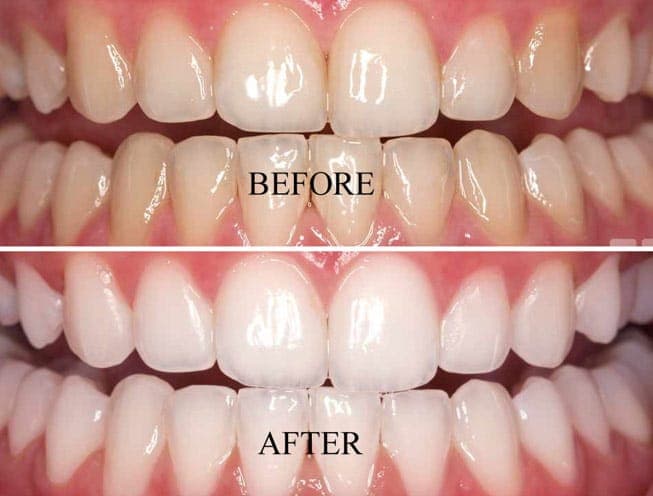
Aim for three to four weeks. The sequence is short but fixed — an assessment, a scaling and polishing appointment, then usually one whitening session and sometimes two — and it is followed by a couple of days of avoiding staining food and drink, and possibly a day or two of teeth reacting to cold. All of that wants to finish before the camera comes out, not alongside it.
How far ahead should the first appointment be?
Earlier than you think, because the appointment that can change your plan is the first one rather than the last.
The assessment is where your teeth and gums are examined, where the cause of the staining is identified, and where a realistic target shade is agreed with you. Everything downstream depends on what that appointment finds. Book it three or four weeks out and any surprise it turns up still has somewhere to go; book it ten days out and a surprise becomes a decision made under pressure.
After the assessment comes the cleaning appointment, which removes plaque and hardened tartar and polishes away surface discolouration so the gel meets clean enamel. Then the whitening itself. If a second session is needed to reach the shade you agreed, when it happens is a clinical decision taken at the time — not an interval published anywhere that you can slot into a spreadsheet in advance.
Why do the final few days matter more than the rest?
Because that is where the aftercare lands, and shoots are catered.
Strongly staining food and drink are avoided for a couple of days after whitening. On a shoot day that means declining the filter coffee somebody is handing round between setups, at the point in the morning when you least want to. Teeth may also react to cold for a day or two, which is a small thing on an ordinary Tuesday and an irritating one when you are being asked to hold a smile.
Leave a clear margin of at least several days between the whitening session and the shoot. It costs you nothing in the calendar and removes the one genuinely avoidable annoyance from the day itself.
What does a close-up show that a bathroom mirror does not?
Detail you have not been looking at, mostly because you have never viewed your own teeth from that distance. Two things are worth checking before the shoot rather than discovering in the proofs.
The first is existing dental work. Crowns, veneers and tooth-coloured fillings do not bleach — they were colour matched on the day they were made and they stay where they are while the natural enamel around them lightens. A restoration in the smile line can therefore finish up looking darker than its neighbours. Your dentist will discuss sequencing at the assessment, and the usual answer is to whiten, let the shade settle, then replace the visible restoration to match. On a shoot runway that sequence may simply not fit, and knowing so early is far better than knowing so late.
The second is that not every discolouration responds to bleaching at all. Staining from tetracycline, from fluorosis, from an old injury or from a tooth whose nerve has died responds poorly or unevenly. A single darker tooth in particular is a different question with a different answer. Which of these applies to you is established by examination, not by studying a photograph of yourself, and your dentist will say so at assessment rather than afterwards.
How white should I ask for?
Ask for the conversation rather than a number. The target shade is agreed with you before anything is applied, and the intent behind that discussion is a result that reads as a healthy version of your own teeth rather than an obviously artificial white.
Say that the reason is a shoot. It is useful information, not vanity — a dentist planning towards a photographed occasion is planning something slightly different from routine maintenance, and they can only account for it if you mention it. Say too if you would rather err on the conservative side. That sentence is much easier to say at the assessment than to unsay later.
What should not be started close to a shoot?
A smile makeover is the important one, and the reason is specific rather than general. A makeover is a planned sequence of treatments spread over weeks to months, with photographs, models or a digital design first, and with temporary restorations worn while the final ones are being made. There is also a short adaptation period once the finals are fitted, with minor adjustments at review being normal. Begin that four weeks before an engagement shoot and there is a real chance of being photographed in the middle of it, in temporaries, which is the one outcome nobody wants.
That is not an argument against a makeover. If the colour is only part of what bothers you — a chip, a gap, teeth that have never matched since some work in your twenties — a makeover is very likely the more honest answer to your question. It is an argument for starting it after the shoot, or far enough before it that the plan finishes.
Two smaller ones. Do not attempt to bring a second whitening session forward to gain a shade before the date; the timing of it is a clinical call. And do not add an unsupervised kit on top to push things further. The supervision is not packaging — in clinic the gums are isolated and protected before the gel is applied and the exposure is timed and monitored, on a mouth somebody has examined. Take those away and you have a different procedure, not a faster one.
If the shoot is next week
Ring anyway, but treat the cleaning appointment as the realistic target rather than the whitening. Polishing lifts surface discolouration left by tea, coffee, tobacco and pigmented foods, there is no downtime, and you can eat and go back to work the same day. For a good number of people that turns out to address a useful share of what they were unhappy about, and it leaves nothing to manage on the shoot day.
Then whiten afterwards, for the wedding, or for the next set of photographs, on a runway that gives the sequence room.
What could change the plan at the assessment?
Anything that means bleaching would be inappropriate right now. The examination catches decay, cracks and exposed roots, and bleaching over any of those causes real pain — which is why the check exists and why it is not a rubber stamp. If something is found, it is dealt with first, and your date moves.
Raise anything you have already noticed. If a tooth twinges with cold water, say so: existing sensitivity can often be managed with a desensitising regimen before and after, or with a gentler protocol spread over more sessions, but only if the dentist knows about it while there is still time to plan around it.
When to contact the clinic instead of pressing on to the date
Sensitivity to cold for a day or two after treatment is the most common effect and usually resolves on its own, with a desensitising toothpaste helping. Brief gum soreness, or a whitened patch at the gum margin where gel has contacted soft tissue, settles quickly.
Contact the clinic rather than working around it if sensitivity persists beyond a few days or is worsening, if gum soreness has not settled, if a single tooth is sharply painful, or if anything is disturbing your eating or your sleep. A date in the diary is not a reason to press on. Do not try to establish the cause yourself — ring Indiranagar or Bellandur, describe what you are experiencing, and let the clinic decide whether you should be seen before the shoot.
What it costs
The consultation is ₹500, waived off against treatment. The figure for the treatment follows the examination, since it turns on how many sessions are needed to reach the agreed shade, whether a cleaning appointment comes first, and whether any existing restoration will need replacing afterwards to match.
If there is a date in the calendar, the assessment is the thing to book first and the thing people leave latest. Read what whitening involves, then book an appointment at Indiranagar or Bellandur and tell them when the shoot is. The rest of the plan is built backwards from that date.