
Teeth Whitening Aftercare: The First Week, Day by Day
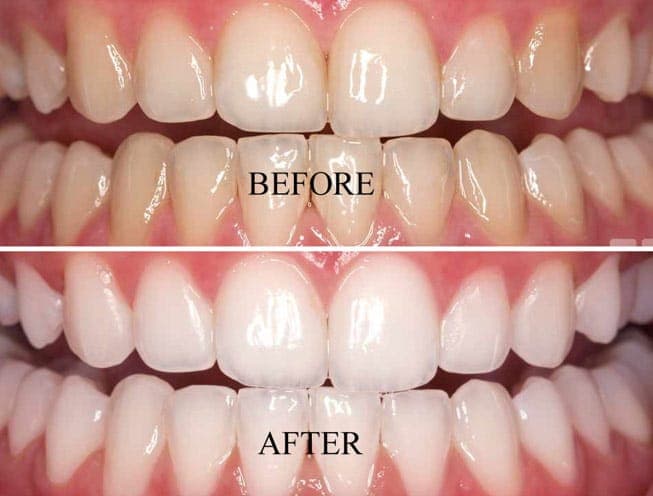
There is no downtime after whitening. The teeth are at their most absorbent for the first couple of days, so deeply coloured food and drink are avoided then; sensitivity to cold for a day or two is common and usually settles on its own, helped by a desensitising toothpaste. By the end of the week most people are back to their normal habits entirely.
What follows is that week set out properly, including the part that most aftercare sheets leave vague — which symptoms are ordinary and which ones mean picking up the phone.
What happens in the first few hours after the appointment?
You walk out and carry on with your day. Whitening has no recovery period in the way an extraction does: nothing has been drilled, nothing removed, and no anaesthetic needs to wear off before you eat.
Two things may be noticeable straight away. Teeth can feel a little tender or react sharply to cold air and cold drinks, and the gum margin may look pale or feel slightly sore where gel has been near it. Both are recognised effects of the treatment and both are described as short-lived. Have something at room temperature rather than iced, and give your mouth an uneventful evening.
Days one and two: what should I keep off the list?
Anything strongly coloured, because this is the window in which the enamel takes up pigment most readily. The practical list for the first forty-eight hours:
- Coffee, black tea and masala chai
- Red wine and dark colas
- Beetroot, turmeric-heavy curries and tomato-based gravies
- Soy sauce, dark chutneys and berries
- Tobacco in any form, including paan and gutkha
Smoking deserves its own line rather than a place on a list. It is the single habit most likely to undo what you have just paid for, and the first two days are when it does the most damage.
What can I eat and drink instead?
Plainer, paler food, and there is more of it than people expect. Curd rice, idli, plain dosa, chapati, paneer, chicken or fish cooked without a dark gravy, bananas, apples, milk, coconut water and plain water all sit comfortably inside the first two days.
If you must have chai or coffee, a straw helps for iced versions and rinsing your mouth with water afterwards helps for hot ones. Neither makes a stained drink harmless — they reduce the contact time rather than removing it — so treat them as damage limitation rather than permission.
Days three to seven: when can I ease back?
From about the third day, most people find they can return to their usual diet, with the strongest offenders reintroduced last. The formal instruction from the treatment itself is that staining foods are avoided for a couple of days; the rest of the week is a sensible taper rather than a rule.
Brushing and flossing carry on exactly as normal throughout. There is no reason to brush harder or more often, and doing so is more likely to irritate the gum margin than to improve anything. If you have been given a desensitising toothpaste, this is the week to use it consistently rather than occasionally.
What should I do about sensitivity?
Use a desensitising toothpaste and let it settle, which is what it usually does within a day or two. Cold is the common trigger, so cold water, iced drinks and cold air on a morning walk are the things people notice.
Sensitivity is the most frequently reported effect of whitening and, in the ordinary course, it eases rather than builds. If you were already sensitive before treatment and had said so, you may have been given a desensitising regimen to follow before and after — keep to it for the full period you were told, not just until the discomfort passes.
What about my gums?
Brief soreness or a pale patch at the gum margin can happen where gel has touched soft tissue, and it is described as settling quickly. Warm salt-water rinses are gentle and reasonable in the meantime.
What is not reasonable is applying anything else to the area on your own initiative — no antiseptic gel, no clove oil, no over-the-counter mouth ulcer preparation — unless the clinic has told you to. A gum that is not settling is information your dentist needs to see for themselves, and self-treating it mainly makes it harder to assess later.
When should I ring the clinic instead of waiting it out?
Ring if any of the following happens. This list is deliberately about what to do, not about what any of it means — that is not something you can work out from home, and it is not something this article can tell you.
- Sensitivity that is intensifying as the days pass rather than settling
- Pain that wakes you at night, or that your usual over-the-counter pain relief does not settle
- One tooth hurting distinctly more than the others, or pain when you bite on it
- Gum soreness, a blanched area or an ulcerated patch that has not resolved within a couple of days
- Bleeding, swelling, or any reaction where a tray or gel sat
- Anything at all that you were not told to expect
None of these are common, and having one does not mean something serious has happened. What they do mean is that the next step is an examination rather than a guess. Telephone whichever branch you were treated at, describe what you are noticing, and let the clinic decide whether you need to be seen — they would far rather check something that turns out to be nothing.
Do not, in the meantime, try to fix it with an over-the-counter whitening product or a repeat application of anything. Unsupervised use is where prolonged sensitivity and gum burns come from, and adding it on top of a problem nobody has looked at makes both harder to sort out.
What keeps the result past the first week?
Ordinary hygiene, plus periodic professional cleaning. The result lasts several months to a few years, and where you land in that range is decided by diet, smoking and how consistent you are with brushing, flossing and check-ups.
A scaling and polishing appointment, ₹1,499 per treatment, lifts the surface deposit that builds up between visits and that a toothbrush cannot reach — a good deal of what people assume is the whitening fading is deposit sitting over a shade that is still there underneath.
One last note for anyone whose plan does not end here. If crowns, veneers or visible fillings are due to be matched or replaced to the new shade, that sequencing belongs to a smile makeover plan and is settled with your dentist rather than improvised after the fact.
If anything about your first week is not going the way this describes, book an appointment at Indiranagar or Bellandur, or call the clinic first if you would rather be advised before travelling.