
Radiofrequency Microneedling: The USA Trend, Assessed for Indian Skin
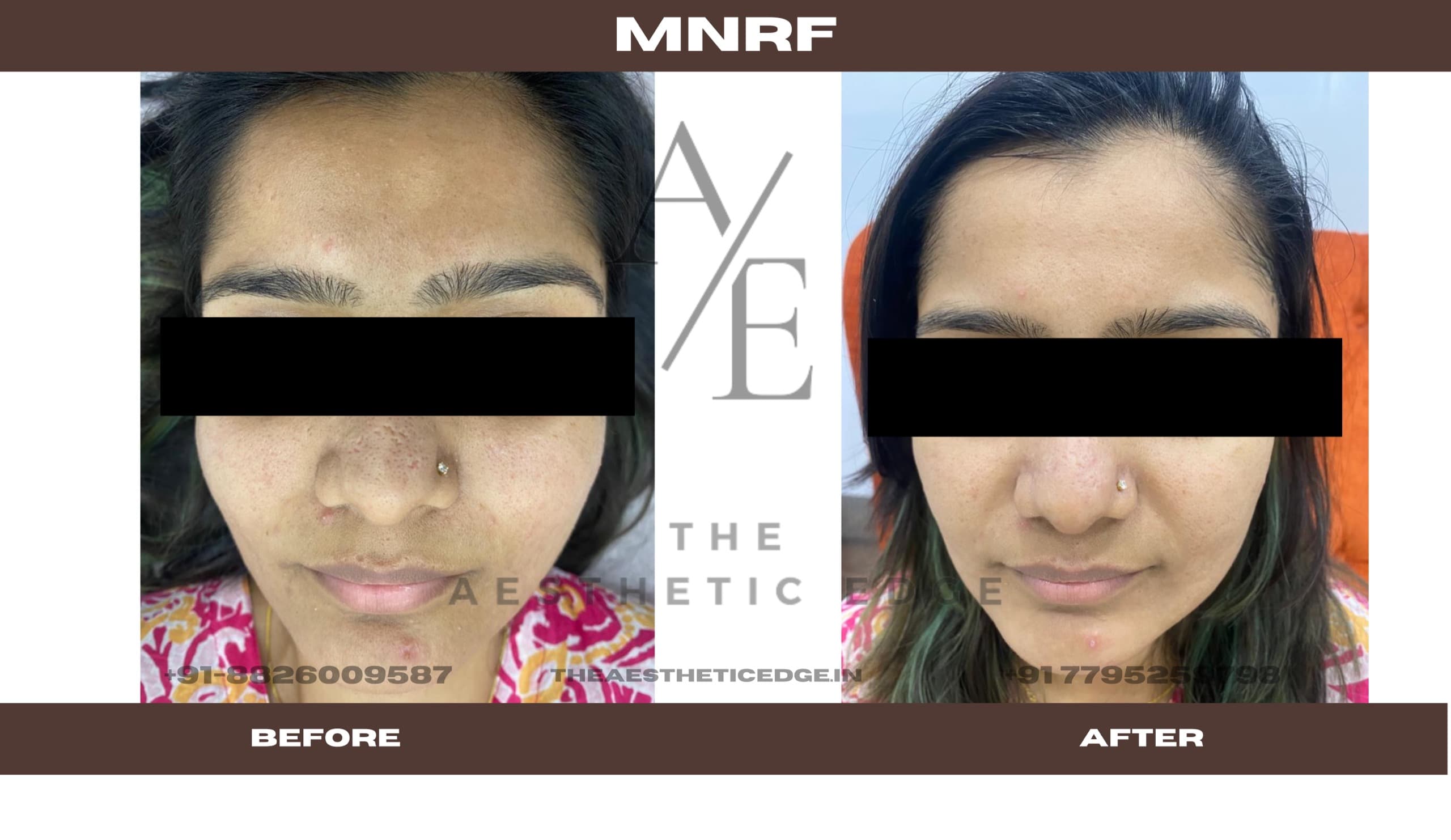
Radiofrequency microneedling is the category that American clinics market under brand names and that Indian clinics have long written as MNRF. It is one thing: insulated needles that deliver radiofrequency energy into the deeper layers of the skin, prompting collagen where acne scars, open pores and early laxity sit. The mechanism travels well to Indian skin. Most of the claims bolted onto it do not.
What is the trend actually referring to?
A delivery method, dressed up as a discovery.
The videos you have been served — before-and-afters set to music, a numbing cream sequence, a device stamped across a cheek — are showing a treatment whose premise is unremarkable in dermatology and has been in routine clinical use in India for years. Fine needles enter the skin; energy is released from their tips at a chosen depth; the skin responds by remodelling collagen underneath.
What is new is the volume of the marketing, not the physics. If you have read about MNRF in Bangalore and RF microneedling on an American feed and assumed they were rival treatments, they are the same category described by two industries with different naming habits.
Is a branded device a different treatment?
No — it is a manufacturer's version of the same category, and this is where readers get sold on the wrong thing.
Names like Morpheus8 belong to particular machines. They differ in needle counts, in the depths a given handpiece can reach, in how the energy is delivered and in how the interface is designed. Those are real engineering differences, and they matter to the doctor choosing settings far more than they matter to the patient choosing a clinic.
To be explicit, because it is the sort of thing that gets misread: naming a brand on this page is not a claim that we run that manufacturer's machine. This site does not publish a device brand at all. What we do publish is that MNRF here is performed by a doctor, always, with the depth and energy set for your skin at the assessment. If a specific system matters to you, ask before you book rather than assuming.
The question worth asking a clinic is not "which machine" but "who is choosing the numbers, and on what basis".
Why does this particular trend suit Indian skin?
Because of where the energy ends up rather than anything about the branding.
The needles carry the radiofrequency beneath the surface, so the layer holding most of the melanin is passed through rather than treated. That is the basis for MNRF carrying a lower pigmentation risk than many surface lasers — the single characteristic that decides whether an energy treatment is usable at all on skin in the Fitzpatrick IV to VI range.
So this is an unusual case of an imported trend being more relevant here than where it was popularised. The imported enthusiasm is the part to keep. The imported expectations are the part to leave behind.
What does the trend get right?
That collagen remodelling at depth is the sensible route for acne scarring, enlarged-looking pores, early sagging and rough texture — concerns that surface treatments genuinely cannot reach.
That it is not a facial. A session runs about an hour, is worked through zone by zone, and starts with numbing cream for a reason.
That the recovery is short. Redness and mild swelling generally settle within hours, with light crusting at the needle points for a few days afterwards.
What does it get wrong?
One session, transformed face. Most plans here run to three or four sessions, spaced by the doctor. A single dramatic before-and-after is either several sessions compressed into one caption or a lighting decision.
Instant results. Some early change can be visible after a first session, but what people are actually paying for builds over weeks as collagen reorganises itself. That biology cannot be accelerated by a device, only respected by a schedule.
Permanence. No collagen treatment stops time. Skin continues to age after a course as it did before one.
The jawline claims. The tightening effect documented for this treatment is for early sagging and fine lines. A surgical result is a surgical result, and filming an angle is not a treatment outcome.
At-home versions. The needling half can be bought online. The half that places controlled energy at a chosen depth cannot, and should not be attempted outside a clinic.
Does the Bangalore climate change anything?
The sunlight does, and it is the part American content has no reason to cover.
After a session, treated skin burns easily for roughly a fortnight, which makes SPF 30 or higher and real shade part of the treatment rather than a suggestion. Bangalore's exposure does not switch off for a season, so that commitment applies through the whole course, including the weeks between visits when nothing appears to be happening.
Anything else about heat, sweat or your particular routine belongs in the written aftercare you are given, which is specific to your session's settings.
Is it a replacement for a laser, or for what I already do?
No. It answers a structural question, not a colour one.
If what bothers you is pigment — sun spots, freckles, marks left behind by old acne — a Q-Switch laser targets that directly, and no amount of collagen stimulation is the right tool for it. If you want the needling response without the radiofrequency component, microneedling with a Dermapen remains a legitimate treatment in its own right rather than a lesser version of this one.
How should I judge a clinic offering it?
By the consultation, not the machine.
Ask what is being treated and what is not, what depth and energy are being chosen for your skin type, how many sessions the plan runs to, and how progress will be recorded — here it is photographed session by session, which is the only reliable way to tell slow improvement from wishful thinking.
If you would like an honest assessment of whether this trend has anything to offer your skin specifically, book a consultation. It is ₹500, adjusted against the cost of treatment if you decide to proceed.