
Questions to Ask Any Clinic Before Dermal Fillers
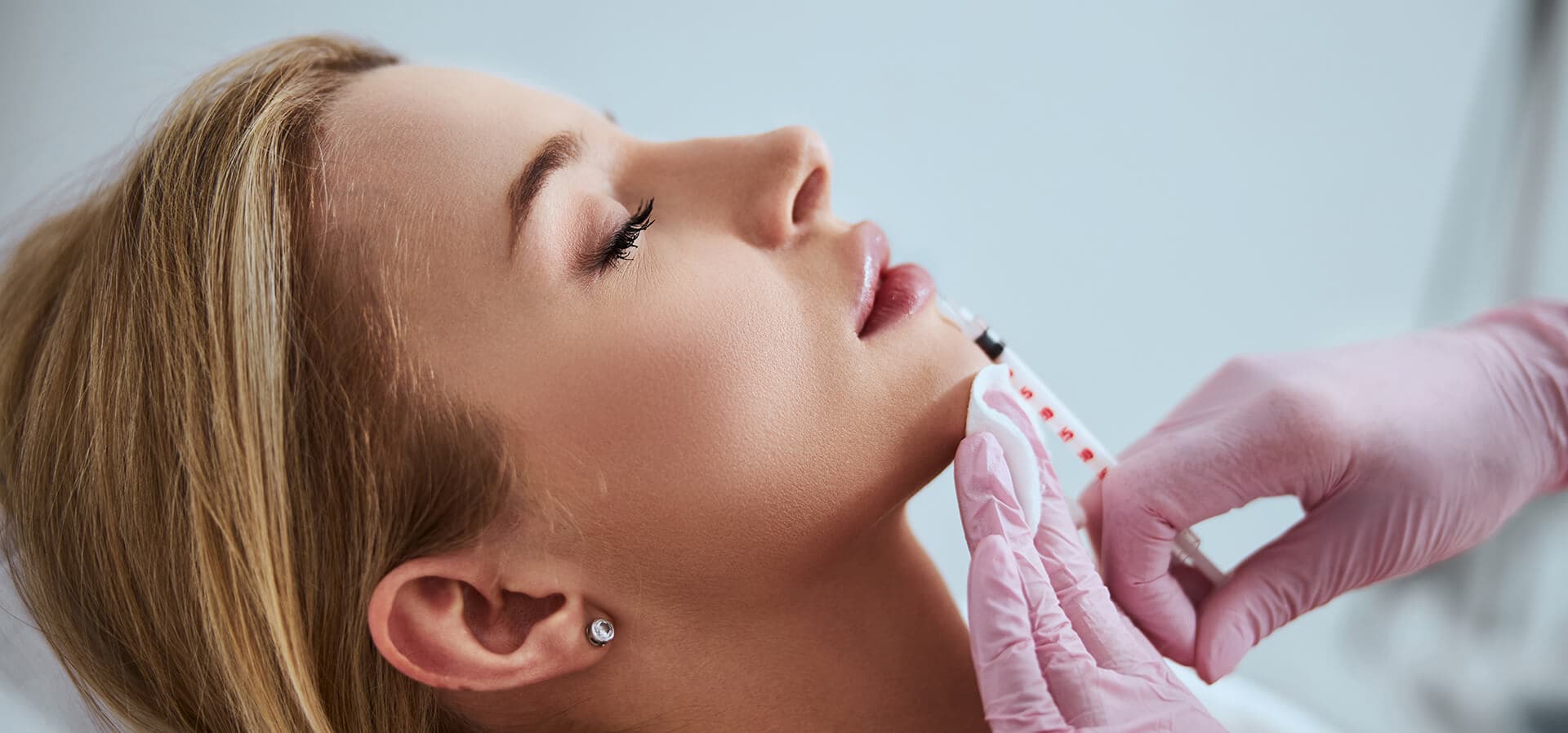
Before booking a filler anywhere, establish four things: who is holding the needle and whether they are a doctor, which specific product is going in and whether you will see it opened, what happens if you dislike the result, and whether the clinic keeps the reversal agent on the premises. Those four answers tell you more about a clinic than any before-and-after gallery, and all four can be asked in a single consultation.
The list below expands that into ten questions. Ask them anywhere you are considering, including here. None of them is rude, and a clinic that finds them irritating has answered the most important one already.
1. Who is actually going to inject me?
You are testing whether the person planning the treatment is the person performing it, and whether they are medically qualified.
This matters more with fillers than with almost anything else in aesthetics. Product choice, the plane the gel sits in and the volume used are decided by whoever knows the facial anatomy at each injection point — and that judgement is the part of the treatment that most determines the outcome. At The Aesthetic Edge a filler is a doctor-only treatment, and the reason is not marketing: the rare complications need somebody who can recognise and manage them in the room.
A straight answer names a person and a qualification. A vague one talks about "our team".
2. Is a filler even the right answer to what is bothering me?
This is the question the consultation exists to settle, and the one patients skip because they have already decided.
There are three different problems that all present as "my face looks older", and they need different tools. Lost volume is a filler problem. Movement lines — the ones that appear when you frown or smile — belong to a wrinkle relaxer such as Botox. Tissue that has descended rather than deflated is a lifting problem, and a thread lift is built for that. Applying the wrong tool to the right problem is exactly what produces the overfilled look people are trying to avoid.
The answer you want includes the possibility of "not this, or not yet". A clinic that has never told a patient a filler is not the right answer for their concern is a clinic that is selling rather than assessing.
3. Which product are you using, and will I see the box?
Ask for the family and the specific product, not just "hyaluronic acid".
The established hyaluronic acid families are Juvederm and Restylane, and each makes products formulated for particular areas — Volbella and Kysse, for instance, are lip products. A gel suited to a jawline is a poor choice for a lip and vice versa, so a clinic that cannot tell you which product it is reaching for has not planned your treatment.
Then ask whether the sealed box is opened in front of you. Here it is, before anything is injected, so you can verify what is being used. It is a small ceremony and it settles an entire category of worry.
4. How much are you planning to use, and why that much?
Hyaluronic acid fillers come in pre-filled syringes, usually of one millilitre, and treatments are planned in those units. How many you need depends on the area and on how much volume has actually been lost, which is why a jawline and a lip are rarely the same number.
You are listening for reasoning rather than a figure — an explanation tied to your face, and confirmation that the plan is agreed before anything is opened.
5. What happens if I do not like the result?
Most fillers used are hyaluronic acid based, and one of the genuine advantages of that chemistry is that they can be dissolved with an enzyme injection if the outcome is not what you wanted. That should be said to you plainly at consultation rather than discovered afterwards.
6. Do you keep the reversal agent here?
A closely related question, and a sharper one, because it is about the premises rather than the principle.
Blockage of a blood vessel is a rare but real risk of any filler, and it is time-sensitive. A clinic that stocks the reversal agent can act; one that does not has to send you somewhere that can. Ask the question before you book, when the answer is still useful to you.
7. What are the risks, and what would you do if one happened?
A good answer covers both halves — the ordinary and the rare — without minimising either.
The ordinary: swelling, redness, bruising and tenderness, common and short-lived, with swelling most noticeable around the lips and eyes. Product settling unevenly in the first days, which can be adjusted. The rare and serious: infection, allergic reaction, and vascular blockage.
If a clinic tells you a filler carries no meaningful risk, you have learnt something you did not ask for.
8. What should I do and avoid, before and after?
You want this before you book, not as a leaflet on your way out, because some of it needs a few days' notice.
Around the appointment you should expect to be asked to avoid alcohol, smoking, strenuous exercise and fish oil — the last because it makes bruising more likely, as do blood thinners. Mention everything you take. Afterwards, ice for swelling, and if a lump appears, report it rather than massaging it yourself.
9. Is a review appointment part of this?
The final result is there at one to two days, and the result should be formally reviewed once it has settled over the following days. That review is where an unevenness gets corrected while correcting it is still easy.
Ask whether it is included, when it happens, and who you speak to in between. A clinic that has no plan to see you again has no plan to fix anything.
10. What does it cost, and what does the price cover?
Fillers here start from ₹14,999 per treatment, and how much you need is settled after examination rather than over the telephone. The consultation is ₹500, waived against treatment.
Two things to check anywhere: that the figure quoted covers the plan you discussed rather than a single unit of something, and that nothing is being priced as a limited-time decision. A treatment with a six-month to two-year lifespan does not need to be bought today.
How to use this list
You will not get through all ten in order, and you should not try. Take the four in the opening paragraph as the ones that must be answered, and let the rest come up naturally. What you are really assessing is whether the person in front of you explains, checks and is willing to say no.
If you would like to put these questions to a doctor, book an appointment at our Indiranagar or Bellandur clinic — and hold us to the same list.