
QR678 for Hair Growth: What's Actually in the Injection
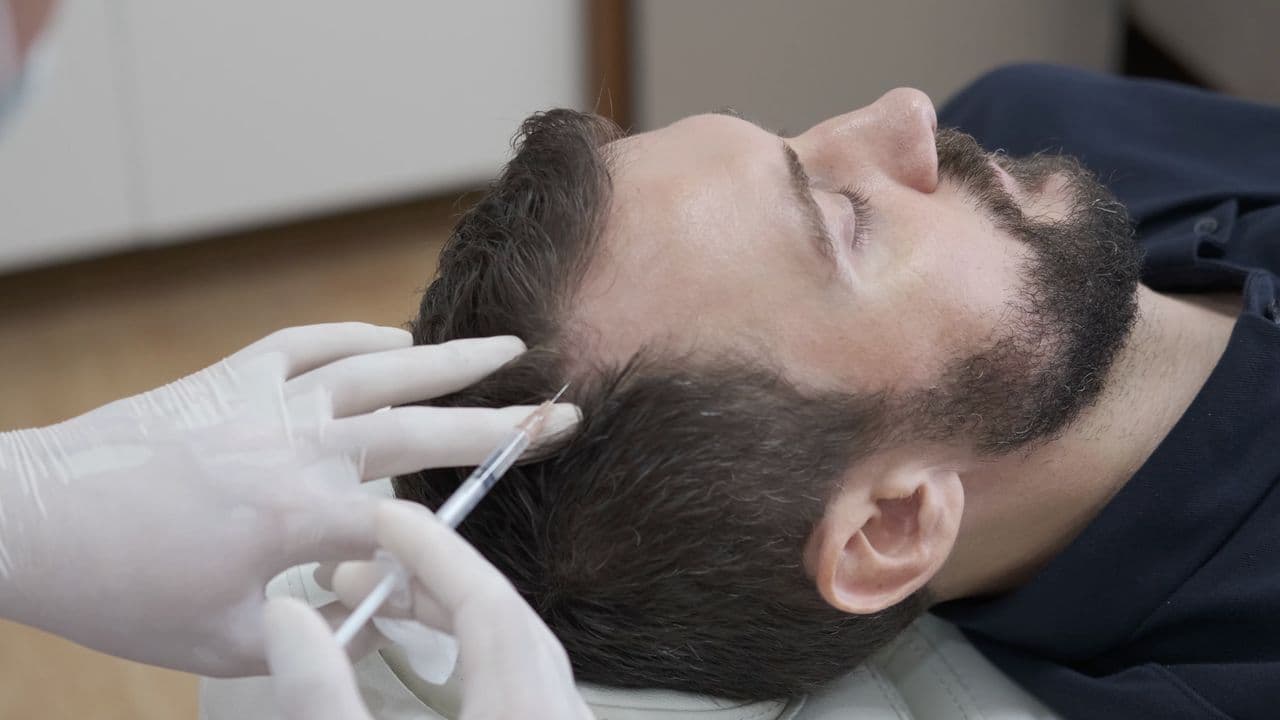
QR678 is a plant-derived growth factor formulation, injected superficially into the scalp to support thinning hair. The single fact that distinguishes it from the treatments most patients have already read about is that it is not made from your blood — it arrives as a ready formulation, so there is no venepuncture and no centrifuge wait, and a session runs to about fifteen minutes.
That last detail is why a lot of people ask about it. Most hair-loss injectables involve sitting in a clinic while a sample of your own blood is drawn and processed, and that adds time to every single visit. If your realistic window for an appointment is a gap between meetings, or the hour before Bellandur traffic turns solid, the difference between a fifteen-minute visit and a much longer one is not a small thing.
What is in the formulation?
The growth factors in QR678 Hair Growth Treatment are sourced from plant-based origins. That is the practical difference between it and the blood-derived alternatives — not a marketing distinction, but the actual reason the appointment looks different. Nothing has to be taken from you and prepared on the day, because the formulation is already made up.
The delivery is superficial. The solution goes into the superficial layer of the scalp with very fine needles. There are no incisions and no stitches, and it is performed by a doctor, always. That is worth saying plainly, because scalp injectables in this city are sometimes offered by people who should not be holding a needle near your hairline.
Downtime is none. You go back to work, you get on with your day.
Who is it actually for?
QR678 is used for male pattern baldness, female pattern hair loss and certain forms of alopecia — the common thread being scalps where active follicles remain. That condition is the entire basis of whether this treatment is worth your money, and it deserves to be stated bluntly rather than buried at the bottom of a page.
Its effect is limited on a scalp that is completely bald, because the treatment acts on follicles that are still present. If the follicles are gone, there is nothing there for a growth factor to support. At consultation your doctor will tell you honestly whether there is enough active follicle to work with. A "yes" to everyone is not a clinical opinion, it is a sales position.
For many Bangalore patients the picture is early to moderate thinning rather than bare scalp: a widening part line, a temple that has crept back, hair that comes out in the shower in quantities that were not normal two years ago. Hard water, long commutes with a helmet on, and the pollution load of the central corridors all get blamed, and they are not irrelevant, but pattern loss has its own underlying driver and that is what this treatment addresses.
How is QR678 different from GFC?
This is the comparison almost every patient wants, so here it is directly. GFC Hair Loss Treatment is prepared from a sample of your own blood at every session. So is the variant offered as Yuskin GFC Treatment. QR678 is not — it is the plant-derived formulation described above, so there is no blood draw and the sessions are shorter.
Which of them suits you is decided at consultation, on your scalp rather than on a preference formed by reading. They are genuinely different approaches to a similar goal, and the honest answer to "which is better" is that it depends on what your examination shows. Anyone who can tell you which one you need before looking at your scalp is guessing.
What you can reasonably weigh yourself is the practical side: whether you are comfortable with a blood draw at every visit, and how much appointment time you can actually commit to over a course of treatment.
What does a course look like?
Around five sessions, spaced roughly three weeks apart, is the usual starting course. Each one is about fifteen minutes.
The word "starting" matters. The plan is not fixed at the outset. Protocols are reviewed at the three-month mark against your baseline photographs and adjusted according to how you respond. Some people need the plan changed; that is a normal part of the process rather than a sign something went wrong.
Scalp photographs are taken before the first session for exactly this reason. Hair loss and hair regrowth are both slow enough that memory is a poor witness. You cannot reliably recall what your part line looked like twelve weeks ago, and neither can we. The change gets compared side by side at review rather than recalled.
When will I actually see a difference?
Reduced shedding tends to come first. That is usually the earliest thing patients notice — fewer hairs on the pillow, less collecting in the drain — and it comes before any visible change in density.
Density changes take months, because hair grows slowly and there is no way to hurry that. A follicle that responds still has to grow a hair out to a visible length, and that is a biological timetable nobody can shorten.
Results vary between patients and cannot be promised. Comparison photographs at three months are how we judge it, and if the photographs do not show what we hoped, that is information worth having rather than something to talk around. A treatment that is not working for you should be reviewed, not simply continued.
Questions worth asking before you start
Whichever clinic you go to, these are fair questions and a good doctor will welcome them. Are there enough active follicles on my scalp for this to do anything? Will baseline photographs be taken, and will I see them side by side at review? Who is performing the injections? What happens at the three-month review if the photographs show little change?
If you want an assessment of your own scalp, you can book an appointment at either our Indiranagar or Bellandur branch. Bring any photographs you already have of your hair from a year or two ago — they are more useful than you would think.