
Monsoon Humidity and Fungal Acne in Bangalore
"Fungal acne" is the popular name for a bumpy, often itchy eruption that turns up in damp weather and behaves differently from ordinary spots — and the reason it matters is that the two respond to different things. Bangalore is damp for an unusually long stretch each year, so the question comes up here more than the season length elsewhere would suggest. Which one you have is settled by an examination, not by a photograph or a page.
That last sentence is the whole point of this article, so it is worth being blunt about it up front: nothing below diagnoses anybody.
Why does Bangalore stay humid for so much of the year?
Because the city is wet from two directions rather than one. The southwest monsoon brings rain through roughly June to September, and the northeast monsoon follows across October and November, so the damp stretch is a run of months rather than a short burst.
That length is the part that matters for skin. A week of humidity is an inconvenience. Half a year of it means sweat evaporating slowly, occlusive sunscreen and makeup sitting on damp skin for longer, gym clothes and helmet padding drying more slowly, and skin that is rarely properly dry between mornings. None of that causes any particular condition on its own, but it is a consistent background that people notice their skin reacting to.
Patients here describe it the same way each year: the same routine, the same products, and suddenly a rash of small bumps that were not there in February.
Is "fungal acne" actually acne?
It is not the same thing, and that is the useful bit of the label even though the label itself is loose. Ordinary acne and the pattern people call fungal acne can occupy the same face at the same time, which is exactly why self-sorting them from a mirror is unreliable.
Broadly, what makes people suspect the second is a change in character rather than severity — bumps that are unusually uniform in size, that itch rather than hurt, and that appear in crops on the forehead, hairline, chest or back rather than as individual spots. But every one of those features shows up in ordinary congestion too, in some people, some of the time.
We are not going to guess from here. If a page tells you confidently that your bumps are fungal, it is describing a statistical likelihood and calling it your skin.
Why does getting the distinction right matter?
Because the wrong assumption is what makes a treatment plan stall for months without anything obviously going wrong.
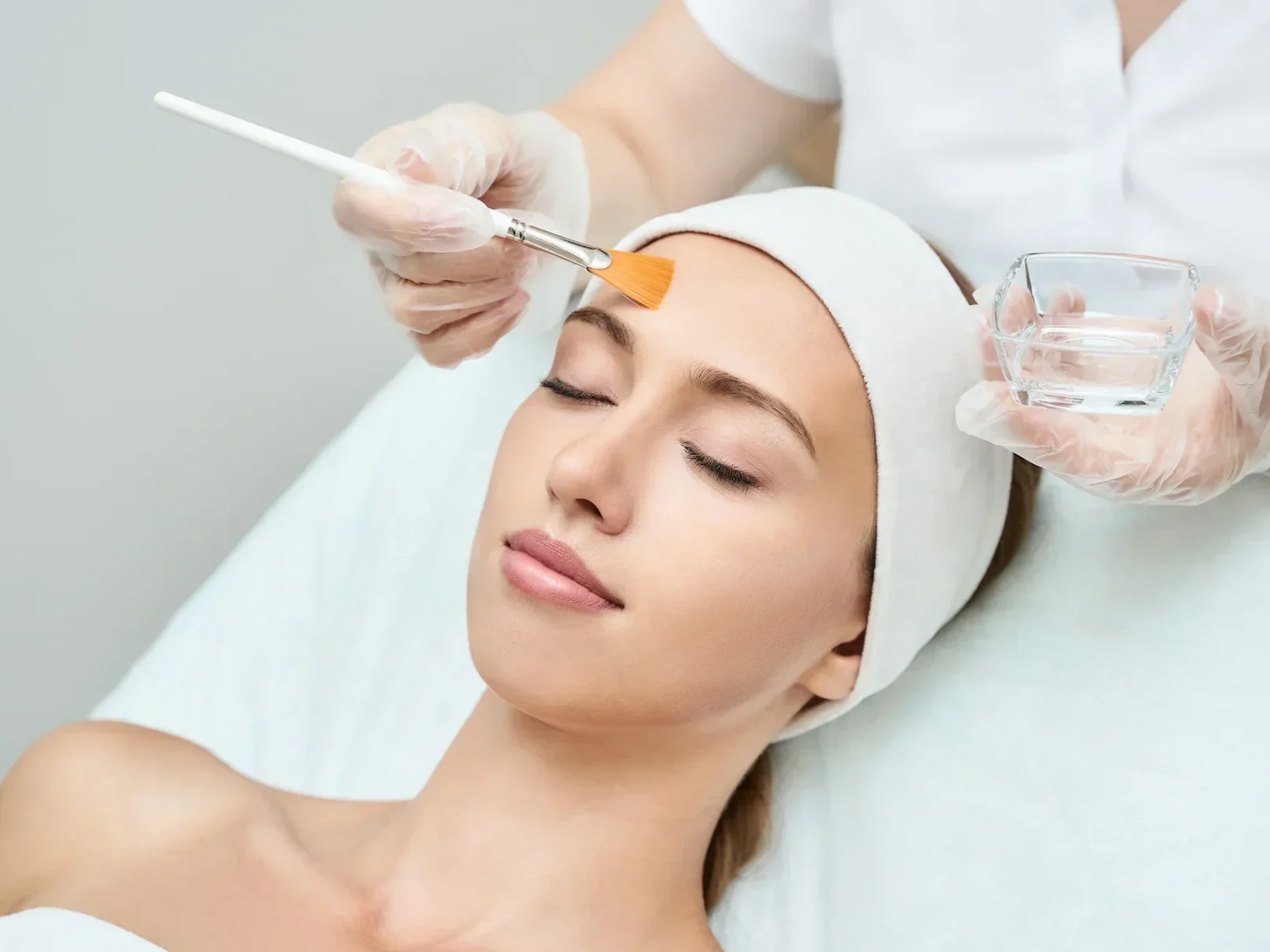
If congestion is the problem, the tools aim at the pore. A chemical peel using salicylic acid or another keratolytic agent clears the pore lining, which is what helps oil-prone, congested skin settle between sessions. Superficial peels are repeated over a few months to build that effect, with the depth and the agent chosen for your skin type after a patch test.
If the eruption is something else, applying the congestion answer to it is a neutral outcome at very good, and an irritating one at worse. Repeating that cycle over a full monsoon is the usual story behind "I have tried everything".
Should the active eruption be settled before anything else?
Generally yes, and the treatment cores are explicit about it rather than diplomatic. Microneedling, for example, lists active acne alongside pregnancy, breastfeeding, active herpes and moderate-to-severe eczema or psoriasis as reasons to treat something else first or choose a different route. BB Glow is not offered over active infections or open wounds at all.
So the sequence usually runs: work out what is actually erupting, settle it, and only then address what it has left behind. Attempting the second while the first is unresolved is how people end up with two problems and a longer timeline.
There are other histories that change the plan in the same way. Recent isotretinoin or other acne treatment, pregnancy and breastfeeding, diabetes for certain peels, and recent cosmetic surgery all alter what can safely be used — or mean waiting.
What about the marks left behind after a wet season?
That is a separate conversation, and a fairer one to have in December than in August.
Flat brown or red marks left where a bump used to be are pigment sitting in the surface, and a course of peels lifts pigmented cells while encouraging turnover underneath, so they read progressively lighter. Where the texture itself has changed — indentations rather than colour — microneedling works differently, creating controlled micro-channels so the skin rebuilds with new collagen and elastin through the scar rather than over it. Typically six to eight sessions, depending on what is being treated.
Your doctor will tell you which of the two you are looking at. It is a genuinely common mix-up and it decides which treatment is even relevant.
What is sensible to do while waiting for an appointment?
Ordinary, undramatic things, and deliberately not a new active every week.
Let skin and fabric dry properly — helmet padding, pillowcases, towels and gym clothes all stay damp longer in a Bangalore August than they do in a Bangalore February. Wash off sweat rather than layering over it. Resist the urge to escalate, because irritated skin marks more readily, and picking at anything is the reliable way to turn a temporary bump into a mark that outlasts the monsoon by months.
And keep wearing sunscreen. Overcast is not the same as low UV, and pigmentation left behind by any eruption settles far more cleanly under daily broad-spectrum protection than without it.
Where does an actual answer come from?
From someone examining the skin. A doctor assesses skin type, tone and texture, takes the history that decides what is safe to use, and patch tests before any peel is committed to. Peel sessions start from ₹2,999 per session; what a course comes to depends on depth and what your skin needs, and that is settled in person rather than quoted in advance.
The consultation is ₹500, waived against treatment. If this is the third monsoon running that your skin has done this, book a consultation and get the question of what it is settled before spending another season on the how.