
What Is a Chemical Peel? A Plain-English Explanation
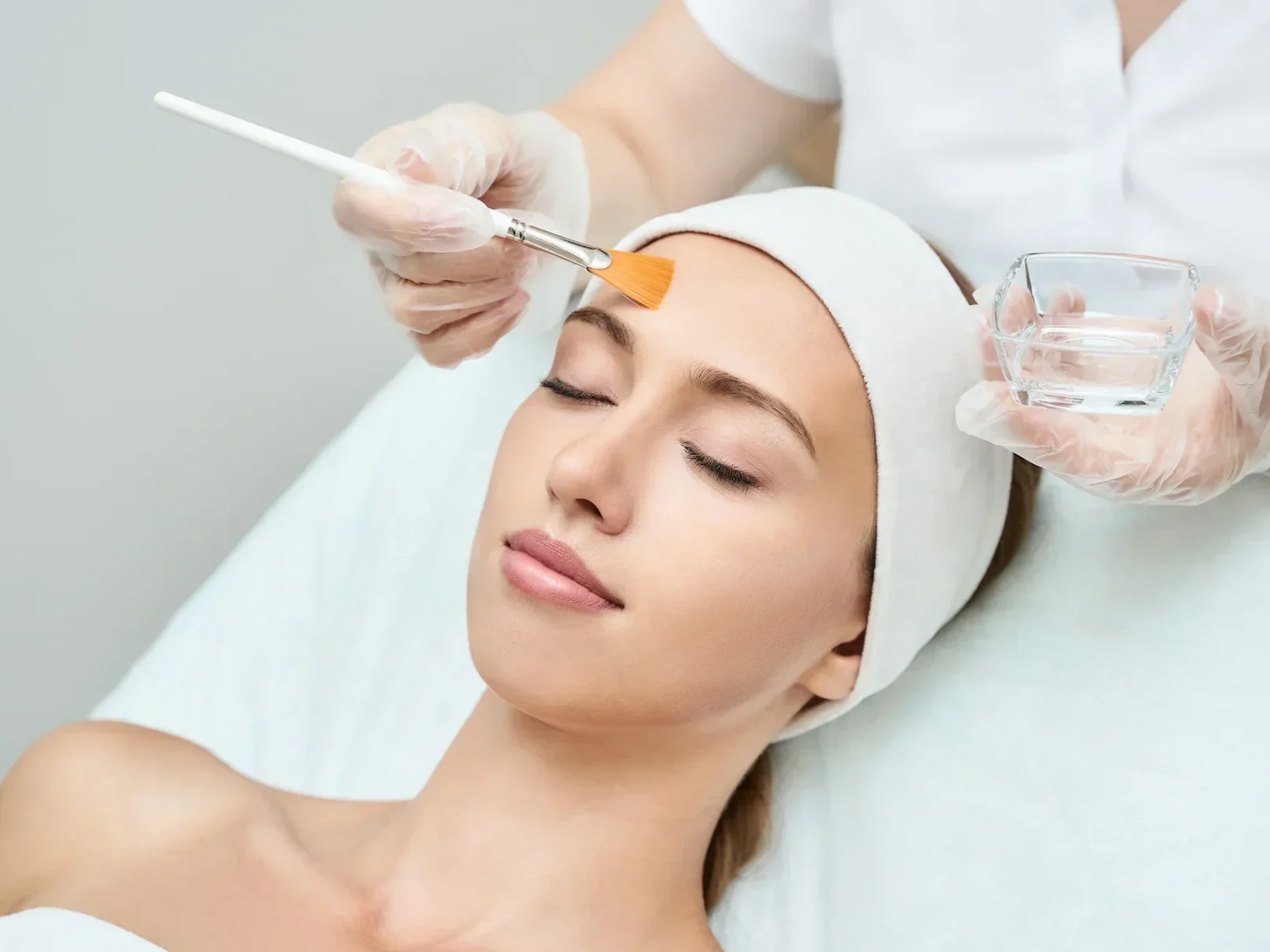
A chemical peel is a medical treatment in which a doctor applies a carefully chosen solution to your skin, leaves it there for a short timed period, and then neutralises it. Loosening the tired outer layer that way lets newer skin come to the surface, which is why peels are used for dullness, rough texture, post-acne marks and patchy tone.
That is the whole definition. Everything else — which acid, how strong, how often — is a set of decisions made about your particular skin, and those decisions are what this article is really about.
Why is it called a peel if nothing is peeled off in the clinic?
Because the peeling happens later, at home, and gradually. The solution does its work while it is on your face; the visible shedding follows over the next few days as the loosened surface leaves on its own.
This is the single biggest mismatch between the word and the experience. Nobody lifts a sheet of skin off you at the end of an appointment. After a superficial peel most people leave looking slightly pink and go about their day, and the flaking — if there is much of it — turns up two or three days afterwards.
The exception worth knowing about is the yellow peel, a retinoid-based formulation we offer here. Rather than being neutralised in the clinic, it stays on for several hours and you rinse it off at home at a time your doctor specifies. Its flaking is more obvious, typically around the second to fourth day.
Is a chemical peel the same thing as a facial or a scrub?
No, and the difference is not a matter of degree. A scrub removes surface debris by physical abrasion. A salon facial cleanses, massages and hydrates. A chemical peel uses a chemical reaction to loosen the bonds holding dead cells in place, and it can be dialled to reach past the surface entirely.
That reach is the point, and it is also why a peel carries requirements a facial does not. There is a patch test before the first full treatment. There is a medical history taken, because pregnancy and breastfeeding, diabetes for certain peels, recent isotretinoin and recent cosmetic surgery all change what can safely be used. There is a recovery window with rules attached.
You can walk into a salon and ask for a facial. You cannot sensibly walk in and ask for a peel, because the useful version of the question is not may I have one but which one, at what strength, for what I have.
What are the three depths, and why are they treated as a family?
Peels come in superficial, medium and deep, and it helps to think of them as one technique with a dial rather than three separate treatments.
- Superficial peels work at the surface. They are the usual starting point, they have the shortest recovery, and they are built to be repeated.
- Medium peels reach further. As the skin repairs, new collagen forms, which is the mechanism behind softer-looking fine lines and shallow age spots.
- Deep peels go further again, need fewer sessions, and come with a longer and more demanding recovery.
Turning the dial up is not an upgrade. A peel that is too strong for your skin type produces pigmentation instead of clearing it, and that is a real risk on Indian skin tones rather than a theoretical one. It is why depth is settled after an assessment and a patch test.
What is a chemical peel actually used for?
Concerns that sit at or near the surface. Specifically:
- Dullness and rough texture that home exfoliation no longer shifts.
- Post-acne marks and other shallow discolouration, which fade progressively across a course.
- Congested, oil-prone skin — salicylic and other keratolytic peels clear the pore lining, so breakout-prone skin tends to settle between sessions.
- Uneven tone and clarity, particularly where the skin looks sun-dulled.
- Fine lines, but only at medium depth and only over several treatments.
There is one distinction here worth carrying into any consultation. Flat brown or red patches left behind after a breakout are pigment, and peels are commonly used for them. True acne scars are changes in the texture of the skin, and a peel on its own is not the usual answer for those — that is closer to microneedling with Dermapen territory. Your doctor will tell you which of the two you are looking at, and it is genuinely hard to judge from a mirror.
Is it a medical procedure or a beauty treatment?
Medical, in every way that matters practically. The choice of solution, the strength, the area treated and the interval between sessions are clinical decisions, and the possible complications — scarring, infection, prolonged swelling — are uncommon but real.
That framing also explains the parts of the process that feel like friction. The patch test is not caution theatre. The aftercare sheet is not a suggestion. Picking at flaking skin is the most common way a routine recovery turns into a mark that outlasts the treatment.
How does a peel compare to the other things I have read about?
It sits at the gentler, more incremental end of the resurfacing options, which is why a lot of people arrive at it wanting something less committing than laser.
If your goal is a more even-looking complexion rather than resurfacing — you wear foundation daily and want your bare skin to read more uniform — then BB Glow works on a different principle and a different schedule. If the problem is set scarring or enlarged pores rather than surface pigment, microneedling reaches a layer a peel is not designed to touch.
None of the three is a substitute for the others. They address different depths of the same face.
What does it cost, and what happens first?
Chemical peels at The Aesthetic Edge start from ₹2,999 per session. What a course comes to depends on the depth, the area and how many sessions your skin genuinely needs, and that is settled once someone has looked at your skin rather than quoted in advance.
The consultation is ₹500, waived against treatment. It covers the assessment, the history and the patch test — the three things that decide whether a peel is the right tool for you at all, and which version of it you should have.
If you have got this far and the honest answer is that you still do not know whether a peel suits your skin, that is the expected outcome of reading rather than being examined. Book a consultation and have someone tell you, including if the answer turns out to be no.