
After the Course Ends: Holding On to an MNRF Result
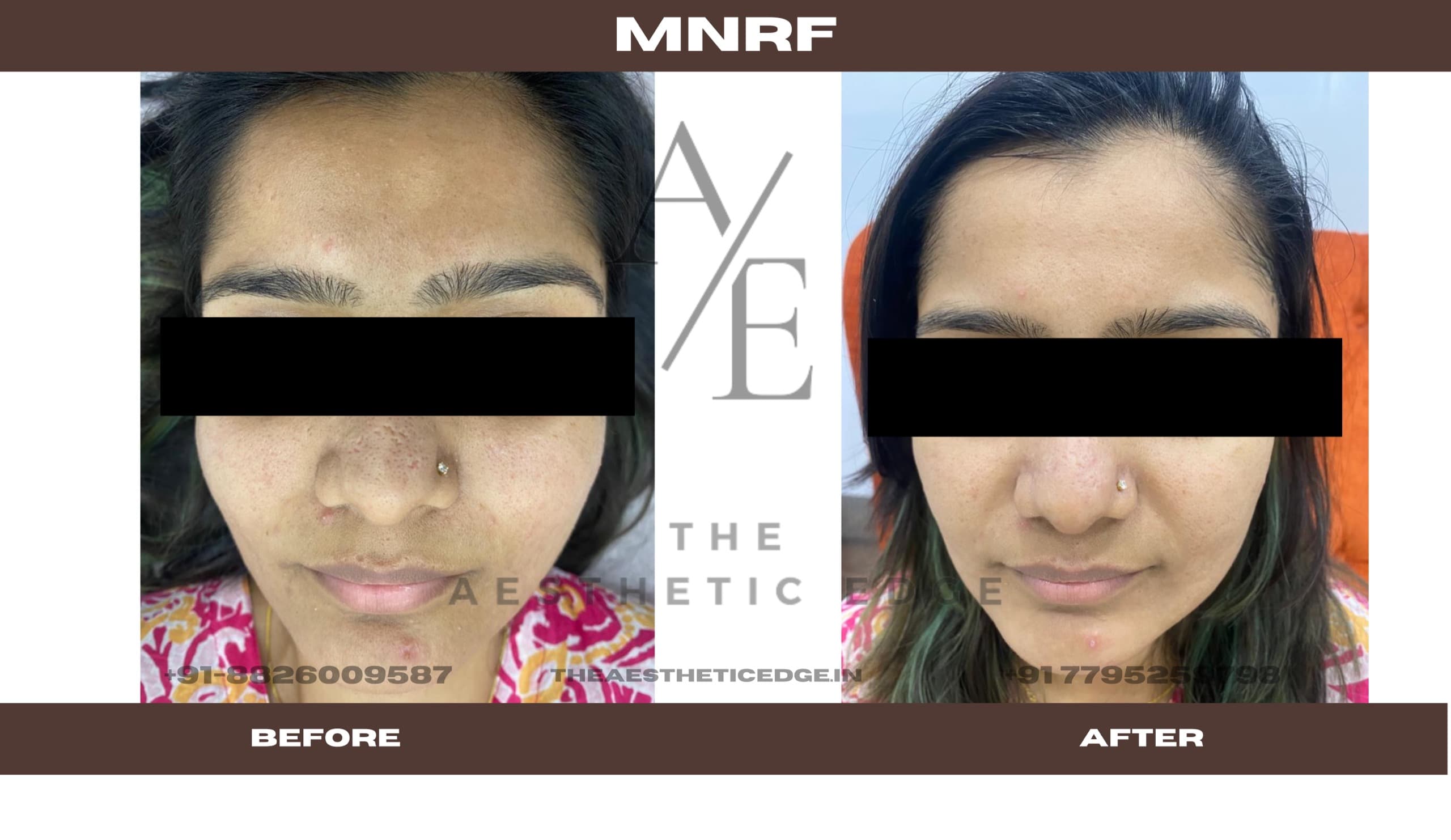
Two things hold an MNRF result: the collagen your skin laid down during the course, and how carefully you protect that skin from the sun afterwards. No fixed top-up interval is published on this site, because the honest interval depends on what was treated and how it responded. That decision belongs to your review appointment, with your own progress photographs in front of you.
Most of what is written about maintenance in this category is invented — a tidy number of months, offered because it sounds authoritative. What follows is narrower and, we think, more useful: what the treatment itself supports, what sun exposure does to it, and how to work out whether you need anything further at all.
What is actually holding the result in place?
Collagen that your own skin produced, which is why the result behaves quite differently from something that was placed into the face.
MNRF works by carrying radiofrequency energy through fine needles into the deeper layers, stimulating collagen where acne scars, open pores and early laxity sit. Nothing is injected and nothing is implanted. The change you are looking at some months later is remodelled tissue — which means it is not going to deflate or migrate, but it does remain subject to everything that affects your skin from here on: sun, age, and whatever caused the original concern.
That distinction matters when you are deciding whether to book a top-up. You are not topping up a substance that has worn off. You are deciding whether another round of stimulus is worth it.
How long does the result last?
The treatment page does not state a duration, and it would be wrong of us to invent one here.
What it does say is that the improvement builds over weeks as collagen remodels — so the first thing to understand is that your result is still arriving for a while after your last session. Judging longevity from the state of your skin the week the course ends is judging it early.
The variables that decide how long anything holds are the ones nobody can read off a page: what was treated, how deep the original scarring was, your age, and how much ultraviolet exposure the skin gets from here. A clinic quoting you a confident number of months without knowing those is guessing in a way that happens to be reassuring.
When should I come back?
At the review, and on the evidence of your own photographs rather than a calendar reminder.
Progress during an MNRF course is photographed session by session. That record is the most useful asset you leave with, because it gives a genuine baseline. If you return in six months or a year wondering whether things have slipped, the question can be answered by comparison rather than by impression — and impression, in this category, is heavily influenced by lighting, sleep and what you happened to be looking at on your phone that morning.
Practically: keep your own copy of the final photograph, and raise maintenance at a review appointment rather than booking a session speculatively.
Why is sun protection the part that carries the most weight?
Because ultraviolet exposure works directly against the collagen the course was designed to build, and because freshly treated skin is unusually vulnerable to it.
The MNRF aftercare is unambiguous on the immediate period: treated skin burns easily for a couple of weeks, and SPF 30 or higher plus shade are described as part of the treatment rather than optional extras. That is the minimum during recovery.
The longer-term case is made most clearly by the neighbouring treatments. On the Q-Switch laser page, sun exposure after a session is named as the main cause of pigmentation returning or worsening, and daily SPF 50 is part of the plan rather than an afterthought. On the microneedling page, SPF 50 or higher every day is called the single most important part of aftercare. The clinic's position across all three is consistent, and there is no reason to treat MNRF as the exception once the first fortnight has passed.
If you take one habit out of a course of treatment, take that one.
What should the rest of my routine look like?
Led by your doctor, and deliberately conservative around anything that irritates skin.
Here the treatment pages set boundaries rather than prescribe products, and it is worth respecting that boundary rather than assembling a regimen from the internet. The microneedling protocol asks patients to stop acids and retinol for two weeks before a session; the Q-Switch protocol asks for no retinol for at least five days afterwards and stops exfoliants and bleaching creams three days before. The consistent theme is that active ingredients and energy treatments need to be sequenced by someone who knows both, particularly if you are running prescribed creams alongside.
So: ask at your review what you should be using, when to restart anything you paused for the course, and what to stop before any future session. That is a short conversation and it prevents the common mistake of restarting a strong active on skin that is still settling.
Does the original problem come back?
It depends on what the original problem was, and this is where honest expectations differ by concern.
Acne scarring is structural — it does not regenerate once remodelled, though new acne can of course create new scarring, which is a separate matter and worth treating at the source. Open pores and texture respond to collagen support, and that support is subject to ordinary ageing. Early laxity, likewise: MNRF addresses the sagging and fine lines that were present when you were treated, not the passage of the years that follow.
The clinic is explicit about this pattern in the pigmentation context, where melasma is described as a chronic, relapsing condition managed rather than finished. Carry the same realism across. A course of treatment resets a position; it does not stop time.
What does maintenance cost?
MNRF is priced from ₹6,999 per session, and any further session is quoted the same way — per session, not as a pre-committed block.
That is the structure to look for elsewhere too. A maintenance package sold in advance, before anyone has compared your photographs, assumes an answer to the question the review exists to ask. The consultation or review is ₹500, waived off against treatment, so finding out whether you need anything is not an expensive exercise.
The short version
Protect the skin from ultraviolet light every day, keep your final progress photograph, restart actives only when your doctor says so, and decide about further sessions at a review rather than on a schedule someone printed in advance.
If your course finished a while ago and you are not sure where you stand, book a review at Indiranagar or Bellandur and bring your photographs. The answer may well be that nothing further is needed yet.