
MNRF Treatment on Indian Skin: What Changes and Why It Matters
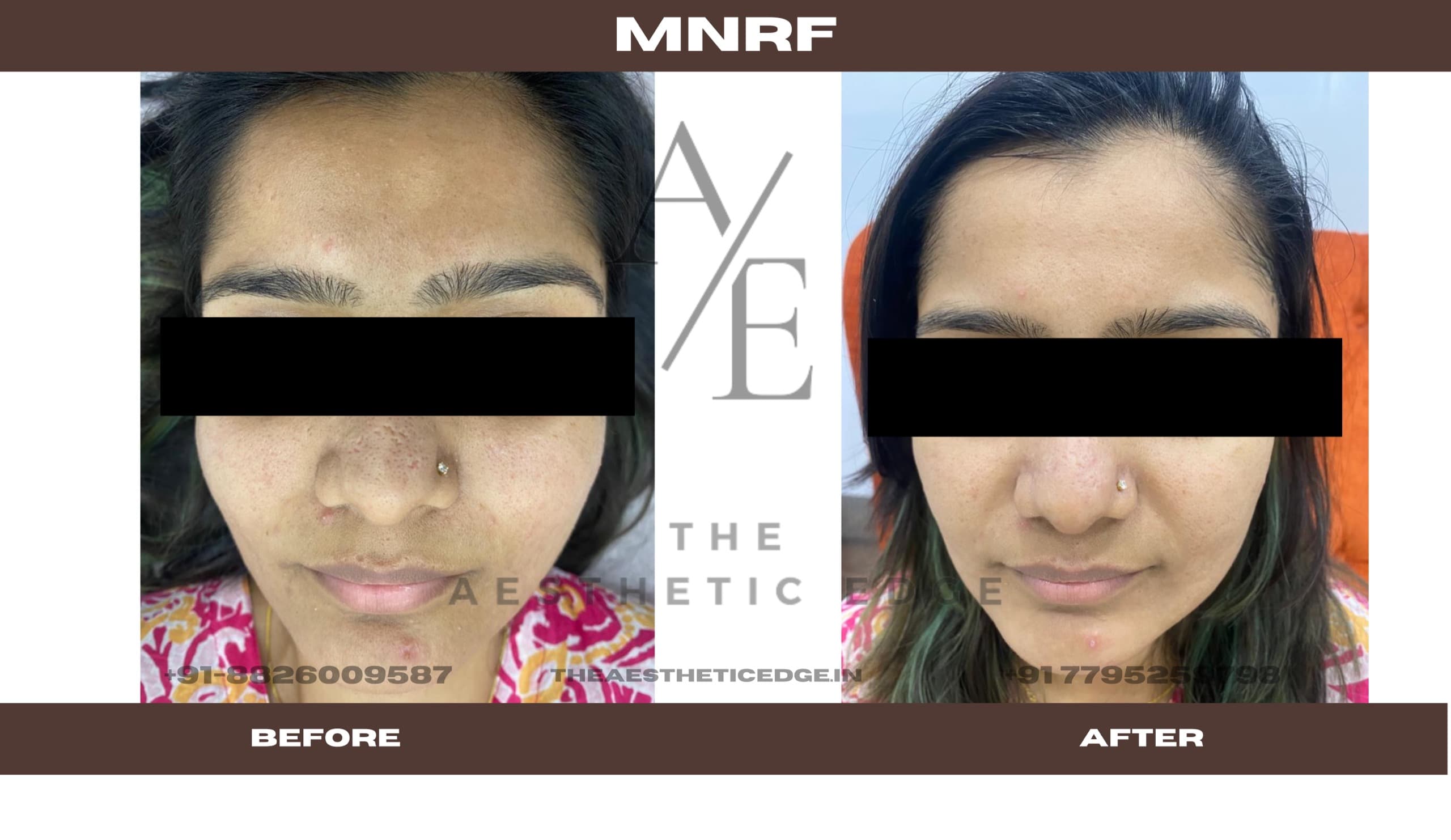
MNRF works on Indian skin because its energy travels below the surface through fine needles instead of across the top of it, largely bypassing the melanin that makes deeper tones prone to pigmenting after treatment. That is why it carries a lower pigmentation risk than many surface lasers. Lower is not none: the depth and the energy are still selected by a doctor for the skin in front of them.
What does "Indian skin" mean in a clinic, exactly?
Not a nationality — a way of behaving. Clinically it usually means Fitzpatrick types IV to VI, the range that tans readily and burns less obviously, and it describes a group of behaviours rather than a colour on a chart.
Two of those behaviours matter for any energy-based treatment. Skin in this range is unusually good at making pigment when provoked, and it is unusually slow to let go of it once made. Neither is a weakness. Both are simply facts that a treatment plan has to be built around instead of ignored.
Most of the aesthetic content circulating online was not built around them. It was written for skin that reddens, peels and recovers with the colour it started with, which is a different clinical problem to the one in this room.
Why does the pigmentation risk rise with skin tone?
Because pigment production is an inflammatory response, not a cosmetic one.
Irritate skin with plenty of melanin — a burn, a spot, a treatment set too aggressively — and one of its repair reflexes is to deposit pigment in the affected area. The result is a darker patch where the original problem was, which is a poor trade if you arrived asking for texture to be improved.
This is the risk that governs everything else. It is the reason clinics here are cautious with anything that heats or ablates the top layer of the skin, and the reason a patient often arrives having been told two contradictory things: that energy treatments fix acne scarring, and that energy treatments are risky for them.
How does MNRF change that calculation?
By putting the working end of the treatment underneath the layer that holds the melanin.
During a session, insulated microneedles carry radiofrequency into the deeper layers of the skin and release it there, zone by zone. Collagen is stimulated at the level where acne scars, open pores and early laxity actually sit, and the pigment-bearing surface is passed through rather than treated.
That geometry is the entire argument, and it is a structural one rather than a marketing one. Because the surface is not the target, less of the surface is provoked, and less provocation means less of the pigment response described above.
It is also why MNRF and a laser answer different questions. A Q-Switch laser exists to break up pigment that is already there — freckles, sun spots, marks left by old acne. MNRF exists to rebuild collagen. If your complaint is colour rather than contour, the laser is the tool, and a good consultation says so instead of selling you the appointment you asked for.
If the risk is lower, can I stop worrying about it?
No, and anyone telling you otherwise is selling something.
Reduced risk describes the technology. What converts that into a good outcome on your face is a series of judgements: how deep the needles go, how much energy each pass delivers, how the settings change between the thicker skin of the cheek and the more delicate skin near the eye, and how many weeks sit between sessions.
Those judgements are why the treatment is performed by a doctor here, always, and why the first step in a session is an assessment that maps what is being treated before any device is switched on. Device choice matters far less than the person choosing the numbers.
Does the recovery look different on deeper skin?
The documented after-effects are the same for everyone: redness and mild swelling that generally settle within hours, light crusting at the needle points for a few days, and a fortnight or so where treated skin burns easily.
What changes is the cost of getting the recovery wrong. On skin that pigments readily, a picked crust is not just a slower-healing spot — it is an inflammatory event on exactly the tissue you are paying to improve, and it can leave a mark where a scar used to be. The instruction not to touch them is doing more work here than it would elsewhere.
Sun protection carries the same amplified weight. SPF 30 or above and genuine shade are part of the treatment, not an afterthought, and in a city with year-round exposure that commitment runs through the whole course rather than one recovery week.
What about microneedling on its own?
It remains a genuine option, and the two are not rivals. Microneedling with a Dermapen creates controlled micro-channels so the skin repairs itself with new collagen and elastin — the same principle, without the radiofrequency component that carries heat to a chosen depth.
Which of the two suits you depends on what is being treated and how deep it sits, and that is an examination question rather than a preference. Both are courses; with MNRF, most plans run to three or four sessions spaced by the doctor, with progress photographed each visit so improvement is measured against a record rather than a memory.
What should I ask before I book?
Four questions, and they are all fair ones.
Which of my concerns is this treating, and which is it not. What depth and energy are you choosing for my skin type, and why those. How many sessions does the plan run to, and how far apart. What does the sun protection commitment look like between them.
A clinic that answers all four plainly is a clinic that has thought about skin like yours rather than skin in general. You can read how a session runs on the MNRF treatment page, and if you would rather have someone examine your skin and tell you which tool it needs, book a consultation — ₹500, set off against your treatment if you proceed.