
MNRF Treatment Aftercare: The First Week, Day by Day
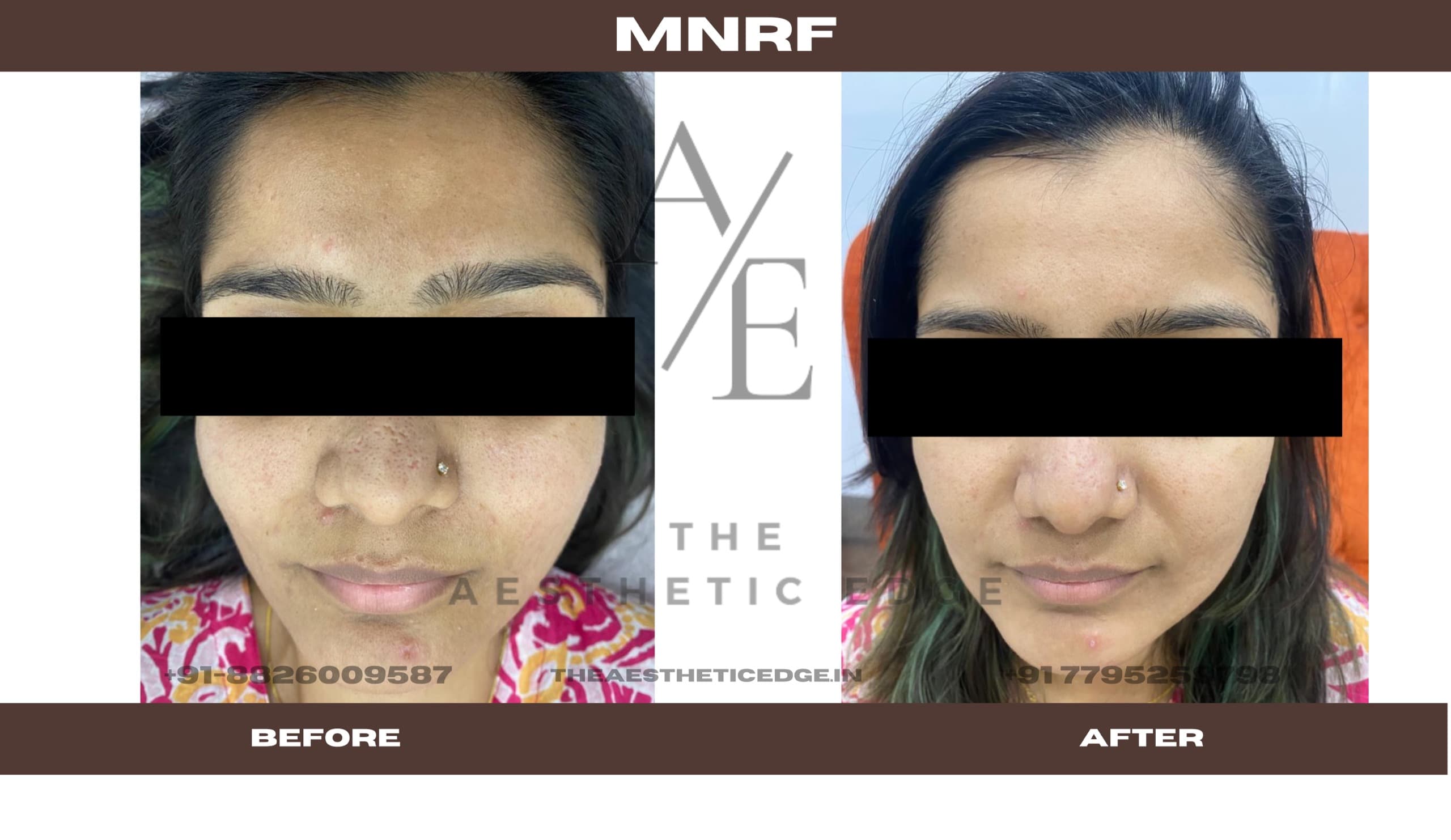
Aftercare following MNRF comes down to two habits: leave the skin alone, and keep it out of sunlight. Redness and mild swelling follow every session and usually settle within hours. Small crusts can form at the needle points for a few days, and must not be picked. For roughly a fortnight the treated skin burns easily, so SPF 30+ and shade are part of the treatment.
The rest of this page walks through that week in order, because the timing is what people actually want and rarely get told.
What happens in the first few hours?
Your skin looks flushed and feels warm, and both fade faster than most people expect. Redness and mild swelling are the standard response after a session, and they generally settle within hours rather than lingering for days.
The warmth is worth understanding. During the procedure, microneedles carry radiofrequency energy into the deeper layers of the skin, working zone by zone across the treated area over about an hour. What you are feeling afterwards is the skin responding to energy that was placed underneath the surface, not damage sitting on top of it.
You will leave with written aftercare. That sheet is specific to the depth and energy your doctor chose for your skin, so where it differs from anything on this page, follow the sheet.
What should the first full day look like?
Quiet. Assume your face will be pinker than usual and that swelling may be slightly more noticeable when you wake up than it was when you left.
The single most useful thing you can do on day one is nothing at all. No scrubbing, no experimenting with a new product because your skin feels different, no examining the treated area under a magnifying mirror every hour. The collagen response the session was designed to trigger is already underway and needs no help from you.
Sunlight is the one active decision. If you have to be outdoors, SPF 30 or higher and physical shade both apply from the first day, not from the day the redness disappears.
Why are there tiny crusts, and what if I pick them?
Because each needle entry point is a very small wound, and small wounds crust. Light crusting at the needle points can appear for a few days and resolves on its own.
Picking is the one genuinely avoidable mistake of the whole week. A crust that is lifted early is a wound reopened, and reopened wounds on skin that pigments readily are how a treatment meant to smooth texture ends up leaving a mark instead. Let them shed when they are ready.
Practical version: keep your hands off your face, keep your pillowcase clean, and if the crusts catch on a towel, pat rather than rub.
Days four and five — is it normal for things to look worse before better?
Mildly, yes. By mid-week the redness has usually gone and what remains is a slightly rough, granular texture where the crusts are still shedding. Skin can feel tight or look dull in that window.
This is the stretch where people quietly conclude the session did not work. It is far too early to conclude anything. Early change can be visible after a single session, but the result that matters builds over weeks as collagen remodels underneath — which is precisely why the sessions are spaced apart in the first place rather than stacked together.
How careful do I have to be about sun in Bangalore specifically?
More careful than the calendar suggests. Treated skin burns easily for a couple of weeks after a session, and Bangalore does not have a sun season — the exposure on a February commute is not meaningfully different from a July one.
That makes the sun rule a two-week commitment rather than a two-day one, and it runs across every session in the course. A daily SPF 30+ applied properly, combined with actual shade at the times of day you cannot avoid being out, does more for your final result than any product you could add.
If your concern is pigmentation as much as texture, this matters twice over. Marks and sun spots are treated differently — often with a Q-Switch laser — and letting fresh sun damage accumulate between sessions works against both treatments at once.
Can I go back to the gym, wear makeup, or restart my actives?
Ask the doctor who treated you, and treat that answer as the authority. The written aftercare you were given is built around your session's settings, and a blog cannot responsibly overrule it.
What is fair to say generally: the fewer new variables you introduce in the first week, the cleaner the healing. If you would not have been able to explain why a product is going on your face that week, it can wait until the next one.
By the end of week one, what should have happened?
Redness gone, crusts shed, texture back to something that feels like your own skin. Not a transformed face — that is not what one week is for.
At the end of the course, your doctor reviews progress against photographs taken session by session. That photographic record exists because skin changes too gradually to judge from a mirror you look into every morning, and because comparing week eight to week one is the only honest way to tell whether the plan is working.
Most plans run to three or four sessions, spaced by the doctor according to what your skin is being treated for. Full detail on how a session is run sits on the MNRF treatment page, and microneedling with a Dermapen is the related treatment worth understanding if you are weighing the two.
What if something does not look like this?
Then call rather than search. Redness, mild swelling and light crusting are documented and expected; anything that surprises you, worries you, or is simply not settling the way this page describes is a phone call to the clinic, not a question for the internet at two in the morning.
Aftercare is the half of MNRF you control. The doctor sets the depth, the energy and the spacing; you supply the sunscreen, the patience and the discipline not to pick. If you would like your skin assessed and a plan set out before you commit to anything, book a consultation — ₹500, and it is adjusted against your treatment if you go ahead.