
Dark Marks Are Not All the Same: Why Guessing the Strength Is the Real Risk
Dark marks on the face are not a single condition with a single answer, and the treatments are genuinely not interchangeable. But the risk that matters most when you are choosing for yourself is narrower than the taxonomy debate: a peel that is too strong for your skin type causes pigmentation rather than clearing it.
That is the sentence to carry away. Whatever kind of pigmentation you have, the thing most likely to make it worse is escalating strength without an assessment — and on deeper skin tones that risk is higher, not lower.
Why is strength the thing that decides it?
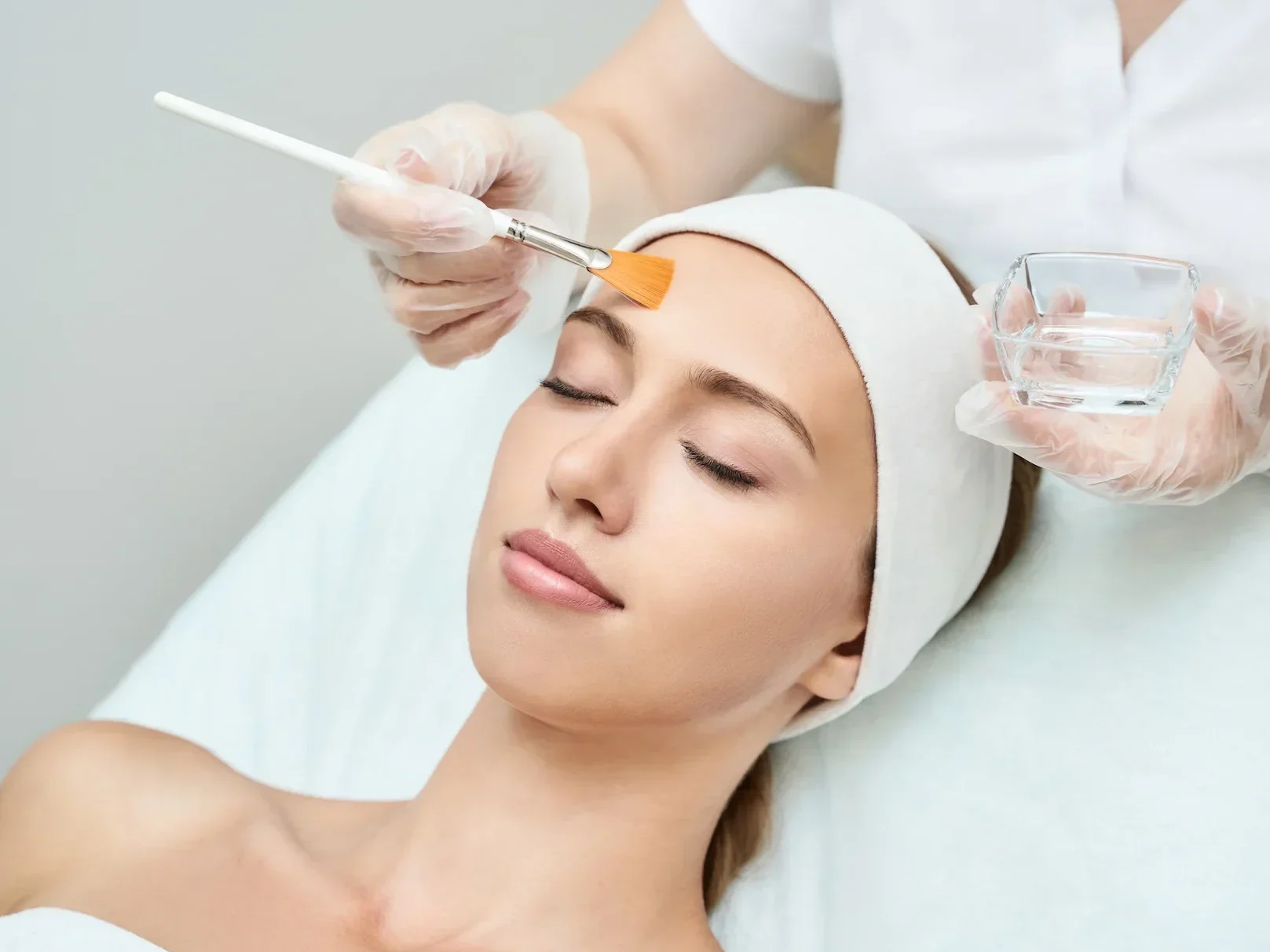
Because depth and solution are what a peel actually consists of. A Chemical Peel uses a controlled solution to lift away dead surface cells so fresher skin comes through, and the depth and the solution are chosen by a doctor for your skin type — which is the part that decides whether a peel helps or backfires.
Three depths exist: superficial, medium and deep, matched to your skin and your concern. Selection happens after an assessment and a patch test — always, before the first full treatment.
For most of our patients this is not an abstract precaution. Deeper pigmented skin is more prone to post-inflammatory pigmentation, which is precisely why the peel is selected rather than picked off a menu. Peels are suitable for Indian skin when that selection is done properly. The risk lives in skipping the selection, whether that happens in a clinic or in your own bathroom with something you bought online.
What kind of marks does a peel actually address?
Shallow ones. That word is doing important work, and it is the honest scope of the treatment.
Peels lift pigmented surface cells and encourage turnover underneath, so post-acne marks and other shallow discolouration read lighter over a course. By speeding up cell turnover, a peel also improves the colour, clarity and brightness of the surface, particularly on sun-dulled skin. Medium-depth peels prompt new collagen as the skin repairs, which softens the look of fine lines and shallow age spots over several treatments.
So the useful question is not which named condition you have. It is whether what you are dealing with sits at the surface, and that is established by someone examining your skin rather than by matching your face to photographs online.
Should I work out which type I have before I come in?
No, and that is a deliberate answer rather than a deflection.
Determining what kind of pigmentation you have is the part of this that requires a trained eye on your actual skin, and it is the decision everything downstream depends on. Getting it from a search result and then buying something stronger on the strength of that conclusion is precisely the sequence that ends with marks to treat on top of the marks you started with.
What is worth preparing instead is your history, and it changes the assessment more than any self-diagnosis would. How long the marks have been there. Whether they appeared after breakouts, after sun exposure, after a pregnancy, or without any obvious trigger. Whether they darken at particular times. Every product you have used on them, for how long, and what happened while you were using it. Bring that list.
What does a course look like?
Superficial peels are usually repeated several times over a few months to build a result. Medium and deep peels need fewer sessions. Your doctor sets the schedule at consultation based on your concern and your skin type.
The solution itself stays on for roughly three to five minutes, varying by peel. Downtime after a superficial peel is slight redness or flaking for a few days; deeper peels take longer. Following the aftercare shortens it noticeably — sunscreen, no picking, no scrubs.
If your instinct when skin flakes is to exfoliate it, that is the instinct to override. On a pigmentation course particularly, adding friction to skin that is already turning over is working against the result you are paying for.
How long will the improvement hold?
Long-lasting rather than permanent, ranging from months to years depending on the depth of the peel. Sun protection is the main thing that decides where in that range you land.
That matters more for pigmentation than for almost anything else, and in Bangalore it is a year-round consideration rather than a seasonal one. The UV load here is steady, and between a two-wheeler commute and time spent waiting outdoors, treated skin is exposed daily. Sunscreen is doing two jobs on a pigmentation course: holding the result, and reducing the risk that made careful selection necessary in the first place. Reapply rather than assuming the morning application survived to evening.
What else might be discussed?
Q-Switch Laser has its own page, its own mechanism and its own assessment, and whether it belongs in your plan is a clinical judgement rather than a preference.
Glutathione Injection comes up often in pigmentation conversations, and one thing should be said plainly: using it for skin brightening is an off-label use with a thin evidence base. That is the honest position, and any clinic worth your time will tell you the same before discussing it further.
Before you book
Come with your history rather than a conclusion, and come before you buy the next stronger product rather than after. If a provider quotes you a treatment before examining your skin, that is the step being skipped — and on pigmentation, that step is the whole thing.
To have your own marks assessed and the depth chosen for them, book an appointment at our Indiranagar or Bellandur branch. Mention anything that has previously left your skin darker, including treatments; it is the most useful thing you can tell a doctor at a first visit.