
Lip Micropigmentation vs Dermal Fillers: How to Choose
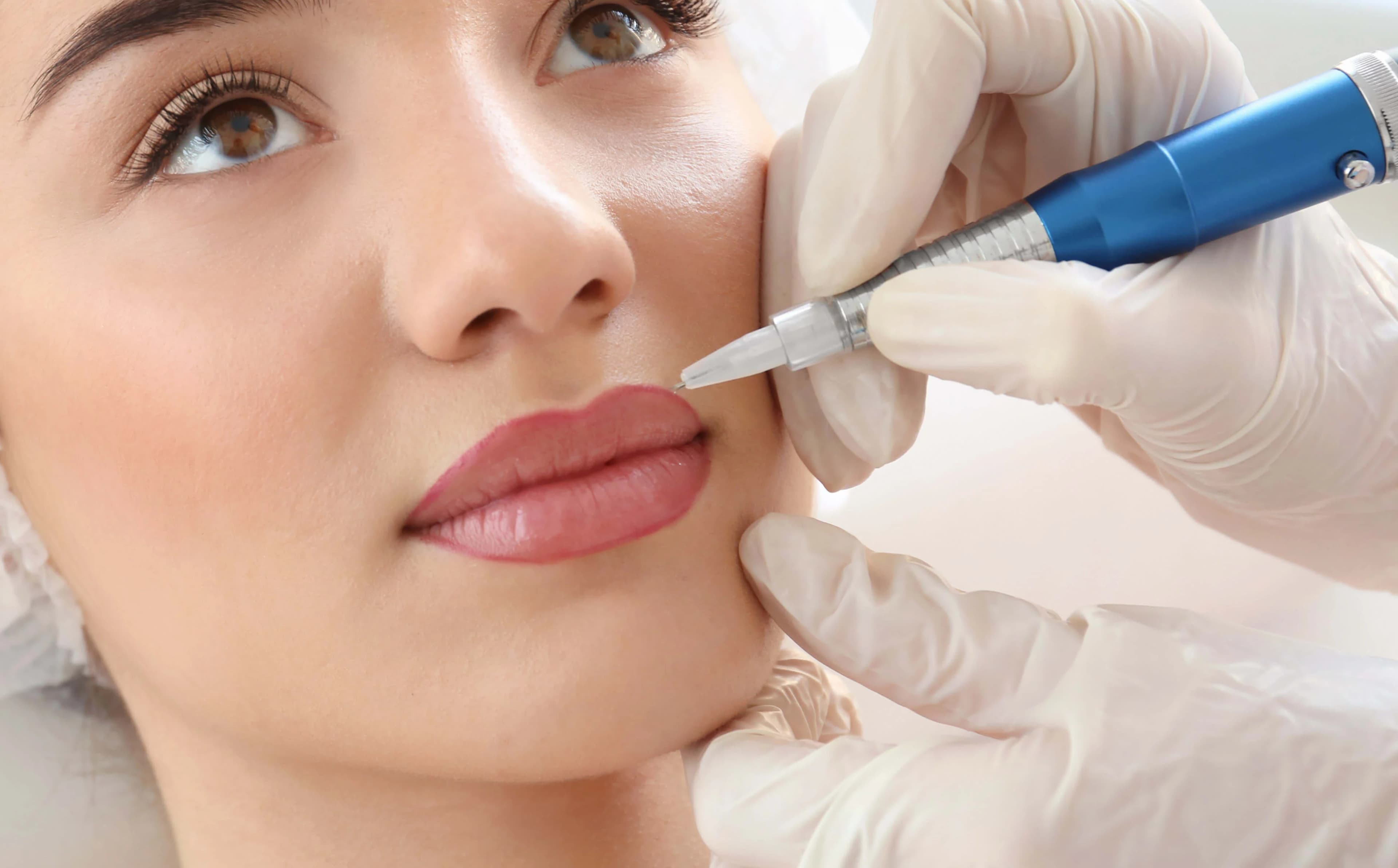
Lip micropigmentation and dermal fillers are not two answers to one question. Micropigmentation places medical-grade pigment into the upper layer of the lip to even out colour and redefine the border. Filler is a gel injected beneath the skin to add volume and refine shape. One changes what colour your lips are; the other changes how much lip there is.
Almost every confused consultation about these two comes from treating them as competitors. They are different jobs done at different depths with different materials, and the useful first step is not choosing between them — it is working out which of the two things is actually bothering you.
What is each one actually doing?
Lip micropigmentation is semi-permanent makeup. A doctor places medical-grade pigment into the upper layer of the lip to even out colour and redefine the border. The shade is chosen for your skin undertone rather than from a fixed palette, and is tested on your skin tone before the full procedure begins. Nothing is added underneath the lip, so the shape and size of your lips are unchanged. What changes is the colour they are, and whether that colour is even.
Dermal fillers are gel-like injectables placed beneath the skin. In the lips they add fullness in a controlled, measured way; elsewhere in the face they restore lost volume, soften deep creases and refine contour. Filler adds structure. It does nothing at all to the colour of your lips.
If you would still be unhappy after applying a lipstick you love, the issue is probably volume or shape. If a lipstick you love solves it entirely — and you are simply tired of reapplying it — the issue is colour.
How do the two compare, point by point?
| Lip micropigmentation | Dermal fillers | |
|---|---|---|
| What it changes | Colour and border definition | Volume, fullness and contour |
| Where it sits | Pigment in the upper layer of the lip | Gel beneath the skin |
| Performed by | A doctor, always | A doctor — product, plane and volume are a medical decision |
| Numbing | Numbing cream applied beforehand | Anaesthetic cream, 30–45 minutes beforehand |
| Time | Under two hours | About 15–30 minutes once the consultation is done |
| Sessions | One primary session plus a six-week touch-up | A single treatment, reviewed once settled |
| Results visible | After healing, refined at the six-week touch-up | Almost immediately; final result at one to two days |
| How long it holds | Softens gradually over the years; an occasional refresh | Roughly six months to two years, by filler and area |
| Downtime | Minimal — most return to normal activity the same day | Most recover fully within one to two days |
| Can it be undone | No equivalent to dissolving — see below | Most are hyaluronic acid based and can be dissolved |
| From | ₹10,999 per session | ₹14,999 per treatment |
| Consultation | ₹500, waived off against treatment | ₹500, waived off against treatment |
What will each one cost in practice?
Lip micropigmentation is ₹10,999 per session — and the plan is one primary session plus a six-week touch-up, so budget for a two-session course rather than a single visit. The touch-up is not an upsell or a correction of something gone wrong; it is a scheduled part of how the finish is perfected. Reading the per-session figure as the whole cost is the single most common budgeting mistake here.
Dermal fillers are ₹14,999 per treatment. How many areas are being treated, and what that means for your particular plan, is confirmed by your doctor before anything is opened.
Both carry a ₹500 consultation, waived off against treatment.
Which one is reversible, and why does that matter?
This is the asymmetry that deserves the most thought before you commit.
Most fillers used are hyaluronic acid based, which means they can be dissolved with an enzyme injection if the result is not what you wanted. That is a real exit route, and it is part of why filler is a doctor-only treatment in a clinic that stocks the reversal agent.
Pigment has no equivalent. It is placed in the skin, and although it is correctly described as semi-permanent — softening gradually over the years at a rate that depends on your skin, sun exposure and aftercare — it does not come out on request. Correcting or removing placed pigment is a considerably harder undertaking than reversing a filler, and it is not something to assume can simply be undone if you change your mind next year.
That is not an argument against micropigmentation. It is an argument for spending real time on shade choice at consultation, and for starting with a softer natural tint if you are uncertain — the shade is chosen with you, from a soft natural tint to a fuller colour, and tested on your skin tone first.
What has to be checked before pigment goes anywhere near your lips?
The cause of the discolouration, and this genuinely matters. Where lips look dark or patchy, a doctor first identifies why: hyperpigmentation, smoking, sun, iron deficiency, or a reaction to a product. Where colour correction is appropriate, pigment is used to even out discolouration towards a natural pink lip tone — but some causes need medical review before any pigment work begins.
That is the reason this is done under medical supervision rather than as a salon service. Covering a colour change that has a medical explanation is not treating it, and you should be told which situation you are in before anything is placed. If a consultation anywhere skips straight to shade cards, that is worth noticing.
Filler has its own pre-treatment checklist: avoid alcohol for at least 24 hours beforehand, tell your doctor about any blood-thinning or anti-inflammatory medication well in advance, and mention any infection or active breakout at the intended injection site.
What does recovery look like for each?
Micropigmentation downtime is minimal and most people return to normal activity the same day. The clinic gives you a detailed before-and-aftercare sheet, and following it is what keeps healing smooth and predictable.
Filler asks a little more of you afterwards. Swelling and redness are very common in the first hours to days, particularly around the lips, and ice helps; it typically settles within one to two days. Bruising and tenderness at the injection site are a normal possibility, more likely if you take blood thinners or fish oil. Avoid touching or rubbing the treated areas for 24 to 48 hours, skip steam rooms, saunas and facials for around 15 days, and avoid strenuous exercise for 72 hours.
What should make you contact the clinic?
Please do not try to work out for yourself whether something is expected. Neither of these is a treatment to sit at home and interpret.
After filler, contact the clinic that treated you if the product seems to have settled unevenly or you can feel a lump — tell your doctor rather than massaging it yourself, because hyaluronic acid fillers can be adjusted or dissolved if needed. Get in touch without delay if pain increases rather than settles, if the colour of the skin in or around the treated area changes, or if your vision changes. Infection, allergic reaction and blockage of a blood vessel are rare but real risks of any filler, and they are the reason the treatment is doctor-only here. Ring the clinic immediately; if you cannot reach anyone, seek urgent medical attention rather than waiting.
After micropigmentation, use the aftercare sheet as your reference. If anything falls outside what it describes — swelling that increases instead of settling, an area that becomes more painful over days rather than less, or anything you simply were not told to expect — telephone the clinic or arrange a review rather than judging it yourself.
In both cases, early is easier than late, and no one minds the question.
Can you have both?
Sometimes the honest answer is that colour and volume are both part of what you are seeing, and in that case it is a sequencing question rather than a choice. Whether both are appropriate for you, in what order, and with what gap between them, is a decision for the doctor who has examined your lips — not something to plan from an article, and not something to compress into a shorter timeline than each treatment's own healing allows.
So which should you book?
Start by naming the problem out loud. My lips look pale, washed out, dark or patchy, and nothing stays put points to micropigmentation. My lips have lost fullness, or I want more shape and definition points to filler. If you cannot separate the two, that is entirely normal and it is exactly what a consultation is for.
Book an appointment and a doctor will assess your lip tone, the cause of any pigmentation, and your facial proportions before recommending either. The consultation is ₹500, waived off against the treatment you go on to have.