
Masseter Botox vs Dermal Fillers: How to Choose for Your Jaw
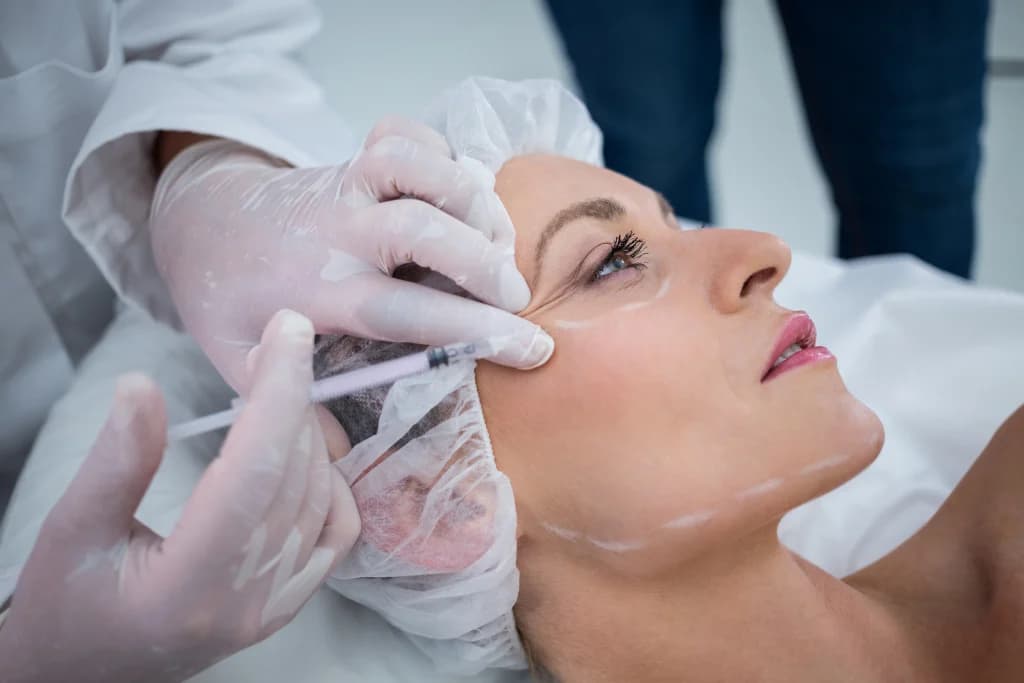
These two treatments move a jawline in opposite directions, which is why the choice is usually simpler than it looks. Masseter Botox makes a wide lower face narrower by relaxing an overactive chewing muscle. Dermal filler makes an under-defined jawline sharper by adding structure where there is too little. If your complaint is "my jaw looks too wide", one of them is the answer; if it is "my jaw has no line", it is the other. Picking wrong does not produce a small result — it produces a change in the wrong direction.
So the question to settle first is not which treatment, but which complaint.
What does each one actually do?
Masseter Botox (Jaw Slimming) places botulinum toxin into the masseter, the thick chewing muscle at the angle of the jaw. When that muscle is overactive it bulks up, squaring the lower face and driving teeth grinding and jaw tension. Relaxing it reduces both: the jawline slims gradually over weeks and the clenching eases.
Dermal Fillers are gel-like injectables placed beneath the skin to restore lost volume, soften deep creases and refine contour. Along the jawline or chin, filler sharpens a contour or adds fullness in a controlled, measured way. It adds structure rather than reducing movement, which is why the change is visible almost immediately.
One subtracts bulk. The other adds shape. Both are injectables; that is roughly where the similarity ends.
Which one does my complaint point to?
Masseter Botox, if the width is coming from muscle. The telling signs are width at the angle of the jaw rather than lower down, and often a history of grinding — many patients notice jaw tension and morning tightness easing before any visible slimming appears. If you grind your teeth and dislike how square your lower face looks, those are the same problem and one injection addresses both.
Filler, if the jawline lacks definition. Here the issue is not too much tissue but too little structure along the line itself, or a chin that gives the jaw nothing to run towards. Filler placed along the jawline or chin is the treatment that answers that.
What neither can do is fix the other's problem. Filler will not narrow a bulky masseter — adding volume to a face that already looks wide is the wrong direction. And relaxing the masseter will not create a jawline that was never defined; it reduces what is overactive, nothing more.
If you cannot tell which yours is, that is a completely reasonable place to be, and it is what the assessment is for. The doctor palpates the masseter at rest and clenched, which is how muscle bulk is distinguished from everything else.
How do the two compare, point by point?
Direction of change. Botox narrows; filler defines and adds.
How soon you see it. Filler is largely immediate, settling fully over the following day or two. Masseter Botox softens from around two weeks, with the full slimming at four to six weeks — the muscle reduces gradually once it stops overworking. If you have a date in mind, this row is the one that decides your timeline.
How long it lasts. Filler holds roughly six months to two years depending on the product and the area. Masseter Botox typically lasts four to six months, with sessions repeated to maintain it — and with repeated treatment the muscle often stays reduced for longer between sessions.
Session time. Both are short: about fifteen to thirty minutes.
Numbing. For filler, anaesthetic cream goes on for thirty to forty-five minutes beforehand, so budget for that rather than for the injecting.
Downtime. Masseter Botox: minimal, most return to work the same day. Filler: most people recover fully within one to two days.
A functional benefit on one side only. Masseter Botox takes the force out of clenching and grinding, which makes it as much a functional treatment as an aesthetic one. Filler has no equivalent.
Reversibility. Masseter Botox wears off by design, which makes a first treatment a low-commitment way to see whether the change suits you. That is a genuine advantage if you are unsure about altering your face shape at all.
What are the risks worth knowing on each side?
For masseter Botox, the one to understand is placement. The muscles that move your smile sit close to the masseter, and a smile change is a known risk of poor placement — which is exactly why this injection should be mapped and given by a doctor rather than a technician. Correctly placed it should not affect your smile, because the masseter closes the jaw and does not move the lips. Some chewing fatigue in the first days is common and settles as other muscles share the work.
For filler, the determining factor is also the doctor rather than the product: product choice, plane and volume are decided by someone who knows the facial anatomy at each injection site, and that judgement is the part that most decides whether it goes well.
Neither of those is a reason to avoid the treatment. Both are reasons to care who is holding the syringe.
Can I have both?
Sometimes that is the honest answer — a jaw can be wide at the angle and under-defined along the line. But it is a sequencing decision rather than a same-day one, because the masseter change takes four to six weeks to be fully visible and you cannot sensibly judge how much definition is missing until the width has settled.
If you think both apply to you, say so at the consultation and ask for the order rather than booking both.
Does being in Bangalore change the choice?
Not the clinical logic, but it changes the timeline you should plan to. Masseter Botox wants four to six weeks before an event; filler can be done much closer to one. For a wedding season that means the muscle treatment is a decision you make early and the filler is a decision you can leave later.
Where to start
Describe the complaint rather than requesting a product — "my jaw looks wide" and "my jaw has no line" lead to different treatments, and only one of them is yours. The consultation fee is waived against treatment if you go ahead, at either our Bellandur or Indiranagar clinic. Book an appointment and let the assessment settle which direction your jawline actually needs to move.