
Korean HydraFacial in Your Twenties: starting early without over-treating
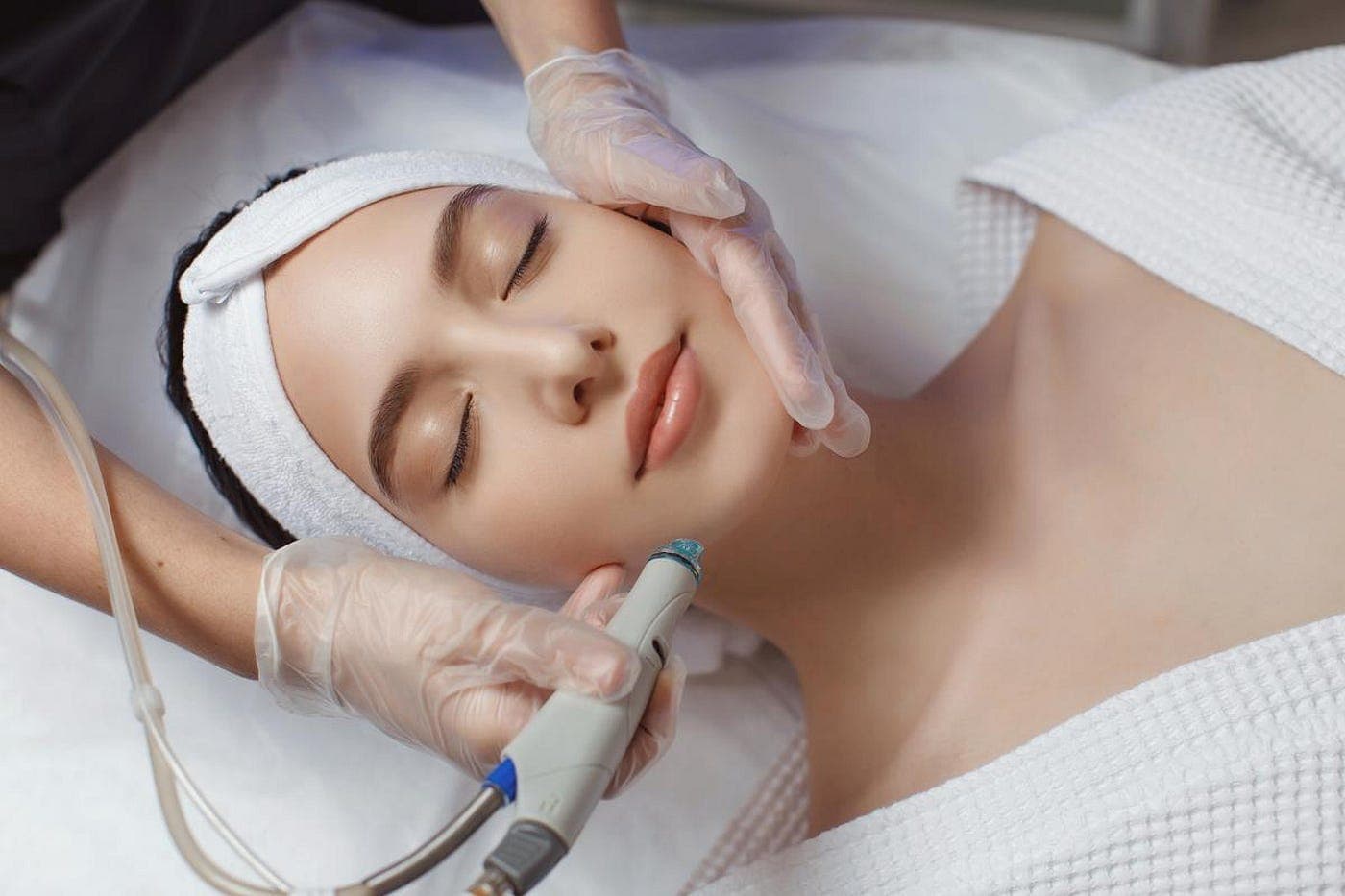
You may not need one. Skin in good condition in your twenties is a legitimate reason to do nothing, and we would rather say that than sell you a course. A Korean HydraFacial is a maintenance facial built for texture and light reflection — useful if your skin is dull or rough, and unnecessary if it is simply fine as it is.
That is not the usual opening for an article on a clinic website, but it is the honest one for this age group. Twenty-somethings are the group most heavily marketed to and the group least likely to need corrective work, so the useful question is not whether a Korean HydraFacial is good. It is whether it is answering a problem you actually have.
Do you need a facial in your twenties?
No. There is no age at which a facial becomes necessary, and nothing about being twenty-five obliges you to start a treatment schedule. If your skin looks and feels the way you want it to, a good cleanser, a moisturiser and daily sunscreen is a complete routine, and adding treatments to it buys you nothing.
The reason this needs saying is that the pressure runs the other way. Reels and before-and-after grids are built to make maintenance look like a prerequisite, and a clinic has an obvious commercial interest in agreeing. Doing nothing is a real option and it stays a real option in your thirties too.
So when does it actually make sense?
When there is something specific you want changed. The reasons people book this protocol are reasonably narrow: skin that looks dull and feels rough, makeup that never sits the way you want it to, an event where you want no recovery time, or a history of stronger treatments leaving your skin red and reactive.
Those are concrete complaints with a plausible answer. "Everyone in my office has started going" is not one, and neither is a photograph of someone else's skin. If you cannot name what you want to be different afterwards, that is useful information about whether to book.
Is once a month too much for young skin?
Once a month is the typical frequency for this protocol, as with any maintenance facial, and the benefit comes from regularity rather than from any single visit. That said, it is maintenance, not medicine. There is no schedule you fall behind on and no progress you lose by skipping a month.
If you are in your twenties and the honest position is that you want to go occasionally — before a wedding, before a trip, twice a year — that is a perfectly coherent way to use it. A single session gives a visible same-day result on its own.
Where does over-treating actually happen?
Rarely in the clinic, and often at home. The protocol itself is deliberately gentle: the acid exfoliation step aims at smoothness rather than shedding, extraction is done by suction rather than by squeezing so there is far less trauma to the skin, and the session finishes with peptide and ceramide barrier support, moisturiser and sunscreen.
The risk sits in what people stack around it. Aftercare for this treatment is to hold off on retinoids or acids at home for a few days and keep the rest of your routine simple, precisely because layering strong actives immediately undoes the barrier work the session ends with. Twenty-somethings tend to have the most crowded shelves — an acid toner, a retinol, a vitamin C, an exfoliating mask — and combining that shelf with monthly treatments is the actual over-treating scenario worth avoiding.
Tell your doctor what you are using. Recent isotretinoin, strong retinoids or a recent peel change how the exfoliation step is set, and sometimes mean deferring the session.
Will starting early change how your skin ages?
We are not going to claim it does. This is documented as a maintenance facial for light reflection and smooth texture, not as a corrective or preventive procedure, and no session count is published for slowing anything down. Any article telling you that a facial in your twenties buys you a different forty-year-old face has gone past what can be supported.
The habit from this treatment that plausibly matters over decades is the least glamorous one in it: broad-spectrum sunscreen, applied daily. It finishes every session for a specific reason — exfoliated skin burns more easily for several days — and it is part of the treatment rather than an optional extra.
What about acne?
The protocol is documented as suitable for all skin types including sensitive skin, and generally tolerated by acne-prone skin, with the gentle exfoliation and barrier-support steps being the reason. But an active rosacea flare, sunburn, infected inflammatory breakouts or broken skin can be made worse rather than better, and those are reasons to reschedule rather than push through. The skin review that opens every session is where that is decided.
More importantly, a facial is not an acne treatment. If persistent breakouts are the reason you are considering an appointment, book the consultation for the assessment rather than for the facial, and let a doctor tell you what is actually going on and what would address it. Nothing in an article can do that, and you should not try to work it out from one.
Is the standard facial enough?
For most people wanting maintenance on a schedule, yes. Our standard Hydra Medi Facial is cleanse, exfoliate and oxygenate in one sitting of around 45 minutes, from ₹2,999 per treatment. The Korean protocol runs 75 to 90 minutes on the same medical-grade device with the same doctor supervision, extended to fourteen steps with layered serum infusion, a cooling mask, LED and a lymphatic massage.
The longer protocol suits an event specifically, or skin that needs the extra barrier work. If neither describes you, the shorter session is the sensible starting point, and there is nothing lost by beginning there.
What should you expect to see?
Brighter, smoother, more even-looking skin the same day, building over a course of monthly sessions if you choose to have one. What you should not expect is the poreless finish in edited photographs and reels. Pores do not close; cleared, well-hydrated skin simply reflects light more evenly, and that even reflection is what glass skin actually describes.
Being clear about that ceiling in your twenties is worth more than the session itself, because it is the expectation that drives people into progressively stronger treatments looking for a result that was never available from any of them.
What it costs to find out
A consultation is ₹500, waived off against treatment, and it is a reasonable thing to book on its own — including to be told that your skin does not need anything at the moment. Every session includes a complimentary chemical peel, a ₹1,999 session in its own right, with how and when it is scheduled settled at that consultation.
When to ring rather than wait
If redness persists past a day after a session, or a small breakout in the first week is not settling on its own, telephone the clinic rather than treating it at home or adding something from your shelf to fix it. Do not self-assess. Asking costs nothing and guessing occasionally costs quite a lot.
Book an appointment at Indiranagar or Bellandur — including if what you want is an opinion rather than a treatment.