
Korean HydraFacial in Bangalore: What Local Conditions Change
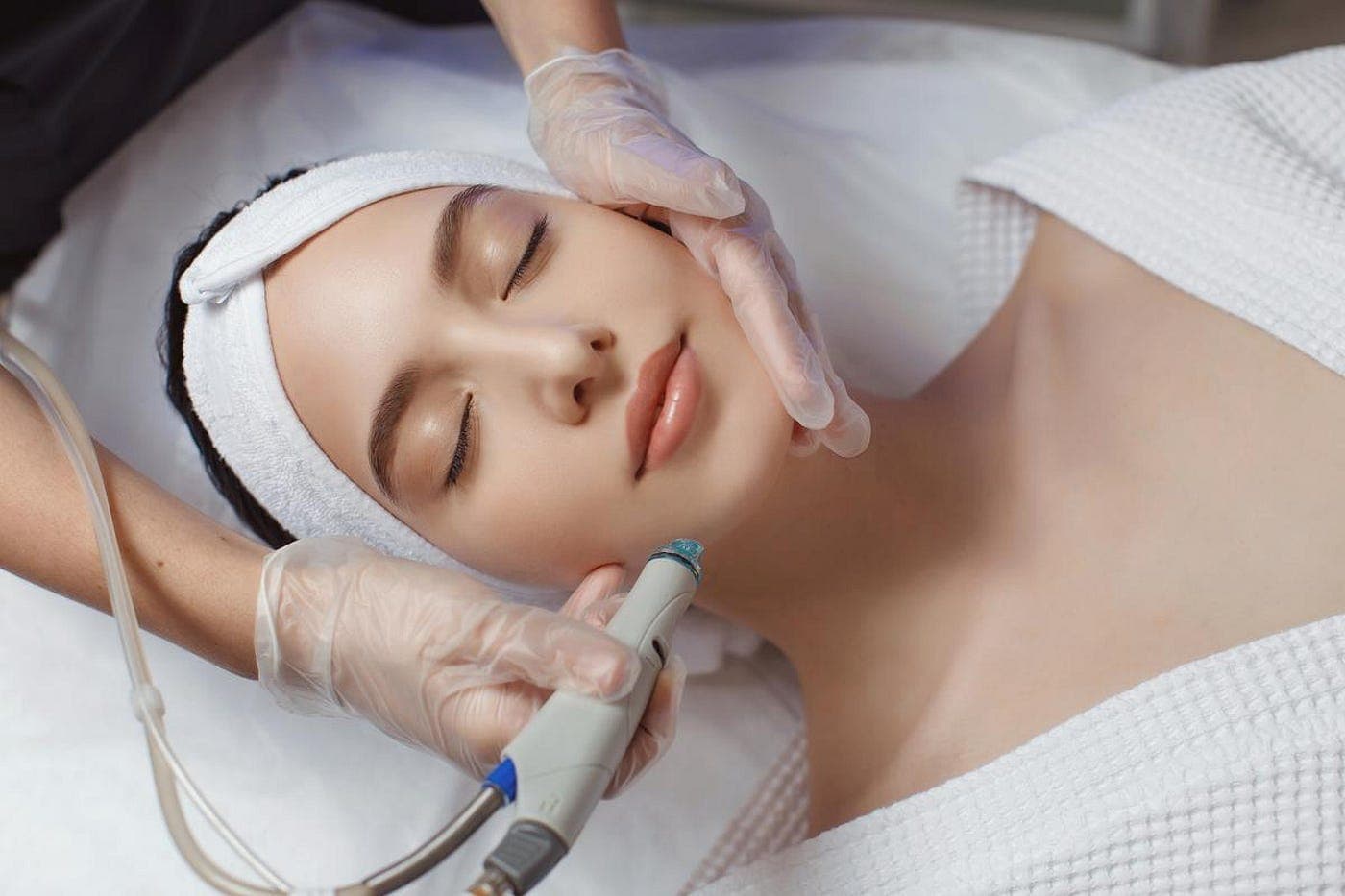
Bangalore changes the aftercare more than it changes the treatment. The fourteen-step Korean HydraFacial protocol is identical here to anywhere else; what the city adds is meaningful UV in every month rather than one hot season, two long humid spells, and a commute that leaves a day's sunscreen, makeup and road dust on your face by evening.
None of that alters the steps. It does change how you schedule the session, how seriously you take the days afterwards, and which parts of the protocol are doing the most work for you. Here is what is genuinely different about having this facial done in this city — and, just as usefully, what is not.
Why the sunscreen rule is not seasonal here
Bangalore sits at roughly thirteen degrees north, so ultraviolet exposure is a year-round fact rather than a summer one. The city's reputation for pleasant weather is precisely what makes this easy to miss: because you are rarely uncomfortably hot, it does not feel like a place where sun protection is urgent, and a cloudy monsoon afternoon feels even less so.
That matters directly for this treatment. Exfoliated skin burns more easily for several days after a session, which is why every Korean HydraFacial ends with broad-spectrum sunscreen applied in the room — it is part of the treatment, not an optional extra tacked on at the end. In a city with a defined summer you could reasonably relax about this in December. Here you cannot, and the daily sunscreen instruction after your session applies in exactly the same way in January as in April.
If you commute by two-wheeler or spend part of the day near a window, that window of extra sensitivity is worth planning around rather than hoping to get away with.
What the monsoon months change about how you book
Humidity does not change the protocol, but it does change how your skin feels between sessions. Through the long wet spells — the southwest monsoon from around June, and the second wetter run through October and November — many people notice their skin feels oilier and looks more congested than it does in the drier weeks after Christmas.
That is worth mentioning at your appointment rather than assuming. Whether what you are seeing is genuine congestion is settled by the assessment at the start of the session, not by how your skin feels on a humid Tuesday. What the protocol does do is clear blackheads and surface build-up out of pores using the device's suction, with a second pass over the nose, chin and any congested area where build-up is heaviest. If congestion is the reason you are booking, say so, because it changes what the doctor is looking at.
The reverse also holds. In the cooler, drier stretch between December and February, dullness tends to be the complaint rather than oiliness, and the layered hydrating and barrier steps are the parts of the protocol earning their keep.
Why the double cleanse earns its place on a Bangalore commute
Two cleanses rather than one is a step people routinely assume is padding. On a Bangalore working day it is not. By the time you reach a clinic after a long cross-city drive, your face is carrying the morning's sunscreen, whatever makeup went on with it, a day of sebum, and the dust that comes with any commute here.
The protocol handles this in the order it does for a practical reason: an oil-based cleanse lifts makeup, sunscreen and sebum, because water-based products cannot fully remove those on their own, and only then does a gentle water-based cleanse clear what the first one loosened. Skipping straight to extraction on an uncleansed face would mean the device working through a layer that should not be there.
This is also why an evening appointment is not a worse appointment. The clearing phase is built for a face that has had a day on it.
What Bangalore does not change
Quite a lot, and it is worth saying so plainly, because local marketing tends to invent a city-specific mechanism for everything.
The device is the same. The fourteen steps are the same. The session still runs 75 to 90 minutes, there is still no downtime, and it still suits all skin types, including sensitive skin. The monthly rhythm that makes a maintenance facial worth having does not shorten or lengthen because of the weather.
We also make no claim about your tap water. Water quality varies enormously across the city and there is nothing in this protocol that is set differently because of it. If someone tells you a facial is calibrated for Bangalore's water, ask them to explain how.
Fitting 90 minutes into a working day
This is the practical local problem, and it is a scheduling one rather than a clinical one. There is no downtime — you can wear makeup and go straight back to work, with any mild redness settling within an hour or two — so nothing needs to be blocked out afterwards. What does need blocking out is the session itself, which is meaningfully longer than a standard Hydra Medi Facial at around 45 minutes.
We run two clinics, in Indiranagar and Bellandur, which for most people means one of them is on the right side of an evening commute. If you are booking before a wedding or an event, leave three to five days rather than going the day before, so any transient redness has settled and the skin has taken up the hydration.
On cost, we do not publish a single figure for this protocol — it is confirmed at the consultation, once a doctor has seen your skin and you have decided between a single session and a monthly course. For reference, a standard Hydra Medi Facial starts from ₹2,999 per treatment, every Korean HydraFacial session includes a complimentary chemical peel that is a ₹1,999 session on its own, and the consultation is ₹500, waived against treatment.
What to tell us afterwards
Alongside daily sunscreen, skip the gym, sauna and steam for about 48 hours and hold off on retinoids or acids at home for a few days. Two things are worth reporting rather than managing yourself.
Mild redness straight after extraction is common and usually gone within an hour or two; if it is still there the next day, contact the clinic rather than treating it at home. Small breakouts sometimes surface in the first week where congestion was already forming — those settle on their own, but call us if they spread, become painful, or simply do not settle. And if you turn up to a booking with sunburn, an active rosacea flare, infected breakouts or broken skin, tell us before the session starts; those are reasons to reschedule, and they are not for you to assess on your own.
Book at Indiranagar or Bellandur
If you want to know whether the fourteen-step protocol or the shorter session fits your skin and your calendar, have a doctor look. Book a consultation at either clinic — ₹500, waived against treatment — or read the full protocol on the Korean HydraFacial page first.