
Planning a Korean HydraFacial Before a Job Interview
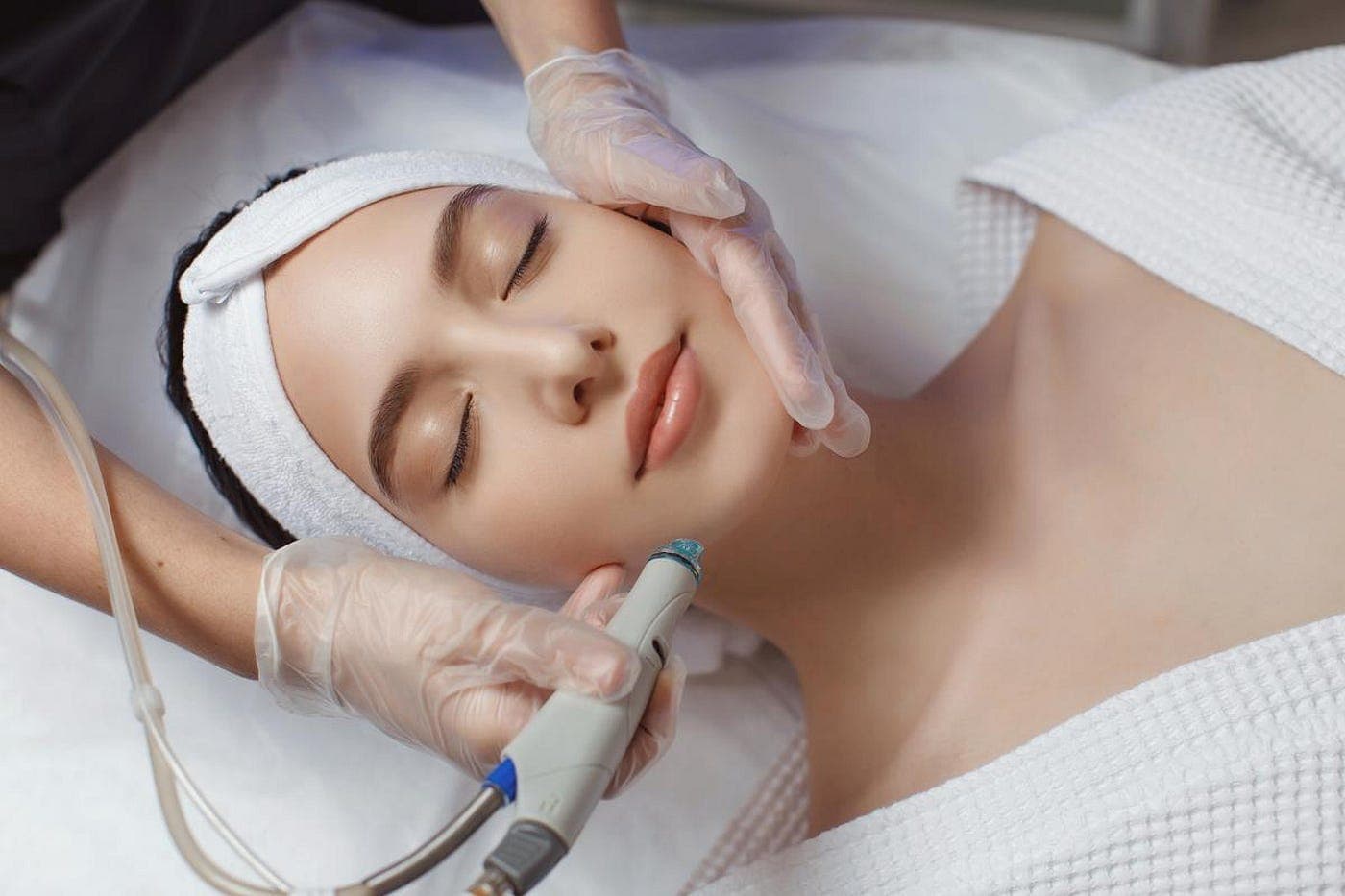
Three to five days before the interview, not the night before. The Korean HydraFacial has no downtime and you can wear makeup the same day, so nothing about it reads as visibly done. But mild flushing after the extraction step settles within an hour or two, and a few clear days lets the skin take up the layered hydration properly.
Interview runways are usually short and rarely negotiable. A recruiter calls on Monday, the panel is on Thursday, and you find yourself weighing up whether to do anything at all. The honest planning advice for a Korean HydraFacial on that timeline is below, including the part where the answer is to do less rather than more.
How many days before should you book?
Three to five days is the window we give for any fixed date, and an interview is a fixed date in exactly the way a wedding is. The reasoning is the same. Any transient redness has completely gone by then, and the skin has had time to settle into the result rather than being looked at within the hour.
If your interview is a fortnight out, take the fortnight. Occasionally, congestion that was already forming surfaces as a small breakout in the first week after a session. It settles on its own and it is not a reaction to the serums, but it is a reason to leave more room than the minimum whenever your calendar lets you.
Will anyone be able to tell you have had something done?
No, and this is genuinely the strength of the protocol for this particular occasion. Nothing is injected. There is no peeling phase to sit through, no marks to cover, no recovery to explain away. You can wear makeup the same day and go back to work the same day.
What changes is texture and light, not shape or colour. Cleared, evenly hydrated skin reflects light more evenly, which reads as looking well rather than as looking treated. That distinction is the whole point when you are about to sit across a table from people forming a first impression.
What if the interview is tomorrow?
Then this is not the week to have it done, and that is a straight answer rather than a hedge. Booking an unfamiliar treatment the day before a high-stakes, unmovable appointment gives you no room at all if your skin responds differently from how you assumed it would. The downside is small but it is not zero, and the upside twelve hours out is smaller than it would be at four days.
What is worth doing on a one-day runway is unglamorous: sleep, water, your usual routine unchanged, sunscreen, and nothing new applied to your face. The temptation the night before an interview is to add a mask, a strong serum or an exfoliant you have not used before. That combination causes more last-minute skin problems than it solves.
Book the appointment for after the interview instead, and be in a better position for the second round.
Does it make a difference on a video call?
Video is unforgiving about texture in a way that a room is not, because a webcam flattens everything and then a ring light rakes across it. Evenly hydrated, smooth skin photographs and films better for exactly the reason it looks better in person — light comes off it evenly instead of catching on rough patches.
Be realistic about the ceiling, though. Pores do not close. The poreless finish you see in edited video is lighting and retouching as much as skincare, and nobody should book a facial expecting to match it. Expect to look like a well-rested version of yourself, which is the actual objective.
Is one session enough, or do you need a course?
One session gives a visible same-day result, which is why single pre-event bookings are common and entirely reasonable. If you are early in a job search and expect several rounds over a couple of months, the typical frequency is once a month, and each session builds on the last so that skin quality holds between visits rather than lifting and falling.
Neither approach is wrong. A single appointment before a specific interview is a legitimate use of this treatment; a monthly course through a long hiring process is a different and slower proposition.
What should not be attempted on a short runway?
Do not start something new and strong close to the date. If you have recently taken isotretinoin, started a strong retinoid, or had a peel, say so when you book rather than when you arrive — those change how the gentle acid exfoliation step is set, and sometimes mean deferring the session altogether. Deferral is the correct call clinically, and it is far easier to absorb a week ahead than on the morning.
Note too that every session includes a complimentary chemical peel, a ₹1,999 session on its own. How that is scheduled around the facial is settled at your consultation, and it is worth raising explicitly when a fixed date is involved so the timing is planned rather than assumed.
Would the standard facial be a better fit?
Possibly, and it is worth asking. Our standard Hydra Medi Facial is cleanse, exfoliate and oxygenate in one sitting of around 45 minutes, from ₹2,999 per treatment. The Korean protocol runs 75 to 90 minutes on the same medical-grade device with the same doctor supervision, and adds layered serum infusions, a cooling mask, LED and a lymphatic massage.
If your diary is the constraint rather than your skin, the shorter session is enough for most people. The longer protocol suits an event specifically, or skin that needs the extra barrier work.
Aftercare during interview week
Sunscreen daily, without exception — exfoliated skin burns more easily for several days, so this is part of the treatment rather than an optional extra. Skip the gym, sauna and steam for about 48 hours, which for most people means the two days immediately after the appointment. Hold off on retinoids or acids at home for a few days.
Keep everything else simple. Interview week is precisely when people start adding products, and layering strong actives immediately undoes the barrier work the protocol finishes with.
When to reschedule, and when to ring us
An active rosacea flare, sunburn, infected inflammatory breakouts or broken skin are reasons to reschedule rather than proceed. If any of those are present on the day, telephone the clinic instead of arriving and hoping — moving the appointment is straightforward and treating skin that is not ready is not.
Afterwards, if redness persists past a day, or anything is not settling the way this article describes, contact the clinic rather than treating it at home. Do not sit at your desk trying to decide for yourself whether what you are seeing is expected; that is what the phone is for.
Booking around a date you cannot move
A consultation is ₹500, waived off against treatment. Say the interview date when you book so the appointment can be worked backwards from it, and so the skin review at the start of the session has the context it needs.
Book an appointment at Indiranagar or Bellandur.