
Korean HydraFacial for New Mothers: timing, breastfeeding and what to postpone
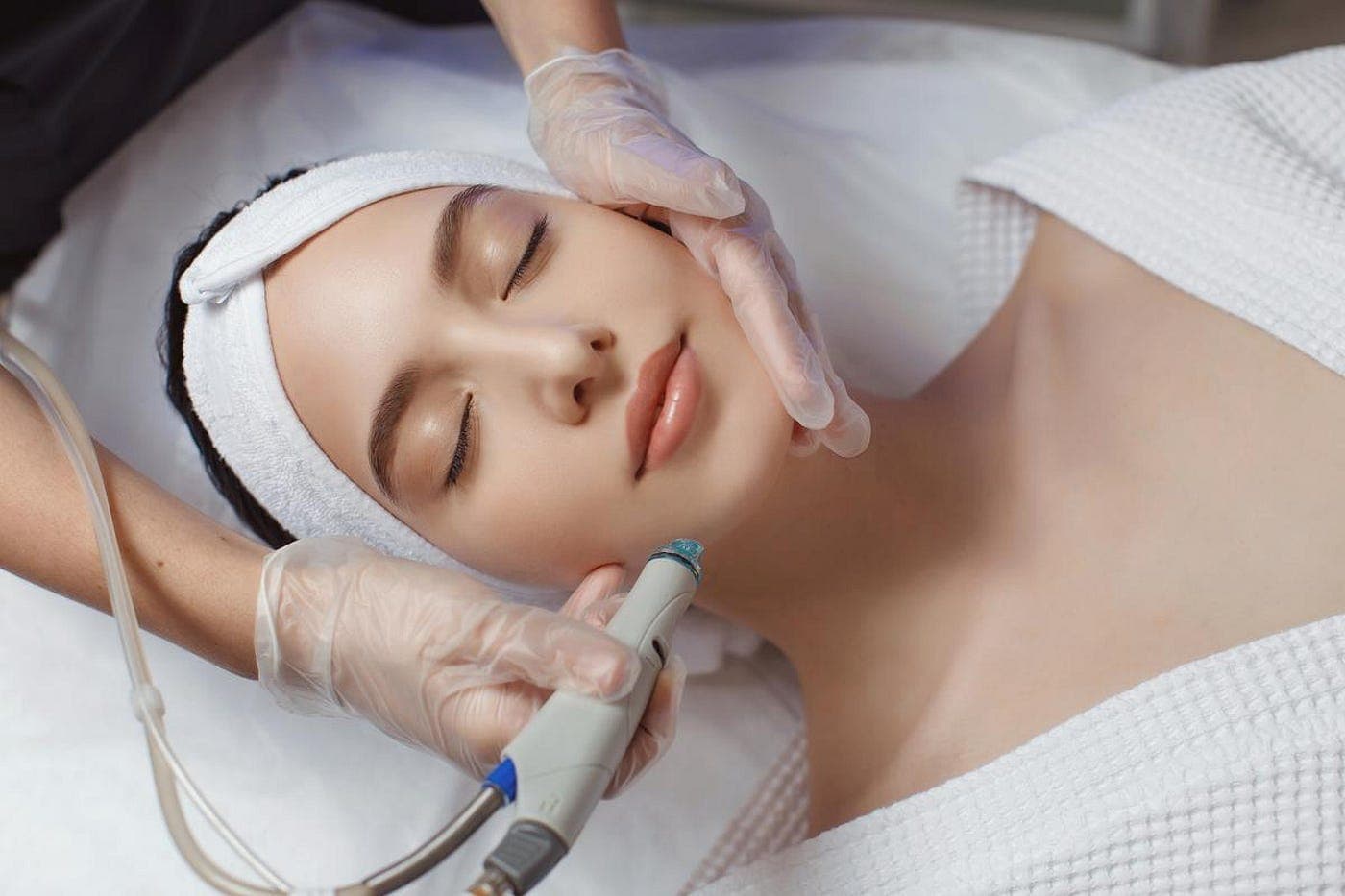
We do not publish a position on breastfeeding for the Korean HydraFacial, and this article will not invent one in either direction. Raise it at the start of your consultation, before anything is booked. What the clinic does document for comparable treatments is set out below, including for the chemical peel that is included with every session.
That is an unsatisfying opening if you came here for a yes or a no, and we know it. But a new mother deciding what is safe deserves an honest account of what is written down and what is not, rather than a confident sentence written to close a booking. Everything else about the Korean HydraFacial — what it does, how long it takes, how it fits a week that revolves around someone else — is documented, and that is what the rest of this covers.
Can you have a Korean HydraFacial while breastfeeding?
This is the question to put to the doctor at the start of your consultation, because we do not state an answer for this protocol either way. There is no published permission to point you to and no published prohibition to warn you off with, and a treatment page that is silent is not the same as a treatment page that says yes.
What is written down elsewhere on this site is worth knowing before you go in, because it tells you the sort of thinking that will be applied. Our standard Hydra Medi Facial is not performed on pregnant patients at all; the page says so plainly and directs patients to discuss an alternative at consultation. For chemical peels, pregnancy and breastfeeding are both named as reasons to postpone or to choose a different treatment. So the clinic clearly does take a documented view on this class of question for comparable treatments — it simply has not published one for this particular protocol.
Take that to mean the conversation is a real one with a real answer waiting at the other end, not a formality. Ask it first, before you discuss anything else.
Why the included peel is the part to raise first
Every Korean HydraFacial session includes a complimentary chemical peel, which is a ₹1,999 session on its own. That inclusion is genuinely good value, and it is also the specific element the clinic already documents a breastfeeding position on.
So do not treat the two as one question. Ask about the facial, and ask separately about the peel that comes with it — whether it is appropriate now, whether it can be deferred, and whether the session runs differently without it. How the peel is scheduled around the facial is settled at consultation in any case, so this is a normal thing to be asked about rather than an awkward one.
How soon after delivery can you book?
We do not publish a waiting period after delivery, so we are not going to suggest a number of weeks. What we can say is that the session opens with a skin review in which a doctor checks your skin type, your barrier condition and anything active that would mean rescheduling rather than proceeding that day. Tell them where you are — how recently you delivered, whether you are feeding, what medication you are on. That review is the point at which timing is decided, and it is decided for you rather than in general.
What does this treatment actually do, and what does it not?
It is a maintenance facial built for light reflection and smooth texture, and it is not a corrective procedure. That distinction matters more after a pregnancy than at almost any other time, because the changes new mothers most often want addressed — patchy pigmentation across the cheeks and forehead especially — are not what a facial is designed to correct.
Nothing here can tell you what is happening with your skin, and you should not try to work it out from an article. If pigmentation is the reason you are considering an appointment, book the consultation for the assessment rather than for the treatment, and let the doctor tell you whether this protocol is the right thing at all. It may well be part of the answer. It may not be.
What one session does give is brighter, smoother, more even-looking skin the same day, building over a course of monthly sessions. Pores do not close, and the poreless finish in edited photographs is lighting and retouching as much as skincare.
Does an appointment fit a new mother's day?
The session runs 75 to 90 minutes, which is the honest number to plan childcare around, and it is longer than a standard facial for a reason — the fourteen steps include layered serum infusion, a cooling mask, LED and a short lymphatic massage on top of the cleansing, gentle acid exfoliation and vortex extraction.
The downtime is where it becomes practical. There is none. You can wear makeup the same day and go straight back to whatever the afternoon holds. Any mild redness or flushing after extraction usually settles within an hour or two. Nothing is injected, and there is no recovery to organise around a feed.
What if your skin has become more reactive?
The protocol is documented as suitable for all skin types, including sensitive skin, and the reasons given are structural: the exfoliation step is deliberately gentle, extraction is done by suction rather than by squeezing, so there is far less trauma, and the session finishes with peptide and ceramide barrier support before moisturiser and sunscreen.
That is not a promise about your skin specifically. An active rosacea flare, sunburn, infected inflammatory breakouts or broken skin can all be made worse rather than better, and those are reasons to reschedule rather than push through. So is anything you have taken recently — isotretinoin, strong retinoids, a recent peel — all of which change how the exfoliation step is set, and sometimes mean deferring.
What is realistic on a schedule you do not control?
Once a month is the typical frequency, and the benefit comes from regularity rather than from any single visit. But a missed month is not a failed course. One session gives a visible same-day result on its own, which is why it is a common booking before an event, and the protocol does not stop working because you skipped December.
Book what you can actually attend. A single session you keep is worth more than a monthly plan you abandon in week three.
Aftercare, compressed
Sunscreen daily without exception, because exfoliated skin burns more easily for several days and this is part of the treatment rather than an optional extra. Skip the gym, sauna and steam for about 48 hours. Hold off on retinoids or acids at home for a few days, and keep the rest of your routine simple — layering strong actives straight on top undoes the barrier work.
What should prompt a call rather than a wait
Telephone the clinic rather than treating it at home if redness persists past a day, or if anything else does not look like it is settling on the timeline described above. If a small breakout appears in the first week, that is described as congestion that was already forming surfacing after extraction, and it settles on its own — but if you are unsure whether what you are seeing is that, ring us and ask. Working it out yourself is not your job.
Booking
A consultation is ₹500, waived off against treatment. Come with your questions about feeding and timing at the top of the list, not the bottom. Book an appointment at Indiranagar or Bellandur.