
How to Prepare for Teeth Whitening (and What to Avoid Beforehand)
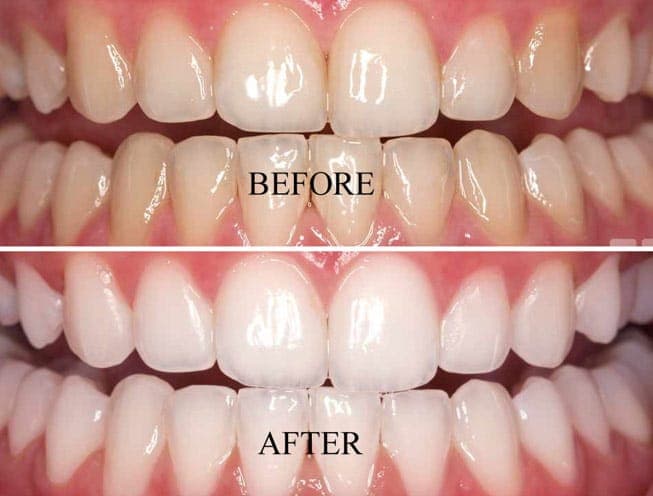
Preparing for whitening is mostly about two appointments rather than one. A scaling and polishing comes first so the gel meets clean enamel, and the assessment before that decides whether whitening is appropriate at all. In the week itself: tell your dentist about sensitivity, stop any home kit, and book the session when you can avoid staining food afterwards.
None of that is onerous. But patients who arrive having done none of it usually end up with either an extra appointment or a patchier result than they hoped for, so it is worth ten minutes of planning.
What has to happen before the whitening appointment itself?
Two things, in order. First an assessment: an examination of your teeth and gums, identification of what has actually caused the staining, and agreement with you on a realistic target shade. That examination is not a formality. It is what catches decay, cracks or exposed roots — and bleaching over any of those causes real pain. Consultation is ₹500, waived off against treatment.
Second, a professional clean. Scaling and polishing starts from ₹1,499 per treatment and comes before whitening so the gel contacts clean enamel rather than a layer of plaque. Whitening itself is usually one in-clinic session, sometimes two, and it is performed by a dentist.
So when you are planning your diary, plan for a sequence rather than a single slot. Ask at the assessment how the clinic wants to space them.
What should you stop in the week before?
Reduce the things that are staining your teeth in the first place — tea, filter coffee, red wine, dark colas, and tobacco in any form. You are not required to give any of them up to be treated, and nobody will lecture you about it, but the cleaner the starting point the more of the gel's work goes into lifting old pigment rather than fresh film.
If you smoke or use tobacco, this is the honest place to say it matters more than the rest combined. It is the single habit that most shortens how long a result lasts, and the effect starts again the day after treatment.
Keep brushing and flossing normally. Do not start scrubbing harder in the days before in the hope of a head start — abrasion is not what changes the shade of enamel, and sore gums on the day are a nuisance.
Should you keep using a whitening kit up to the day?
Stop it, and tell your dentist you were using it. Over-the-counter strips and kits contain peroxide at a lower concentration, applied without gum isolation and with a fit that is generic rather than made for your mouth. Coming to a supervised appointment straight off a course of them can leave gums already irritated and teeth already sensitised, which limits what can safely be done on the day.
This is not an argument that home products are useless. A whitening toothpaste is mildly abrasive and genuinely lifts surface stain; a strip can produce a modest change over weeks. What neither contains is enough active agent to change the underlying shade of the enamel the way a supervised treatment does — which is exactly why so many people arrive having used one for months and seen no difference. The point is simply that the two should not overlap.
What must you tell your dentist?
Everything on this list, at the assessment rather than in the chair:
- Sensitivity. If your teeth already react to cold or sweet things, say so. It does not usually rule whitening out — sensitivity can be managed with a desensitising regimen before and after, or by using a gentler protocol over more sessions — but the plan has to be built for it from the start.
- Any crowns, veneers or tooth-coloured fillings, especially in the smile line. These do not bleach. If the natural teeth around them lighten, they can end up looking darker by comparison, and matching them means replacing them. Your dentist will discuss the sequencing, and for some patients the conversation turns towards a smile makeover instead.
- Pregnancy or breastfeeding. Elective cosmetic whitening is generally postponed. Say so and the appointment can be planned for later.
- Why you think your teeth discoloured. Staining from tetracycline, fluorosis, trauma or a nerve that has died responds poorly or unevenly to external bleaching. Only an examination can establish which kind you have, so bring what you know and let the dentist do the working out.
- Any pain, or a tooth you have been avoiding chewing on. That needs investigating before anything cosmetic happens.
How do you schedule it around work or a wedding?
There is no downtime, so you can go back to work the same day. The scheduling constraint is the two days afterwards, not the appointment itself: staining foods and drinks are avoided for a couple of days while the result settles.
Book it so that window falls somewhere quiet. A treatment on the day of a client dinner or a wedding lunch puts you in front of exactly the food you are meant to be avoiding.
If you are whitening for an event, leave real room. Allow for the possibility of a second session, for the cleaning appointment beforehand, and for a day or two of sensitivity — a fortnight ahead of a wedding is comfortable, the week of it is not. If restorations may need replacing to match, that needs longer still.
What should you bring, and what happens on the day?
Bring a list of your medications, details of any previous dental work and any old X-rays or reports you have. If you have a photograph of your teeth from a few years ago it can be genuinely useful in the shade conversation.
On the day, the gums and soft tissues are isolated and protected, the peroxide gel is applied to the enamel, and the process is monitored with reapplication as needed to reach the shade you agreed. Nothing is drilled and no enamel is removed — whitening is additive, which is one of the reasons it is a relatively contained cosmetic procedure.
Afterwards you will be given dietary guidance for the first days, desensitising advice, and a plan for keeping the result — generally good hygiene plus periodic cleaning.
When should you contact the clinic afterwards?
Some sensitivity is expected. Teeth may react to cold for a day or two, it typically settles on its own, and a desensitising toothpaste helps. Brief gum soreness or a whitened patch at the gum margin also settles quickly.
Do not try to judge for yourself whether something has crossed a line — only an examination can establish what is happening. Contact the clinic if sensitivity is severe enough to disturb sleep or eating, if it is getting worse rather than better after two or three days, if you have sharp pain on biting, or if gum soreness, ulceration or bleeding persists rather than settling. If you develop facial swelling or fever, seek dental or medical care promptly rather than waiting for the next working day.
You can read the full protocol on the teeth whitening page. To get the assessment and the clean booked in the right order, book an appointment at Indiranagar or Bellandur.