
How to Prepare for a Chemical Peel (and What to Avoid Beforehand)
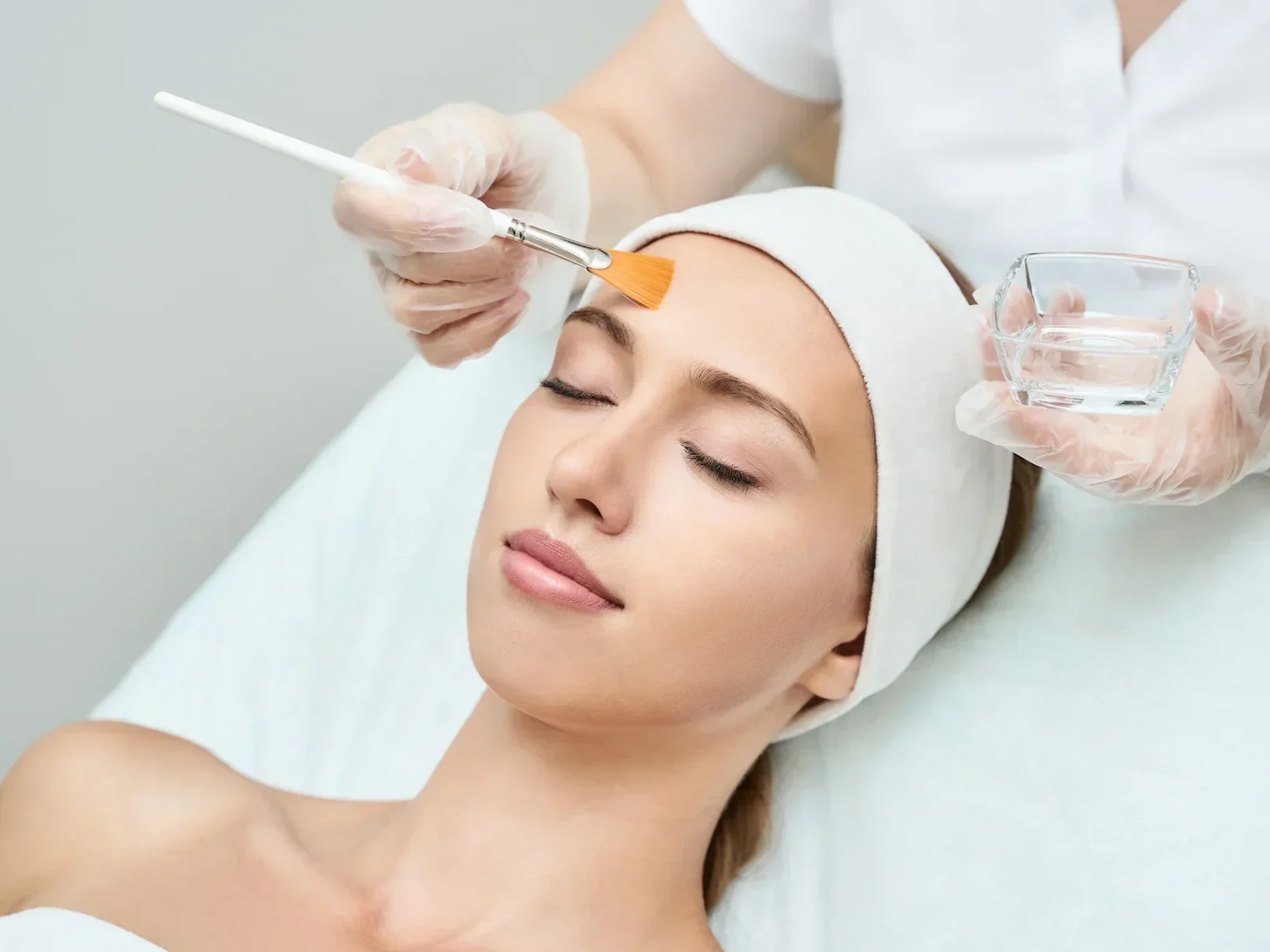
Preparing for a chemical peel comes down to four things: stop exfoliating scrubs and benzoyl peroxide at least 48 hours ahead, skip waxing and bleaching beforehand, tell your doctor about any glycolic acid allergy and every recent treatment or medication, and place the appointment where a few days of flaking will not collide with something you care about. The patch test happens first, always.
Each of those has a reason behind it that is worth knowing, because people who understand the reason tend to actually follow it.
What happens before the peel is even scheduled?
An assessment and a patch test, and you should build days into your plan for them rather than assuming you will walk in and be treated.
Your doctor examines skin type, tone and texture, takes a history of acid allergies and recent treatments, and tests a small area before committing to anything. Only after that are the depth and the solution chosen — superficial, medium or deep, and which agent — matched to what is being treated and to how your skin behaved on the test patch.
This is also the stage at which the answer might be not yet, or not this. It is a real outcome, not a failure of the appointment.
What should I stop using, and how far ahead?
The published rule is exfoliating scrubs and benzoyl peroxide, stopped for a minimum of 48 hours. The principle behind it extends further than the list does.
A peel is a controlled amount of irritation applied to skin your doctor has assessed. Anything that arrives already irritating the surface changes that calculation without anyone deciding to change it. Scrubs do it mechanically; benzoyl peroxide does it chemically; and a face that has been through both in the preceding day or two is not the face the plan was written for.
So the useful move is to hand over your whole routine at consultation rather than only the items on a published list. Retinoids, acids, prescription creams, anything you have started in the last month. Your doctor will tell you what to pause and for how long, and that instruction is specific to your skin and your peel rather than generic. It is a great deal easier than reverse-engineering it from an article.
Why does waxing come up, and for how long either side?
Waxing and bleaching are avoided before a chemical peel, and waxing, threading and bleaching are all off the table for a week afterwards. Read those two instructions together and the practical window is more than a week wide, sitting either side of the appointment.
Worth planning around deliberately, because this is the instruction most often broken by accident. A threading appointment made three weeks ago, or a salon visit before a family function, quietly lands inside the window and nobody connects the two afterwards. If a peel is going into your month, put the grooming appointments in the calendar first and let the peel find a gap between them.
What has to be disclosed, even if it feels beside the point?
More than people volunteer, and none of it is visible when someone looks at your face.
- Any glycolic acid allergy, specifically, and any other reaction to an acid.
- Pregnancy and breastfeeding. Some peels are avoided in both.
- Diabetes, which rules certain peels out.
- Recent isotretinoin or other acne treatment. Skin that has recently been on it heals differently, and this is one of the commonest reasons a peel is postponed rather than refused.
- Recent cosmetic surgery, where skin is still settling.
- Any treatment in the last few weeks, including anything done elsewhere.
That last one catches people. A facial, a laser session or a course you started at another clinic is genuinely relevant, and there is no awkwardness in saying so. The consultation is looking for reasons to change the plan, and a plan changed in advance is a good outcome.
How should the appointment sit in a working week?
Around the flaking, which is short but visible. After a superficial peel most people have slight redness or some flaking for a few days; deeper peels flake more and for longer, which is one of the trade-offs weighed when depth is chosen.
Two more constraints shape the calendar. Swimming and strenuous exercise wait 24 hours, and direct sunlight is avoided for about a week — so a peel immediately before a beach trip, a sports weekend or an outdoor wedding is fighting itself.
The yellow peel, which patients ask about often, has a different rhythm entirely and needs planning as such. Rather than being neutralised in the clinic after a few minutes, it is worn for several hours and washed off at home at the time your doctor specifies, and its flaking is more visible than after a superficial peel — usually around the second to fourth day. If that peel is what is proposed, ask where the visible days fall before you pick a date.
The general shape that works: book so the middle of the flaking lands on days with fewer meetings, and count at least a week clear of anything photographed.
Is there anything to arrange for the day itself?
Very little. The appointment is short — the solution is on for roughly three to five minutes, varying by peel — and it finishes with a cool compress, a hydrating cream and sunscreen, so you leave protected rather than needing to sort that out on the way home.
What is worth arranging is the days after. Have a plain moisturiser and a broad-spectrum sunscreen you already tolerate at home, since keeping the skin moisturised and protected is the actual aftercare, and starting a brand-new product on freshly treated skin is not the moment for an experiment.
Ask two questions before you leave: what you can and cannot apply for the next 72 hours, and when the next session is likely to be.
What if I have another treatment booked?
Then the order matters, and it is a conversation rather than something to sequence yourself.
BB Glow asks you to avoid peels and retinol in the weeks leading up to a session, and to pause AHAs and BHAs for the whole length of its course — so a peel and a BB Glow course cannot simply be run in parallel. Microneedling has its own set of situations where something else is treated first, active acne among them.
If you are considering more than one thing, say so at the consultation rather than booking them separately and hoping the calendar works out.
The short version
Stop scrubs and benzoyl peroxide 48 hours ahead. No waxing or bleaching before, and none for a week after. Disclose allergies, medication, pregnancy, diabetes and anything done recently at another clinic. Expect a patch test first. Leave a week clear of strong sun and anything you will be photographed at.
Peel sessions start from ₹2,999 per session, with the course length settled after an assessment rather than quoted in advance. The consultation is ₹500, waived against treatment — book a consultation and bring your actual routine, not the tidied-up version.