
How Teeth Whitening Actually Works
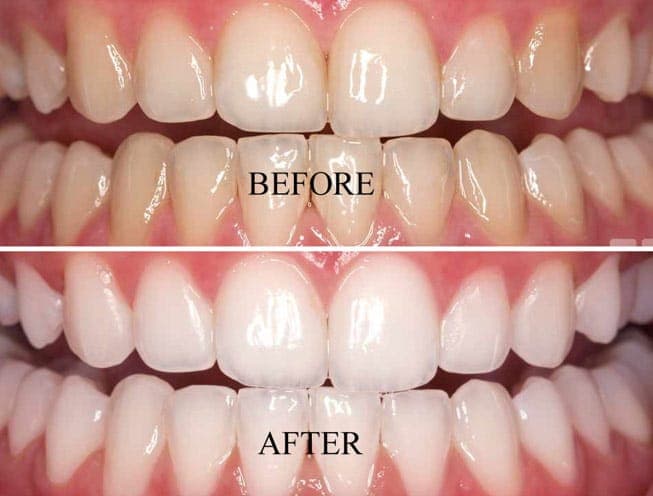
Professional whitening works by getting a peroxide-based gel into the enamel, where it breaks down the pigment that tea, coffee, tobacco and pigmented foods have left behind. Nothing is scrubbed off and no enamel is removed. The tooth you finish with is the same tooth, holding less colour — which is precisely why it lightens natural teeth and leaves a crown exactly as it was.
Understanding that one sentence answers most of the questions people bring to a whitening consultation, including several they had not thought to ask.
What does the gel actually do to a stain?
It breaks the pigment down rather than lifting it off. The bleaching agent works into the enamel and acts on the coloured compounds sitting within it, reducing them to a state where they reflect far less colour. This is the whole reason whitening can change the shade of a tooth that has already been brushed thoroughly twice a day for years: the colour it is acting on was never on the outside to begin with.
It also explains why the procedure is described as additive. Reshaping a tooth means removing structure. Whitening removes nothing — it changes what is already inside the enamel, which is why it sits in a different category from a veneer or a crown.
Why do surface stains and deeper discolouration behave so differently?
Because they are two unrelated problems that happen to look similar in a mirror.
Surface staining is deposit — what your morning filter coffee, your chai and tobacco leave on and immediately beneath the outer surface. It accumulates, it is mechanically removable in part, and it is the kind of colour a professional clean addresses directly.
Deeper discolouration is colour held within the structure of the tooth. Some of that arrives with age. Some of it was laid down while the tooth was still forming, which is the case with tetracycline staining and with fluorosis. Some of it comes from inside the tooth after trauma, or after a nerve has died.
Peroxide reaching the enamel deals with pigment held in the enamel. It does far less for discolouration that was built into the tooth's structure or that originates from within the tooth. That is not a limitation of one product or one clinic — it is a consequence of where the colour physically is. A dentist should name which type you have at assessment, before any gel is mixed.
Why can a whitening toothpaste not do this?
Two reasons, and the mechanism gives both away. A whitening paste is mildly abrasive, so it works on surface stain — it is doing the mechanical job, not the chemical one. And it does not carry enough active agent to change the underlying shade of the enamel, which is the part that actually holds the colour you are unhappy with. A paste can only ever reach the first of the two problems above.
Why do crowns, veneers and fillings never change colour?
Because there is nothing there for the peroxide to act on. Whitening affects natural enamel and only natural enamel. Ceramic and tooth-coloured composite carry no enamel-held pigment for the gel to break down, so they finish the appointment at exactly the shade they started.
This has a practical consequence people find genuinely surprising. If you have visible restorations in your smile line and the natural teeth around them lighten, those restorations do not stay neutral — they start reading as darker by comparison. Your dentist raises this before treatment and discusses sequencing, because restorations are often replaced afterwards to match the new shade. Where there are several, that becomes a smile makeover plan rather than a whitening appointment.
Why isolate the gums and time the exposure?
Because the strength of the agent is the whole point of doing it in a clinic, and a stronger agent needs a boundary. The gums and soft tissues are isolated and protected before the gel is applied, and the exposure is timed and monitored with reapplication as needed. That control is what makes a stronger agent appropriate to use at all. Take it away and you have the same chemistry with none of the containment.
Why does the clean come first?
So the gel meets clean enamel. Pigment sitting in a layer of deposit is not where the gel needs to work, and a scaling and polishing appointment removes that layer so the agent reaches the surface it is meant to act through. It is a sequencing decision, not an upsell.
Why does whitening make teeth sensitive afterwards?
Because the gel works through the enamel rather than sitting on top of it, teeth commonly react to cold for a day or two afterwards. It is the most common effect of the procedure, it typically resolves on its own, and a desensitising toothpaste helps in the meantime. If your teeth are already sensitive, that is worth raising before the appointment — the protocol can be adjusted, either with a desensitising regimen around the treatment or by working more gently across more sessions.
Brief gum soreness, or a whitened patch at the gum margin where gel has touched soft tissue, settles quickly.
When should I contact the clinic instead of waiting?
Get in touch rather than trying to interpret it yourself. Ring us or book a review if, after whitening:
- sensitivity is worsening day by day rather than easing
- pain is still there after a few days, or it wakes you at night
- pain arrives on its own, with no hot or cold trigger
- biting on one particular tooth produces a sharp pain
- a gum area stays sore or ulcerated, or has not settled within a few days
- there is any facial swelling
This list is not a way to work out what is wrong. Some of these overlap completely with problems that have nothing to do with whitening, and telling them apart takes an examination. Treat every line on it simply as a reason to be seen.
What decides how long the effect holds?
Your habits, mostly. Results usually run from several months to a few years, and the spread is that wide because diet, smoking and oral hygiene do the deciding. Heavy tea, coffee or tobacco reintroduces exactly the pigment the treatment removed, and it does so continuously.
Which shade is realistic for your teeth, whether external bleaching is the right approach for the type of discolouration you have, and how many sessions that would take are all settled at consultation — ₹500, waived against treatment. Book an appointment and we will look at the cause before discussing the shade.