
How Hair Botox Actually Works
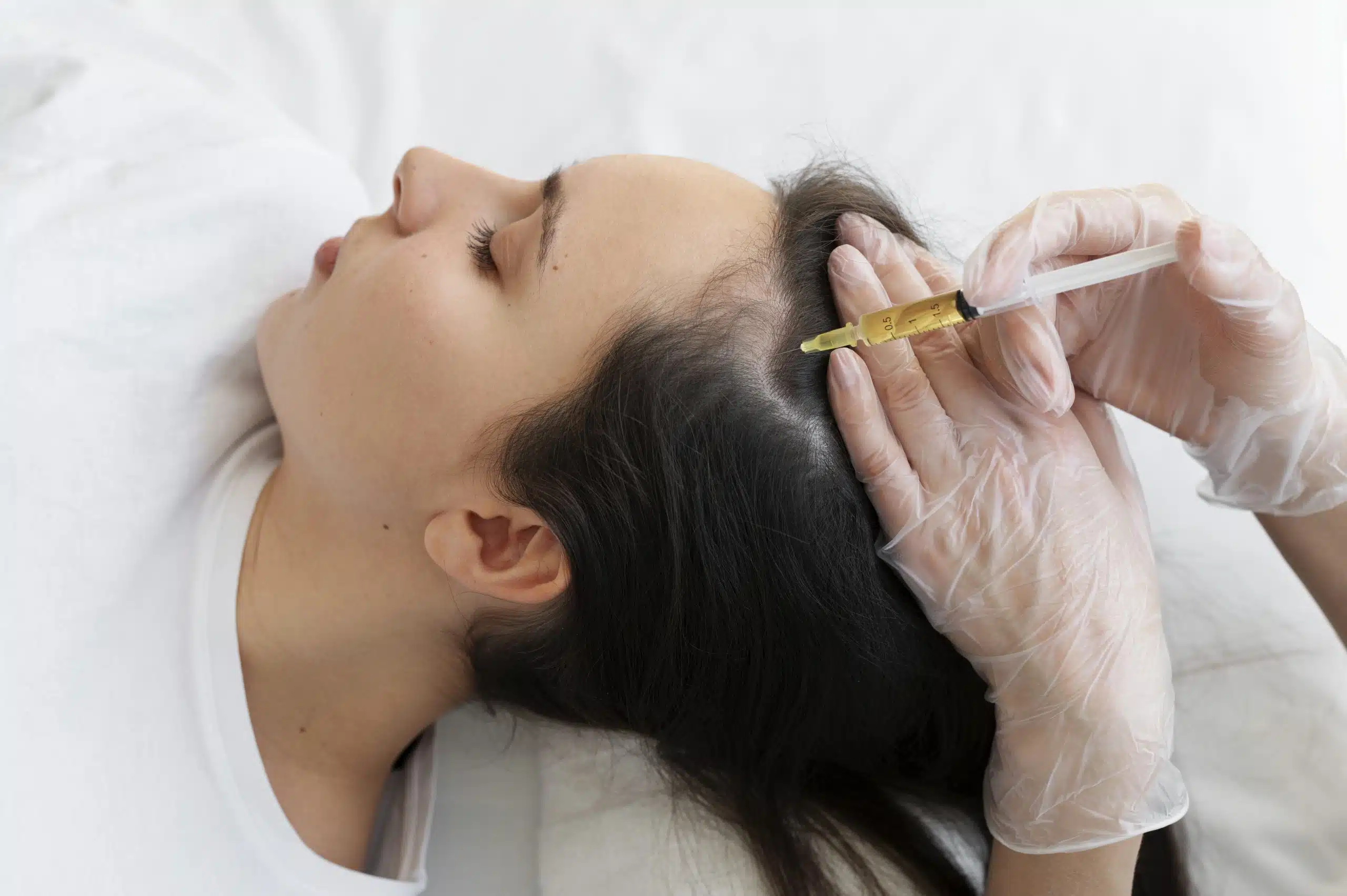
Hair botox works by interrupting a chemical message. Sweat glands in the scalp are switched on by nerve endings that release a signalling chemical; botulinum toxin, placed into that skin in mapped micro-doses, stops those endings releasing it. The glands quieten, the scalp stays drier, and the effect holds until those nerve endings recover.
That is the whole engine of the treatment, and understanding it is genuinely useful before you consent to anything. It tells you why the result is temporary, why the doctor spends time mapping before injecting, and why the treatment cannot deliver several of the things people hope it will.
What signal is being interrupted?
Sweat glands do not decide anything on their own. They are instructed, by nerve endings that sit alongside them and release a signalling chemical across the tiny gap between nerve and gland. Chemical arrives, gland switches on.
Botulinum toxin acts on the nerve ending rather than on the gland. It prevents that chemical being released, so the instruction never arrives and the gland sits idle. Nothing has been destroyed or removed; a message has simply been stopped in transit.
This matters for how you think about the treatment. It is not doing anything to your hair, your follicles, or the structure of your skin. It is turning down a set of instructions in one mapped area.
Why does this need an injection rather than a cream?
Because the target is under the skin, not on it. The nerve endings that matter sit at the level of the glands, and nothing applied to the surface of a scalp gets to them in a controlled way.
That is the practical difference between this and the salon product wearing the same name. A topical mask acts where it is spread — along the hair shaft. Hair Botox as this clinic performs it acts where it is placed, which is why placement is the treatment and why a doctor, always, is the one holding the needle.
Does the same mechanism explain the drop in oiliness?
Partly, and it is worth being precise rather than tidy about this.
Sweat glands and oil glands are different structures. The signalling pathway described above is the sweat gland's, and it is the clearer half of the explanation. The clinic documents reduced sebum alongside reduced sweat as what patients experience — fresher roots for longer, and less washing — but how much of that oil change you personally should expect is a question for the doctor examining your scalp, not something a page can promise in advance.
If someone tells you the oil effect is as predictable as the sweat effect, they are smoothing over a distinction that a careful clinician would make.
Why does the mapping change the outcome?
Because the mechanism is local. A quietened gland is a gland close to where the medicine was placed; a gland two zones away is unaffected. So the pattern of injection points decides the pattern of the result.
That is why the appointment opens with an assessment rather than a needle. Your sweat and oil pattern, your scalp health and your medical history are reviewed first, and only then does the doctor map injection points and dose for your scalp — not from a fixed template. Somebody whose problem is a drenched hairline and crown needs a different map from somebody whose whole scalp soaks through by mid-morning, and giving them the same one would treat skin that did not need it while missing skin that did.
The procedure that follows is short: fine micro-injections across the mapped zones, numbing cream applied first, around thirty minutes in total, with none to minimal downtime afterwards.
Why does the effect wear off after four to six months?
Because nerve endings recover. The block is on release, not on the nerve itself, and over months the ending re-establishes its ability to signal. The gland starts receiving instructions again and does what it always did.
The clinic's documented figure is four to six months, after which scalp sweating gradually returns to its earlier pattern and the treatment can be repeated. Note the word gradually — this is not a switch flipping back on one morning. Recovery is a slope, which is why the effect is reviewed at follow-up and repeat sessions are typically planned at that four-to-six-month interval rather than booked at a fixed calendar date decided in advance.
If it calms the scalp, why does it not regrow hair?
Because nothing in the mechanism touches the follicle's growth cycle. Quieting a sweat gland does not instruct a follicle to produce hair, and the clinic states plainly that hair botox is not a regrowth treatment by itself.
What it does is change the environment. A drier, calmer scalp is a healthier place for the hair you already have, which is why the doctor may pair it with PRP or GFC after a scalp review — those protocols work on the follicle, this one works on the skin around it. Two mechanisms, two jobs, and a plan that uses both is not the same as one treatment claiming both.
Where do the side effects come from, mechanically?
Two of the three come from the needle rather than the medicine. Injection-site soreness — small bumps, redness or tenderness for a day or two, settling on its own — is the skin responding to being punctured. A mild, short-lived headache can follow scalp injections for much the same reason.
The third comes from the mechanism itself. The same signalling chemistry the toxin interrupts at a gland also operates at muscle, so if the medicine travels slightly beyond where it was placed, a nearby muscle can feel temporarily weak. This is rare, and the mapping and dose control done by a doctor exist precisely to keep it rare.
Understanding that gives you a useful trigger for picking up the phone. If soreness or bumps persist beyond the first couple of days, if a headache does not settle, or if you notice weakness in any muscle near the treated area, contact the clinic and ask to be reviewed. You are not expected to judge whether it is significant — that assessment belongs to the doctor who mapped the dose, and getting in touch early is the sensible move rather than an imposition.
Why does the mechanism rule some people out?
For the same reason the muscle effect exists. Anyone with a neuromuscular disorder should not have this treatment, because the pathway being interrupted is one their condition already involves. Anyone pregnant or breastfeeding should not have it either. The doctor reviews your medical history at consultation before confirming you are a candidate, and other medicines you take belong in that conversation too.
What does knowing the mechanism change for you?
Mostly, it changes what you expect. A treatment that interrupts a signal for a few months is a maintenance decision, not a fix. A treatment that acts where it is placed is only as good as the assessment behind the map. And a treatment aimed at glands will not do anything for hair that is dry, brittle or over-processed, however often the name suggests otherwise.
If that mechanism matches the problem you actually have, book a consultation at Indiranagar or Bellandur — it is ₹500, taken off the cost of treatment if you proceed — and ask the doctor to show you the map before agreeing to anything.