
Hair Botox: The Myths Worth Clearing Up Before You Book
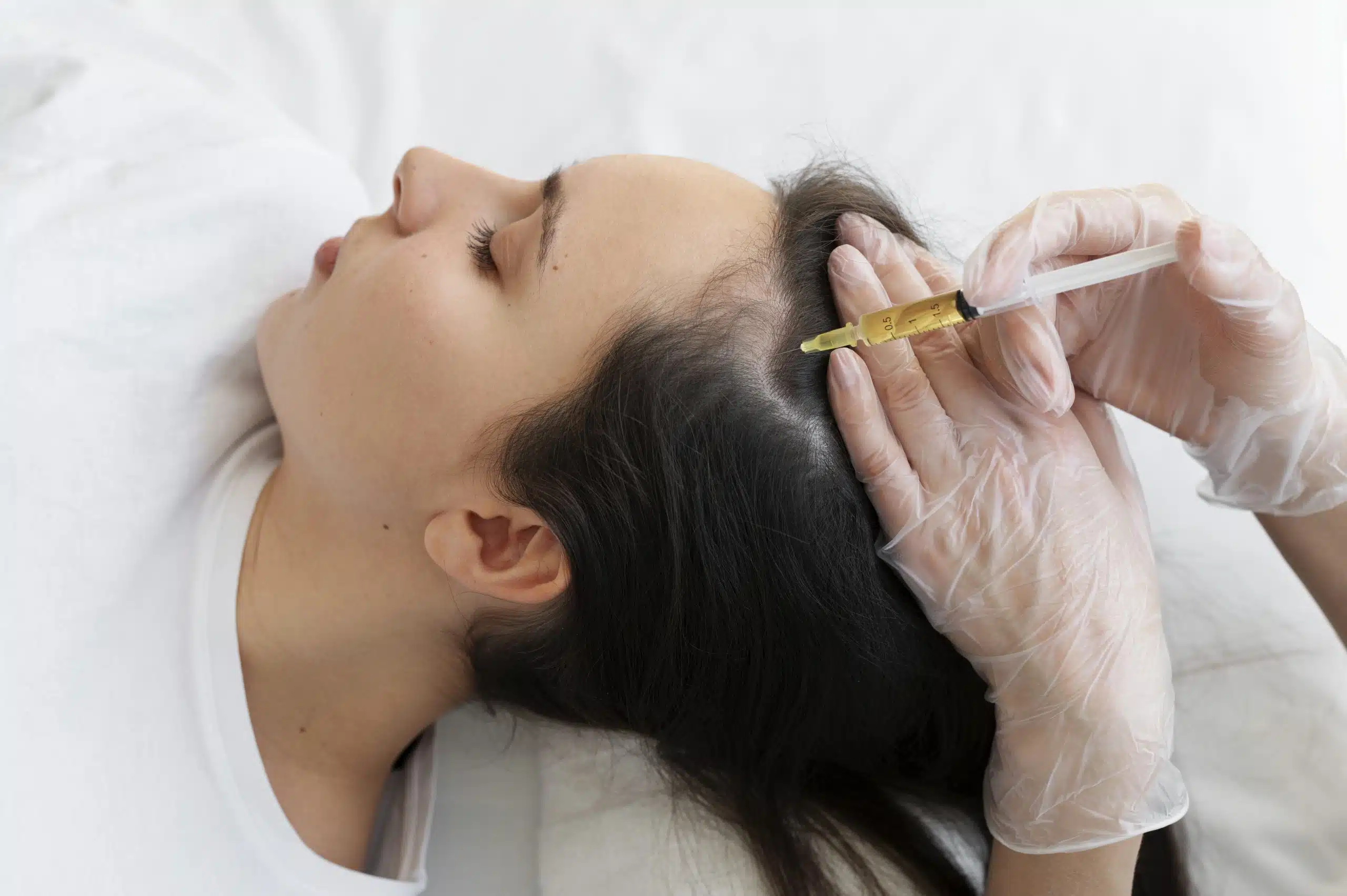
Almost every misunderstanding about hair botox traces back to one of two things: a shared name covering two unrelated treatments, or an assumption that an injectable prescription medicine behaves like something bought off a salon menu. The corrections below all come from what this clinic actually does — a doctor placing micro-injections of botulinum toxin into the scalp to calm excessive sweating and oiliness.
Myth: it is a conditioning treatment for damaged hair
The name is doing a lot of unearned work here. Salons use "hair botox" for a topical deep-conditioning mask applied along the hair shaft, and that product contains no botulinum toxin whatsoever — the word is borrowed for marketing. What we offer under the same two words is the medical version: Hair Botox as an actual injectable, placed into the scalp by a doctor.
The tell is what each one is aimed at. A mask is aimed at the strand. Our treatment is aimed at the skin the strand grows out of, and specifically at how much that skin sweats and how much oil it produces. If your complaint is about the lengths of your hair rather than your scalp, you are reading about the other treatment.
Myth: it regrows hair
It does not, not by itself, and we would rather say so than let the name imply otherwise. Hair botox calms scalp sweating and oiliness, which supports scalp health — that is the whole of its claim. It is not a regrowth protocol.
Where it earns a place in a regrowth plan is as groundwork. A drier, calmer scalp complements PRP or GFC protocols, because the environment your follicles sit in matters to the plan, and the doctor may pair them after a scalp review. Groundwork is not the same as growth, and any clinic blurring the two is selling you the wrong expectation.
Myth: anyone with a needle can administer it
Botulinum toxin is a prescription medicine. At The Aesthetic Edge this treatment is performed by a doctor, always — not delegated, and not offered as a walk-in beauty service. That is not a marketing position; it follows from what is being injected and where.
The scalp sits near muscles you use constantly. Very rarely, nearby muscles can feel temporarily weak after treatment, and doctor-led dose mapping exists precisely to minimise that. Somebody has to be qualified to judge where the medicine goes and how much of it is used, and to recognise it if something is not settling as expected.
Myth: everyone gets the same standard dose
There is no standard dose here, because there is no standard scalp. The doctor maps injection points and dosing for your scalp rather than applying a one-size template, and that map is built out of the assessment that comes first: your sweat and oil pattern, your scalp health and your medical history, reviewed before anything at all is planned.
This is worth knowing when you compare quotes or experiences with a friend. Two people described as having "had hair botox" may have had quite different areas treated with quite different amounts.
Myth: the effect is permanent
It is not, and nobody should imply that it is. The effect typically lasts four to six months, after which scalp sweating gradually returns to its earlier pattern and the treatment can be repeated. That is why the last step of our own protocol is a review: the effect is checked at follow-up, and repeat sessions are typically planned at that four-to-six-month interval.
Treat it as maintenance, planned session by session as it wears off, rather than as a one-off purchase that settles the matter for good.
Myth: it is agonising, because it is injections into the scalp
Uncomfortable for a moment is closer to the truth than agonising. Numbing cream is applied before anything begins, and the injections themselves are fine and quick — most patients describe brief pinpricks rather than pain. The whole procedure runs around 30 minutes.
We will not describe it as painless, because that is not a promise anyone can make about a needle. What we can say is that the discomfort people report is brief and at the pinprick end of the scale, and that if your pain threshold is a genuine worry it is a reasonable thing to raise at the assessment.
Myth: it has no side effects worth mentioning
Every real medicine has a side-effect profile, and pretending otherwise is a warning sign in itself. The common one here is injection-site soreness: small bumps, redness or tenderness at the injection points for a day or two, which settles on its own. A mild, short-lived headache can follow scalp injections. Very rarely, nearby muscles can feel weak temporarily.
Knowing that list is what lets you notice when something is not following it. If soreness or bumps persist beyond those first couple of days, if a headache does not pass off, or if you notice weakness in any muscle near the treated area, contact the clinic and ask to be seen rather than working out for yourself what it might mean. You will not be wasting anyone's time.
Myth: it needs days of downtime
It does not. Downtime is none to minimal, and most people carry on with their normal routine the same day. The short bumps and tenderness described above are the realistic inconvenience, not a recovery period.
Myth: it is suitable for everyone
It is not, and this is the correction most often missing from pages selling it. Anyone with a neuromuscular disorder should avoid this treatment, and so should anyone who is pregnant or breastfeeding. Suitability is not decided by a quiz or by a phone call — the doctor reviews your medical history at the consultation before confirming that you are a candidate.
There is also a plainer sort of unsuitability: wanting something this treatment does not do. If the problem is the condition of your hair rather than the behaviour of your scalp, the honest answer is that a different solution belongs in front of you.
Where this leaves you
The version of hair botox worth booking is specific: doctor-placed, mapped for your scalp, aimed at sweat and oil, lasting four to six months, and not pretending to be a regrowth or conditioning treatment. If that matches the problem you actually have, it is a proportionate answer to it.
Book a consultation at Indiranagar or Bellandur — ₹500, waived off against treatment — and bring your questions, including the ones you suspect are silly. The list above started life as questions patients were slightly embarrassed to ask.